
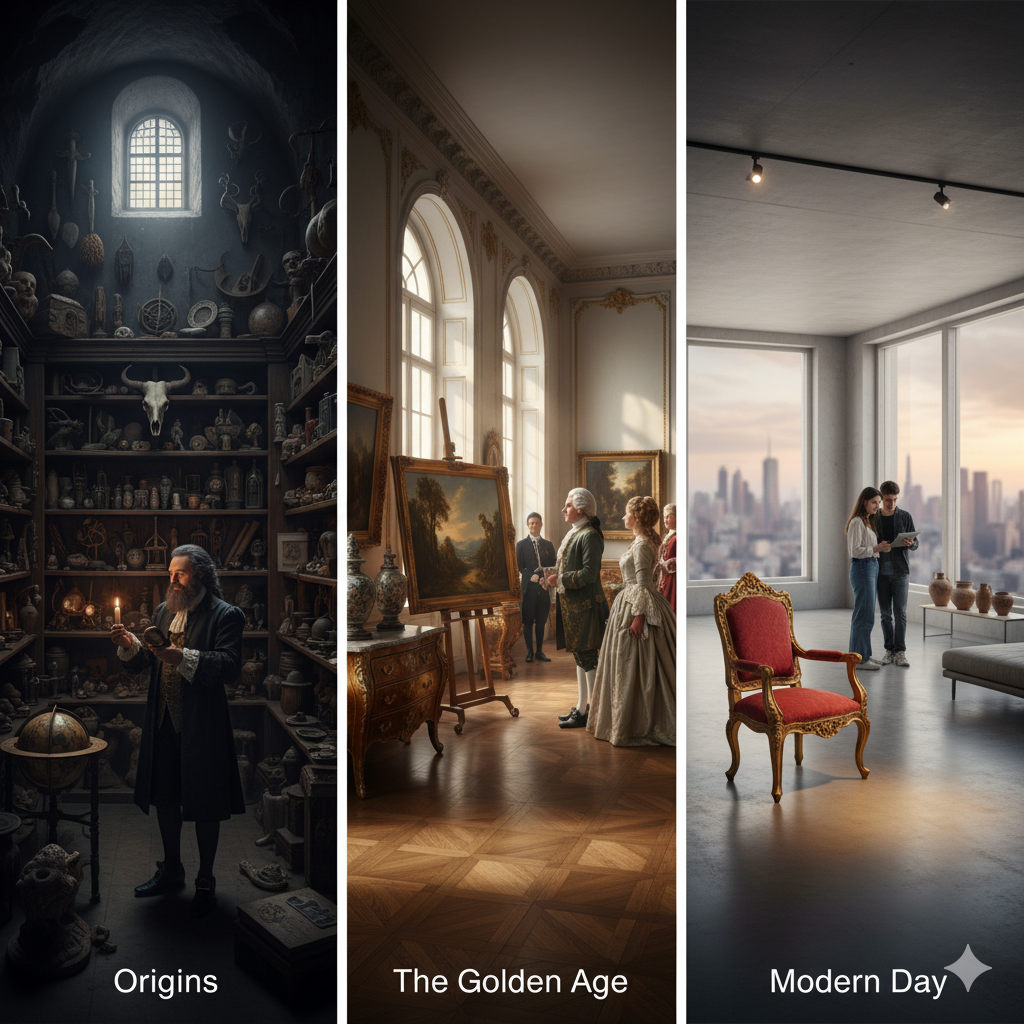
L’antiquariato ha radici antiche e affonda le sue origini nei primi collezionisti dell’epoca classica, quando il valore degli oggetti non era solo economico, ma anche culturale e simbolico. Nel corso dei secoli, l’interesse per gli oggetti antichi si è evoluto, passando dalle raccolte private dei nobili alle grandi case d’aste internazionali. Se anche tu sei affascinato dal mondo dell’antiquariato, scopri con noi come è nato e come si è trasformato nel tempo.
Le prime collezioni: dall’Antichità al Medioevo
Già nell’Antica Roma e in Grecia, i più facoltosi collezionavano opere d’arte e manufatti antichi per dimostrare il proprio status sociale e il proprio sapere. Imperatori e aristocratici accumulavano statue, monete e reperti provenienti dalle culture precedenti, spesso per adornare le loro ville e palazzi. Questo modello di collezionismo ebbe una battuta d’arresto nel Medioevo, epoca in cui gli oggetti antichi furono spesso trascurati o riutilizzati per altre funzioni.
Il Rinascimento: la riscoperta dell’arte e della storia
Con il Rinascimento, l’interesse per il passato riprese slancio grazie all’amore per l’arte classica e l’archeologia. Umanisti e mecenati, come i Medici a Firenze, collezionavano sculture, manoscritti e antichità. Durante questo periodo nacquero le prime vere gallerie d’arte, con l’intento di preservare e studiare il patrimonio culturale del passato.
Dal collezionismo aristocratico ai primi mercanti d’antiquariato
Nel XVII e XVIII secolo, il collezionismo non era più solo un’attività riservata ai nobili, ma iniziò a diffondersi tra gli appassionati d’arte e i borghesi facoltosi. I primi mercanti d’antiquariato iniziarono a raccogliere e vendere opere d’arte e pezzi storici a una clientela sempre più ampia. A Londra e a Parigi nacquero le prime case d’asta, dando vita a un vero e proprio mercato dell’antiquariato.
Il XIX secolo e la nascita del mercato moderno
Durante il XIX secolo, il crescente interesse per la conservazione del patrimonio storico portò alla fondazione di musei e istituzioni dedicate alla tutela dell’arte antica. Le esposizioni universali fecero conoscere oggetti di epoche e culture diverse, accrescendo l’interesse del pubblico. Fu in questo periodo che iniziarono a emergere figure professionali come antiquari e curatori, rendendo il mercato più strutturato.
L’antiquariato oggi: passione e investimento
Oggi, il mondo dell’antiquariato è profondamente cambiato grazie alla tecnologia e alla globalizzazione. Le aste online hanno reso più accessibile l’acquisto di pezzi d’epoca, mentre la maggiore consapevolezza del valore storico rende collezionisti e acquirenti più attenti e informati. Se stai pensando di avvicinarti al mondo dell’antiquariato, sappi che non si tratta solo di una passione per il bello, ma anche di un investimento che può rivelarsi molto vantaggioso.
L’antiquariato continua a evolversi, mantenendo il fascino di un tempo e adattandosi alle dinamiche moderne. Sei pronto a scoprire il prossimo pezzo che entrerà a far parte della tua collezione?