

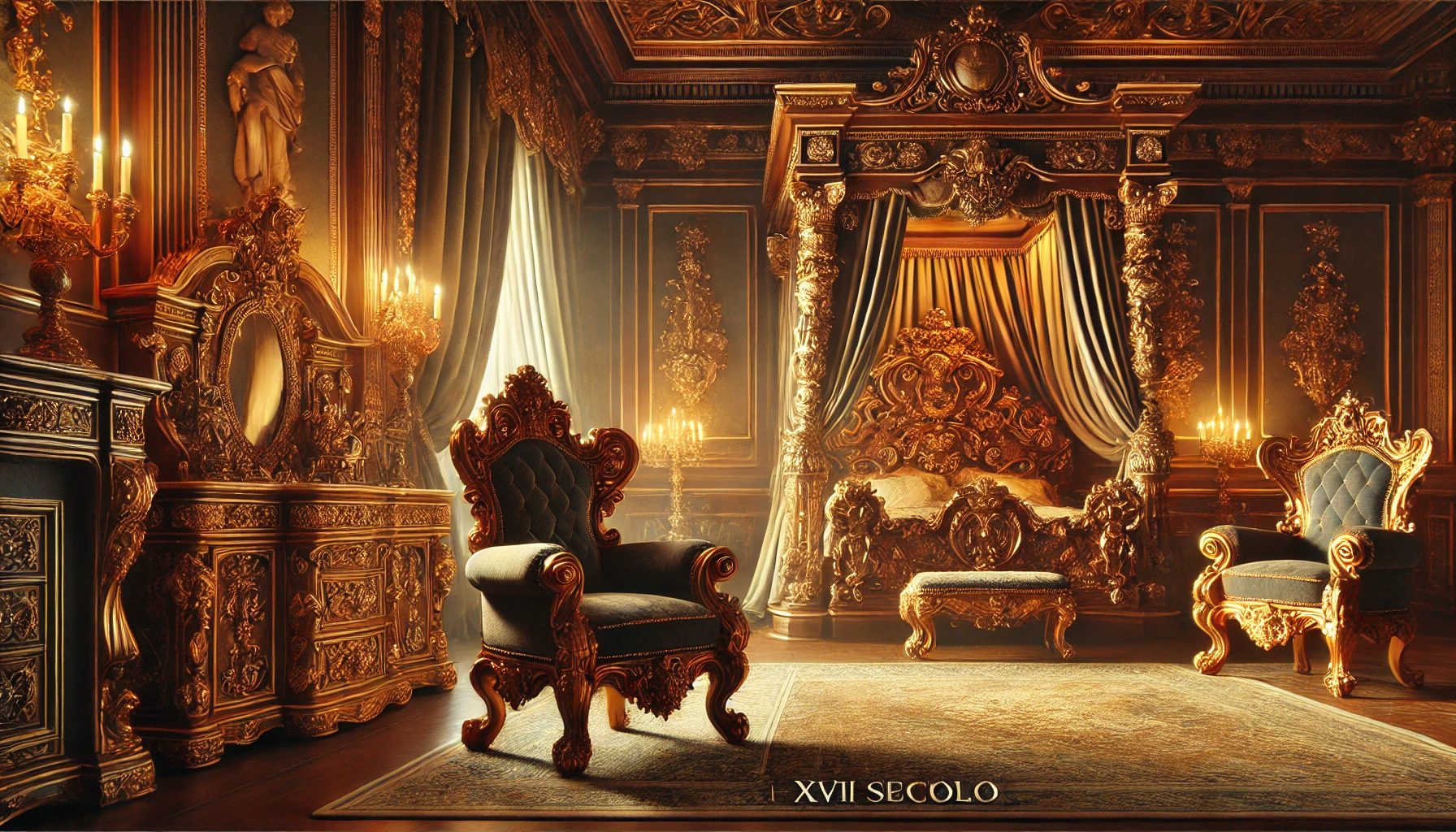
The Baroque period stands as one of the most lavish and spectacular eras in the history of furniture design. Originating in the 17th century, a time of profound artistic and political expression, the Baroque style deeply influenced architecture, painting, sculpture, and, naturally, furniture production. Characterized by its rich, dramatic, and theatrical aesthetic, the Baroque style is synonymous with luxury and grandeur.
This style particularly thrived in Italy, France, and Spain, subsequently spreading throughout Europe. Baroque furniture was designed to express power and magnificence, reflecting the social status of its owners and creating dramatic environments capable of impressing guests.
1. Characteristics of Baroque Furniture
The Baroque style is distinguished by its imposing presence and its ability to astonish through intricate decorative details and high-quality materials. Unlike the Renaissance, which favored geometric and symmetrical forms, the Baroque abandons rigidity in favor of a more fluid and dynamic aesthetic. Curves predominate in every element, from the legs of chairs to the details of carvings, providing a sense of continuous movement. This dynamism is enhanced by the interplay of light and shadow created by the inlays and sculptures present in the furniture.
Decorations are often abundant and lavish, enriched with floral motifs, mythological figures, and angels, testifying to the influence of the Church and monarchy of the time. The materials used for the creation of furniture were of the highest quality: precious woods such as ebony, rosewood, and walnut were combined with inlays of mother-of-pearl, ivory, and semi-precious stones, in addition to the ubiquitous gilding that gave an even more sumptuous appearance. Surfaces were often treated with lacquers and polishes that reflected light, contributing to creating a spectacular scenic effect.
2. Types of Baroque Furniture
Baroque furniture was not simply functional but represented true symbols of wealth and social prestige. It was made on commission for the aristocracy and the Church, with a style that favored grandeur and scenic effect.
Consoles and credenzas were among the most common pieces of furniture and were distinguished by their structures decorated with highly complex carvings and surfaces often embellished with marble and precious metals. Armchairs and thrones had high backs and massive armrests, covered with precious fabrics such as velvet and silk, sometimes embroidered with gold threads. The four-poster bed, typical of noble residences, was a true decorative monument, surrounded by brocade curtains and characterized by carved columns and gilded friezes.
Tables were imposing, with carved legs representing allegorical figures, lions, griffins, or Baroque volutes, often accompanied by equally decorated chairs. Monumental cabinets, made with precious woods, were adorned with carvings and inserts in worked metal, becoming decorative as well as functional elements. Finally, Baroque mirrors, with their gilded and sculpted frames, were used to amplify the light in the rooms and increase the perception of space, reflecting the grandeur of the interiors.
3. Techniques of Working and Decoration
Baroque cabinetmaking reached levels of absolute excellence, thanks to the skill of the artisans of the time and the use of refined techniques. Gilding was one of the most widespread techniques, performed by applying very thin gold leaf to the sculpted surfaces to enhance the details and increase their prestige. Lacquering, on the other hand, was used to protect and polish wooden surfaces, giving the furniture a bright and uniform appearance. Some variations involved the use of colored lacquers to create even more evocative chromatic effects.
Inlay was another widely used technique: through the insertion of woods of different tones and precious materials such as ivory and mother-of-pearl, elaborate decorations were created with floral, allegorical, or geometric motifs. Carvings, on the other hand, were made by hand with precision chisels to sculpt volutes, mythological figures, and angels with extraordinary three-dimensionality. Marble, often used for the tops of tables and consoles, was worked to enhance its natural veins, while wrought metal decorated locks, hinges, and handles with elaborate motifs.
4. The Influence of the Baroque in Antiques and Contemporary Design
The Baroque continues to be one of the most influential artistic currents in furniture design, with a strong presence in the antiques market and in contemporary design trends. Original furniture from the 17th century are among the most sought-after pieces by collectors, with examples reaching very high prices in international auctions.
In contemporary design, the Baroque is often reinterpreted in a modern key, maintaining the characteristic decorative elements but simplifying the forms. There is a return of luxurious materials such as velvets and gilded metals, combined with more essential lines to adapt to modern environments. The interiors of many prestigious residences, luxury hotels, and exclusive environments are inspired by the Baroque to create sophisticated and scenic atmospheres.
Even cinema and theater continue to draw inspiration from this style, using Baroque furniture and decorations for regal and historical settings. The theatricality and opulence of the Baroque remain one of the most fascinating choices for those who want to furnish with a sense of grandeur and prestige.
5. Conclusion
The Baroque is the emblem of magnificence and artistic exaggeration applied to furniture design. Its furniture, imposing and richly decorated, represents the culmination of 17th-century craftsmanship. Even today, these masterpieces continue to be appreciated for their extraordinary beauty and their ability to transform any environment into a regal and fascinating space.
Their influence is still strongly visible in interior design and antique collections, demonstrating how the Baroque is a timeless style, capable of captivating with its theatricality and its opulence.