

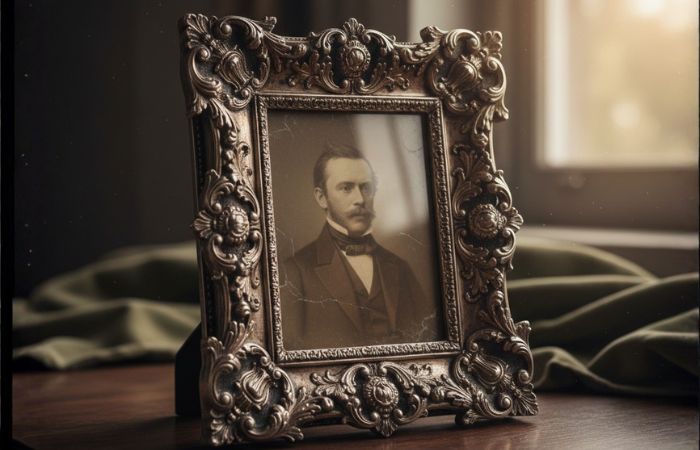
When you talk about antiques, you’re not just referring to old things: you’re talking about pieces that have survived the test of time, witnesses to eras, people, trades, events, and stories that defy oblivion. We’re talking about objects that were made to last, and which in many cases are still here, often in incredibly good condition, speaking to us through their signs of use, their imperfections, and their living presence.
In this journey into the rediscovered past, I would like to tell you not only about objects, but about the lives of objects — because every piece of antique furniture, jewelry, tool, or fabric we see before us today has gone through decades, sometimes centuries, of history. They are not just rare: they are resilient, stubborn, fascinating. Let’s discover together some of these masterpieces of objects truly born to last.
1. The table – when the weave of wood is a promise of eternity
One of the first things that strikes those who enter an antique shop is the smell of antique wood: a warm mixture of resin, dust blown by time, and stories etched into the grain. And often the first piece that goes under the critical eye is a table — sturdy, massive, unaware of having become a legend.
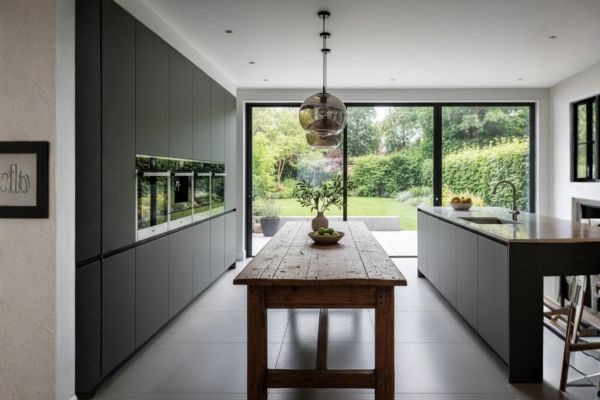
Look at it closely: the slightly worn legs, the surface smoothed by years of cuts and supports, the perfect joints that don’t creak. This type of table was not born to be momentarily beautiful: it was born to survive generations of meals, speeches, childhood discoveries, and family toasts.
The strength of the solid wood, the manual attention of the craftsman who built it, and the balance of the shapes still make it a central piece in many homes, a perfect example of how functionality and aesthetics can merge without ever losing integrity.
2. Jewelry from bygone eras – not just ornaments, but keepers of meanings
If the table speaks of family and roots, antique jewelry tells stories of people. Often small, rarely flashy, these objects speak of promises, loves, identities, status, and belonging.
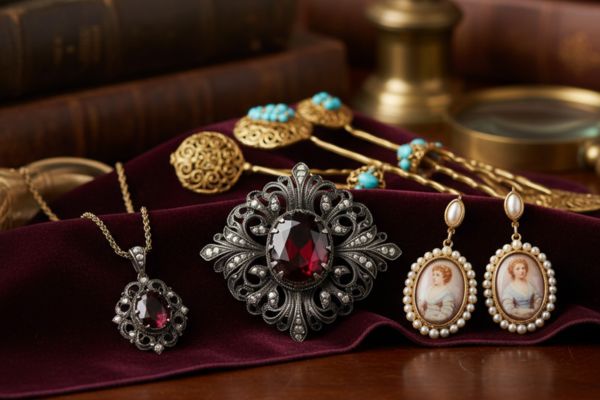
Take, for example, a Victorian ring preserved in a glass case: engraved with a date, sometimes with a name, with a stone that today might seem unremarkable. Yet, every small imperfection is a page of its past — scratches due to decades of daily use, a thread of faded enamel, gold that has lost some of its luster but not its history.
These jewels are objects that no longer exist in modern productions: they were made to have a personal and lasting meaning, made with materials and techniques that sought stability and presence over time — not just fleeting fashion.
3. Machines and tools – functionality that becomes myth
Those who approach the world of antiques often think of furniture or jewelry. But one of the most fascinating aspects is the tools: machines, utensils, pieces of ancient technology that today appear strange to us, but were once cutting-edge.
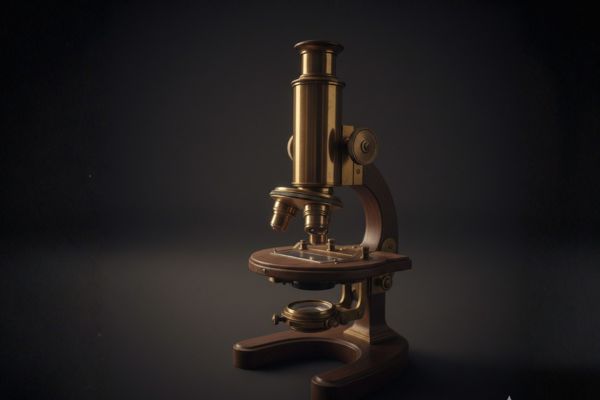
Take, for example, an old letterpress printing machine. It is a huge and heavy object, built in cast iron and tempered steel, which, when operated, gave life to sheets upon sheets of words. Each element is designed to resist: shiny gears, perfectly aligned planes, levers that survive thousands of pressures. A similar machine today is a museum piece, but in its time it was the daily tool of journalists, publishers, and printers who lived racing against time.
This is not just antiques: it is applied history, technology with deep roots in the society that has shaped our modern civilization.
4. Fabrics and clothes – the lightness that survives
It is easy to imagine that fabrics cannot last over time: washing, light, friction consume everything. Yet there are antique fabrics — tapestries, ceremonial clothes, embroidered fabrics — that have resisted for centuries.
Often preserved in controlled conditions, these fabrics show a care that goes far beyond simple manufacturing: they are works of textile art, created with patience, precision, and great love for detail. A medieval tapestry is not just a fabric: it is a narrative work, a visual document of traditions, myths, symbols.
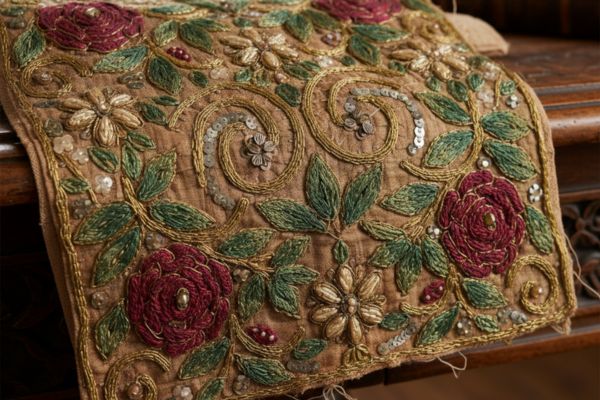
This teaches us that durability is not just a matter of materials, but above all of care and attributed cultural value.
5. Antique books – keepers of words and time
There can be no journey into the past without talking about books. And when we talk about antique books, we are talking about objects that were designed to last: quality paper, leather bindings, robust bindings, titles engraved with precision. Many of the oldest volumes still in existence have been read and reread, browsed by hands we have never known, preserved by generations as treasures.
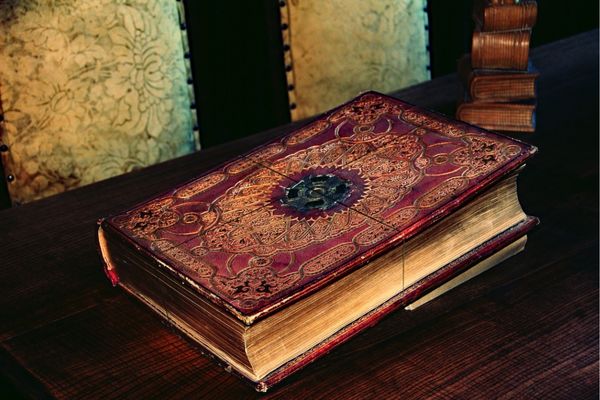
What keeps them alive today? Not just the paper and ink: it is the value of the stories, the ideas, the thoughts that have crossed the centuries. Reading a three-hundred-year-old book is not a simple intellectual act: it is a bridge between eras, voices, and memories.
6. The value of manufacturing – when the object is made with art
A common thread in all these objects is the inference on the quality of manufacturing. The artisans of the past did not need fashions or trends; they designed their pieces to be useful, durable, and beautiful. Where today fast industrial production often prevails, then there was maniacal attention to detail and durability.
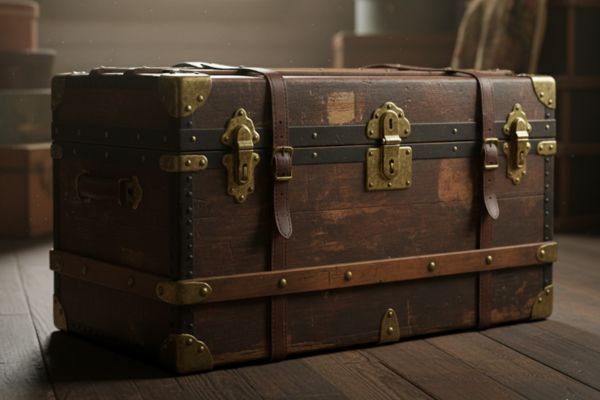
For example:
- a wrought iron lock that still works after 200 years;
- a trunk with perfect joints that has never given way;
- a silver frame that still maintains its shine after generations.
These objects are not rare by chance: they are rare because very few objects built today will have the same longevity.
7. What does it mean to “last forever”?
When we say that an object was “born to last forever,” what do we mean? We do not mean that it is immortal — no object is — but that it is designed to withstand time and use, to maintain value, beauty, and presence beyond its era.
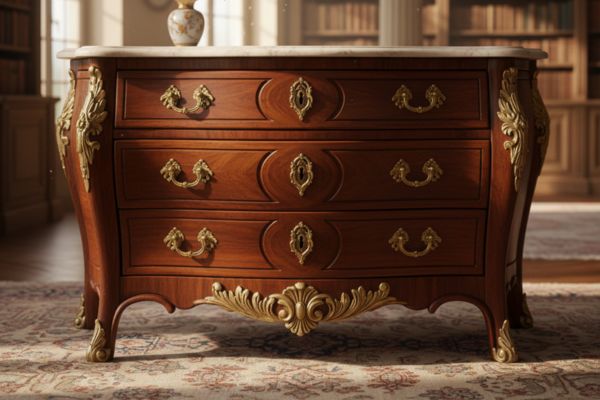
Lasting is not just physical resistance: it is also cultural continuity. An antique object still lives today because it continues to speak, continues to be interesting, continues to excite.
8. Why these objects matter to us today
For those who love antiques, these pieces are not simple objects: they are bridges between generations. Every imperfection tells a moment, every sign of wear is a sign of life.
These objects demonstrate that:
- value is not measured only with money;
- beauty is not fleeting;
- history is not only read in books, but also in objects.
The charm of the eternal in the ephemeral world
We live in an era in which many things are designed to be disposable, where speed and the ephemeral seem to be the only rule. This is why the objects that were born to last and have succeeded fascinate us so much: they are counter-current witnesses of a way of doing that put value, time, and care at the center.
When we look at an antique piece, we see more than an object: we see stories, lives, people, mastery, and memory. And understanding this helps us not only to appreciate the past, but also to recognize what really matters in the present.
1. What does it mean that an object is “born to last forever”?
It means that it has been designed and made with materials, techniques, and attention such as to withstand daily use and the passage of time, maintaining value and functionality even after decades or centuries.
2. Which materials contribute to the longevity of an object?
Solid wood, hand-worked metals, blown glass, naturally tanned leather, and handcrafted fabrics are examples of materials that withstand time better than modern industrial productions.
3. Why are some antique objects still in excellent condition?
In addition to resistant materials, constant care and maintenance, the quality of manufacturing, and, often, the fact that these objects have been used with care and respect by their owners count.
4. Does antique jewelry have more value than modern objects?
Not always in monetary terms, but in terms of history and uniqueness yes: antique jewelry tells stories of people and past cultures, with artisanal techniques difficult to replicate today.
5. Are all antique objects necessarily precious?
No. Not all have high commercial value, but every lasting object has historical or cultural value, even if material and simple, because it testifies to an era, an artisan, or a daily use.
6. How to recognize an object made to last?
Clues include robust materials, precise joints, hand-finished details, balanced weight, and signs of craftsmanship that show attention to resistance over time.
7. What role does maintenance play in the duration of an object?
Fundamental: correct cleaning, protection from light, humidity, and temperature changes, and careful repairs can prolong the life of an object by decades or centuries.
8. Why are antique tools and machines so sought after?
Because they combine functionality and durability. Tools built with traditional methods often still work today and represent a heritage of artisanal knowledge that is difficult to replicate.
9. What importance do antique fabrics and clothes have?
Antique fabrics not only last physically, but tell stories of fashion, society, and culture. Tapestries and ceremonial clothes are true textile historical documents.
10. How can we learn from the past to create lasting objects today?
By observing manufacturing techniques, choice of materials, attention to detail, and attention to function. The past teaches that beauty, utility, and longevity can coexist, even in contemporary production.