
In the world of antiques, there are objects that do not merely decorate, but tell stories. Victorian cameos and brooches belong to this rare and fascinating category: small masterpieces that combine art, symbolism, and personal memory. Born in an era when every detail had a precise meaning, these jewels continue to speak to those who know how to observe carefully.
They are not simple ornaments from the past: they are fragments of life carved into matter, silent testimonies of emotions, bonds, and social codes that have long since disappeared.
The historical context: why Victorian jewellery still speaks to us today
What did jewellery represent in the Victorian era?
In the 19th century, during the reign of Queen Victoria (1837–1901), jewellery was never a simple aesthetic accessory. It was a language. Every shape, material, and symbol communicated something specific: love, mourning, social belonging, economic status, or even secret messages between individuals.
Victorian society was deeply codified. Emotions were not expressed openly, but translated into objects. In this context, jewellery became true “portable messages”.
A brooch could declare a silent love. A cameo could commemorate a distant person. A ring could mark a period of mourning or an eternal bond.
Why cameos and brooches in particular?
Among all the jewellery of the era, cameos and brooches stand out because they were the most versatile from a symbolic point of view.
- The cameo was intimate, often personal.
- The brooch was visible, therefore communicative.
Both, however, had a common characteristic: the ability to transform an emotional message into an artistic form.
The cameo: when matter becomes a portrait
What really is a cameo?
The cameo is a form of relief carving made on layered materials such as shell, agate, or onyx. The artist carves the surface to bring out an image—often a face or a scene—by taking advantage of the different layers of natural colour.
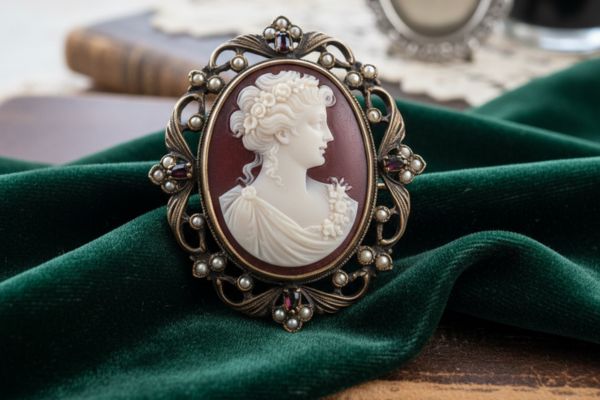
The result is a delicate, three-dimensional image, almost as if suspended.
How is a cameo made?
The crafting of a cameo is one of the most complex in miniature art.
- The material is selected (shell or layered stone)
- The natural veining is studied
- The hand-carving begins with very fine tools
- The figure is slowly carved in relief
There is no room for error. A wrong cut compromises the entire piece.
This precision makes every cameo unique and unrepeatable.
What do the subjects of cameos represent?
The most common subjects include:
- idealised female profiles
- classical deities (Aphrodite, Apollo)
- mythological scenes
- symbolic portraits
These subjects were not random. They served to evoke virtues such as beauty, purity, love, and harmony.
Why were cameos so highly prized?
In the Victorian world, the cameo was considered an object of cultural refinement. Whoever wore one showed not only aesthetic taste but also education and artistic sensibility.
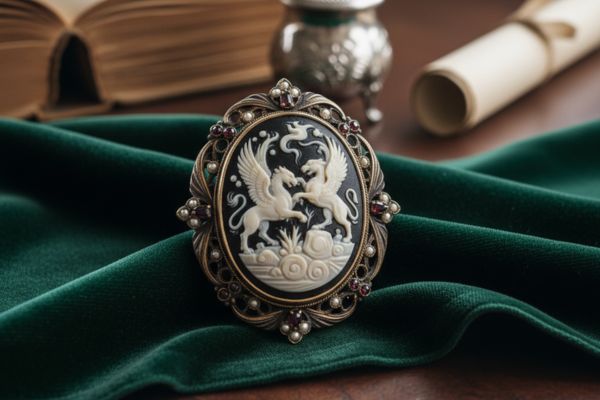
It was a discreet but powerful sign of social distinction.
Victorian brooches: the secret language of elegance
Were brooches only decorative?
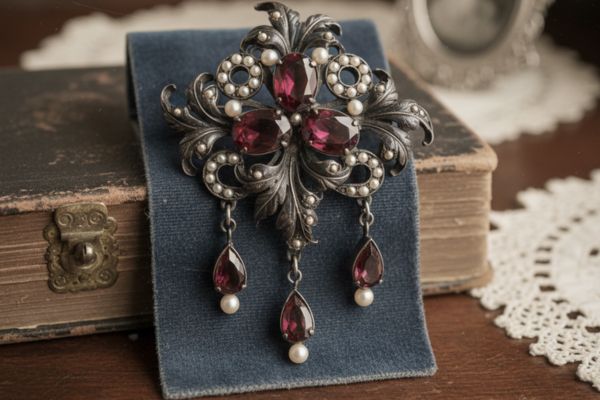
Absolutely not. In the 19th century, the brooch was one of the most important tools of non-verbal communication.
Every shape, material, and position on the body had a precise meaning.
What messages did they convey?
Some examples:
- ❤️ Heart → love and fidelity
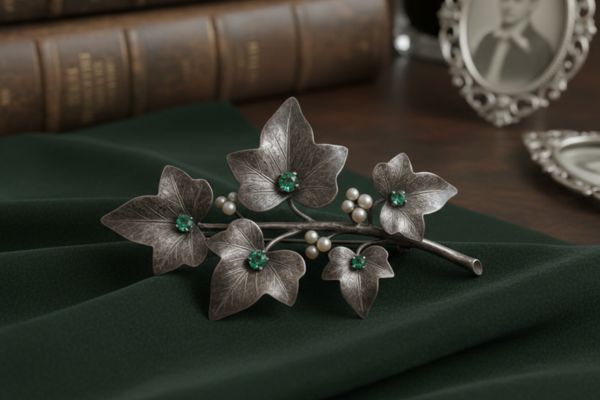
- 🌿 Ivy → eternal bond
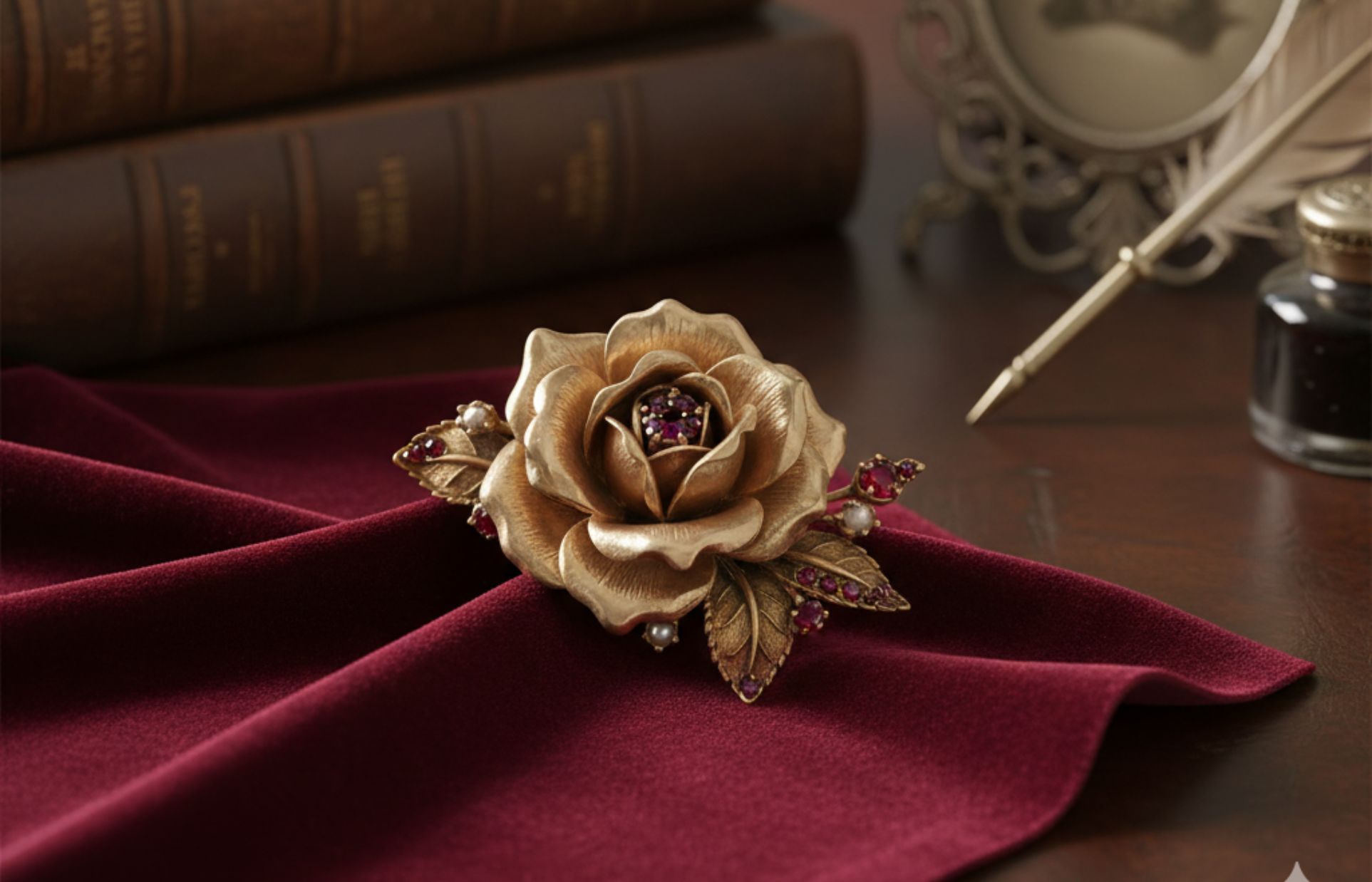
- 🌹 Rose → passion or remembrance
- ⚫ Black onyx → mourning and memory
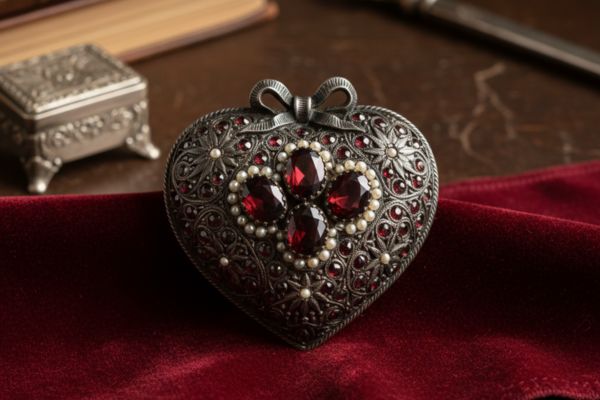
Wearing a brooch therefore meant “speaking” without words.
The role of mourning in Victorian jewellery
One of the most intense aspects of Victorian culture is the relationship with death.
Mourning was not private, but socially regulated. There were precise rules about what to wear and for how long.
Mourning brooches were often:
- black (onyx, glass, enamel)
- understated
- sometimes containing hair of the deceased
This may seem unusual today, but back then it represented a deeply personal way of keeping a memory alive.
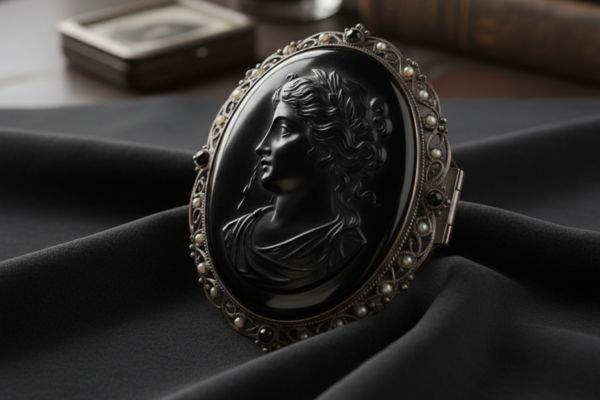
Why was hair used in jewellery?
Hair was considered a symbol of intimacy and permanence.
It does not decay easily and thus became a perfect material for preserving the memory of a loved one.
Brooches with woven hair were often true objects of emotional memory.
The invisible art of details
Why are the details so important?
In the Victorian world, nothing was left to chance. Even the smallest detail had a communicative function.
An engraved border, a chosen stone, the orientation of the brooch: everything contributed to the final message.
How does perception change over time?
Today, many of these symbols have been lost. We look at a cameo as an aesthetic object, but for the person who wore it, it was a precise message.
Recovering this language means recovering a part of 19th-century culture.
Materials and techniques: the geography of beauty
Where were they produced?
The main production centres were:
- Italy (Torre del Greco, Napoli)
- Victorian England
- France
- Germany
The role of Italy
Italy, particularly Napoli and Torre del Greco, was famous for shell cameos. Here, the art of carving was passed down through generations.
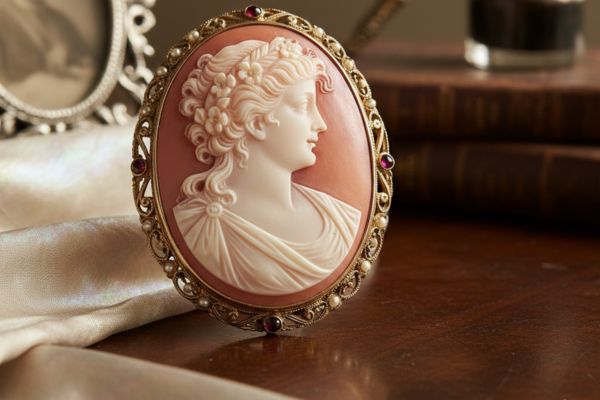
The English taste
In England, on the other hand, the symbolic brooch prevailed, often more rigid and formal, in line with Victorian culture.
The charm of the patina of time
What is patina?
Patina is the natural change of materials over time. It is not a defect, but a testimony.
Why is it important in antiques?
Because it tells the story of the object’s life.
A slightly worn cameo or a brooch with signs of use do not lose value: they increase it, because they demonstrate authenticity.
Collecting today: between aesthetics and responsibility
What does it mean to collect cameos and brooches?
Collecting does not just mean owning. It means understanding.
A true collector:
- studies the object’s history
- respects its origin
- recognises its cultural value
The risk of the modern market
In today’s market, there are also reproductions. This is why it is essential to develop a critical eye and knowledge.
The emotional value of antique objects
Why do these objects still move us today?
Because they speak of something universal:
- love
- loss
- memory
- identity
Objects as narrative
A cameo is never just a cameo. It is:
- a hand that carved it
- a person who wore it
- a moment that was lived
The silence that speaks
Victorian cameos and brooches teach us something fundamental: beauty is not always immediate. Sometimes it requires time, attention, and listening.
In a fast-paced, digital world, these small objects bring us back to a slower, more human dimension.
They do not shout their presence. They whisper it.
And for this very reason, they remain eternal.
FAQ
1. What do cameos represent in Victorian antiques?
Cameos were small carved portraits that often depicted female profiles, deities, or symbolic scenes. In the Victorian era, they were considered signs of elegance and culture, as well as objects with sentimental or commemorative value.
2. Did Victorian brooches have a specific meaning?
Yes. Brooches were not just decorative: every shape and material conveyed a message. For example, hearts represented love, ivy eternal bonds, and black onyx was often associated with mourning and memory.
3. How can you recognise an vintage cameo?
An vintage cameo features manual carvings with small details that are not perfectly identical, natural marks of the material (such as shell or agate), and a depth in the relief that is difficult to replicate in modern copies.
4. Why was Victorian jewellery so symbolic?
In the Victorian era, emotions were often expressed indirectly. Jewellery became a secret language to communicate feelings such as love, mourning, or social belonging.
5. Do cameos and brooches still have value today?
Yes, from both an economic and a cultural perspective. They are highly sought after in the antiques market and represent important historical testimonies of the art and society of the 19th century.