

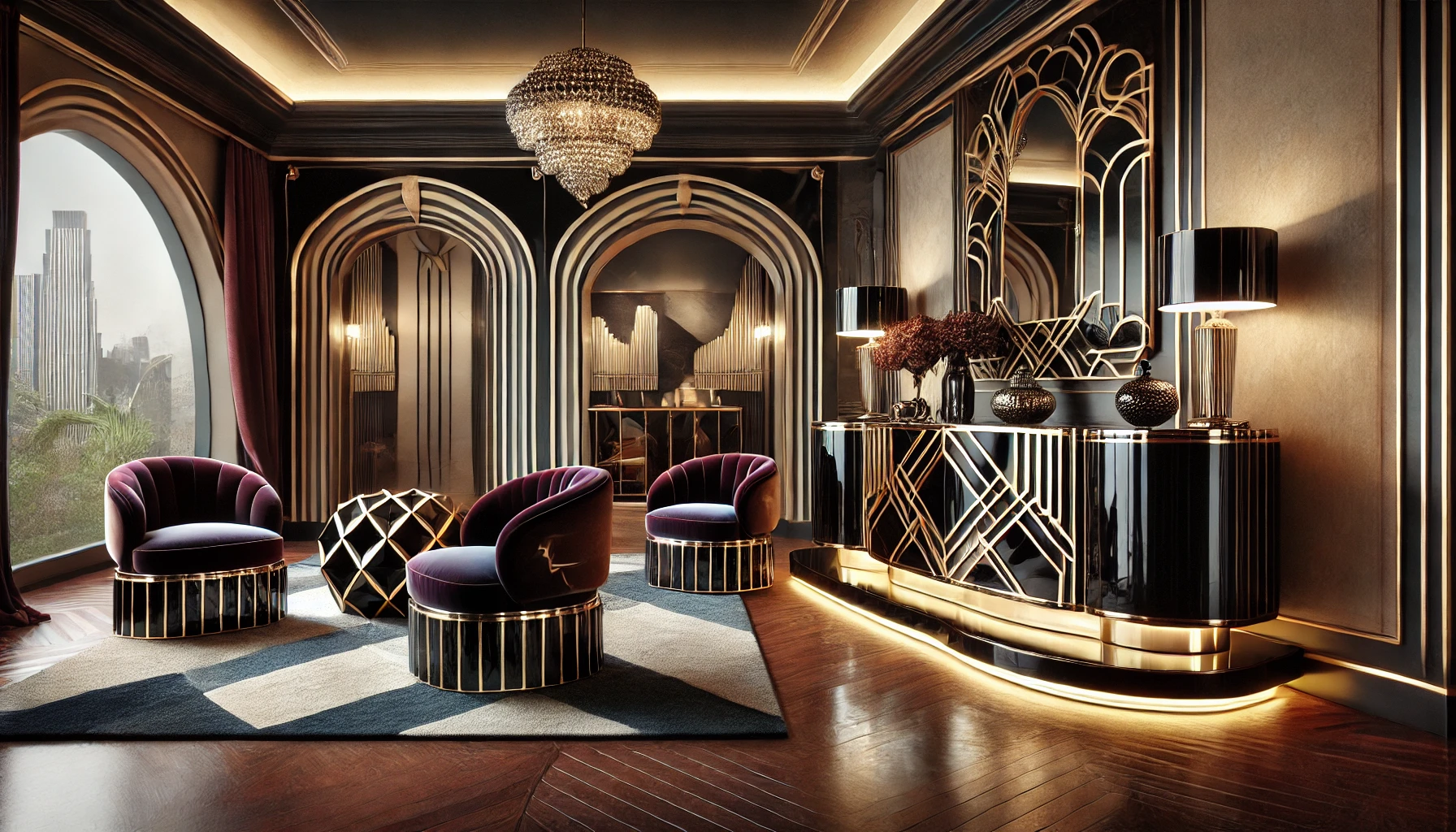
After the organic flow of Art Nouveau, the world of furniture and design experienced another major aesthetic revolution: Art Deco. Emerging in the 1920s and solidifying in the following decade, this style embodied the modern spirit of the era, characterized by luxury, refinement, and a strong sense of geometry. Art Deco takes its name from the Exposition Internationale des Arts Décoratifs et Industriels Modernes, held in Paris in 1925, where the fundamental principles of this movement were displayed. It influenced not only interior design but also architecture, fashion, graphic arts, and cinema.
The Art Deco style reflected the optimism and desire for modernity of the post-war period, combining influences from industry, African art, ancient Egypt, and European artistic avant-gardes. This translated into furniture with a refined and functional appearance, made with precious materials and innovative forms, capable of conveying an idea of luxury and progress.
1. The Characteristics of Art Deco Furniture
Art Deco furniture is distinguished by its sophisticated aesthetic, which combines geometric shapes, luxurious materials, and impeccable craftsmanship. Unlike Art Nouveau, which emphasized sinuous lines and natural inspiration, Art Deco is based on a more rational aesthetic, characterized by symmetry, order, and rigor.
Among the distinctive elements of the Art Deco style, we find:
- Geometric and angular lines: Squared shapes, zig-zag patterns, circles, and fan motifs dominate the decoration of furniture.
- Symmetry and order: Each element is designed to convey a sense of balance and visual coherence.
- Precious and innovative materials: The use of exotic wood essences (rosewood, ebony, mahogany), chromed metals, glass, ivory, and mother-of-pearl contributes to creating a sense of luxury.
- Lacquered and glossy finishes: The surfaces of furniture are often treated with glossy paints or brilliant lacquers to enhance the decorative details.
- Stylized decorative motifs: Elements of nature, such as flowers and animals, are represented in geometric and essential forms.
- Bold color contrasts: Black and white are often combined with bright colors like red, gold, and cobalt blue to create a strong visual impact.
These characteristics give Art Deco furniture an exclusive and sophisticated look, capable of enhancing any environment.
2. Types of Art Deco Furniture
Art Deco influenced every aspect of furniture, creating pieces with a refined aesthetic and functional design. Some of the most iconic furniture of this period include:
- Lacquered sideboards and buffets: Made with glossy finishes and inlays in metal or mother-of-pearl, often decorated with geometric or abstract motifs.
- Armchairs and sofas with compact shapes: Characterized by solid structures, leather or velvet upholstery, and chromed metal details.
- Dining tables with sculptural bases: Often made of precious woods and equipped with column legs or pedestals.
- Desks with lacquered surfaces: With essential lines and metallic details, designed for elegant and modern environments.
- Beds and bedroom furniture: With headboards in inlaid wood or covered in precious fabrics, characterized by rigorous shapes and opulent details.
Each Art Deco furniture piece was conceived to express luxury and innovation, reflecting the new modern and cosmopolitan lifestyle.
3. Processing and Decoration Techniques
Art Deco is characterized by meticulous attention to craftsmanship and the use of innovative materials. Some of the most common techniques used in the creation of Art Deco furniture include:
- Lacquering and polishing: The furniture was often finished with multiple layers of transparent or colored lacquer to obtain glossy and impeccable surfaces.
- Inlay and marquetry: The use of materials such as ivory, mother-of-pearl, and precious woods allowed for the creation of elaborate geometric decorations.
- Chromed metal elements: Table legs, sideboard profiles, and decorative details were often made of brass or chromed steel to add a touch of modernity.
- Glass and mirror work: Many furniture pieces included colored glass inserts or mirrored details to reflect light and amplify the perception of space.
These techniques contributed to making Art Deco furniture exclusive and unmistakable, combining functionality and aesthetics in perfect balance.
4. The Influence of Art Deco in Antiques and Contemporary Design
Art Deco continues to be one of the most appreciated artistic movements in the world of design and antiques. The original furniture from the 1920s and 30s are now highly sought-after collector’s items, with signatures like Jacques-Émile Ruhlmann, Émile-Jacques Ruhlmann, and Jean-Michel Frank reaching very high prices in international auctions.
In contemporary design, Art Deco is reinterpreted in a modern key through furniture and furnishing accessories that reproduce its geometric shapes, luxurious materials, and sophisticated finishes. Art Deco interiors still stand out today for their timeless elegance and the ability to convey a sense of exclusivity.
Even in cinema and fashion, Art Deco continues to inspire sets and haute couture collections, demonstrating its timeless influence in the world of art and design.
5. Conclusion
Art Deco has left an indelible mark on the world of furniture, introducing an aesthetic that combines luxury, modernity, and geometric rigor. Its furniture, characterized by precious materials, elegant lines, and stylized motifs, represents a perfect synthesis between craftsmanship and innovation. Even today, the Art Deco style continues to be synonymous with refinement and glamour, confirming its leading role in the history of design and furniture.