

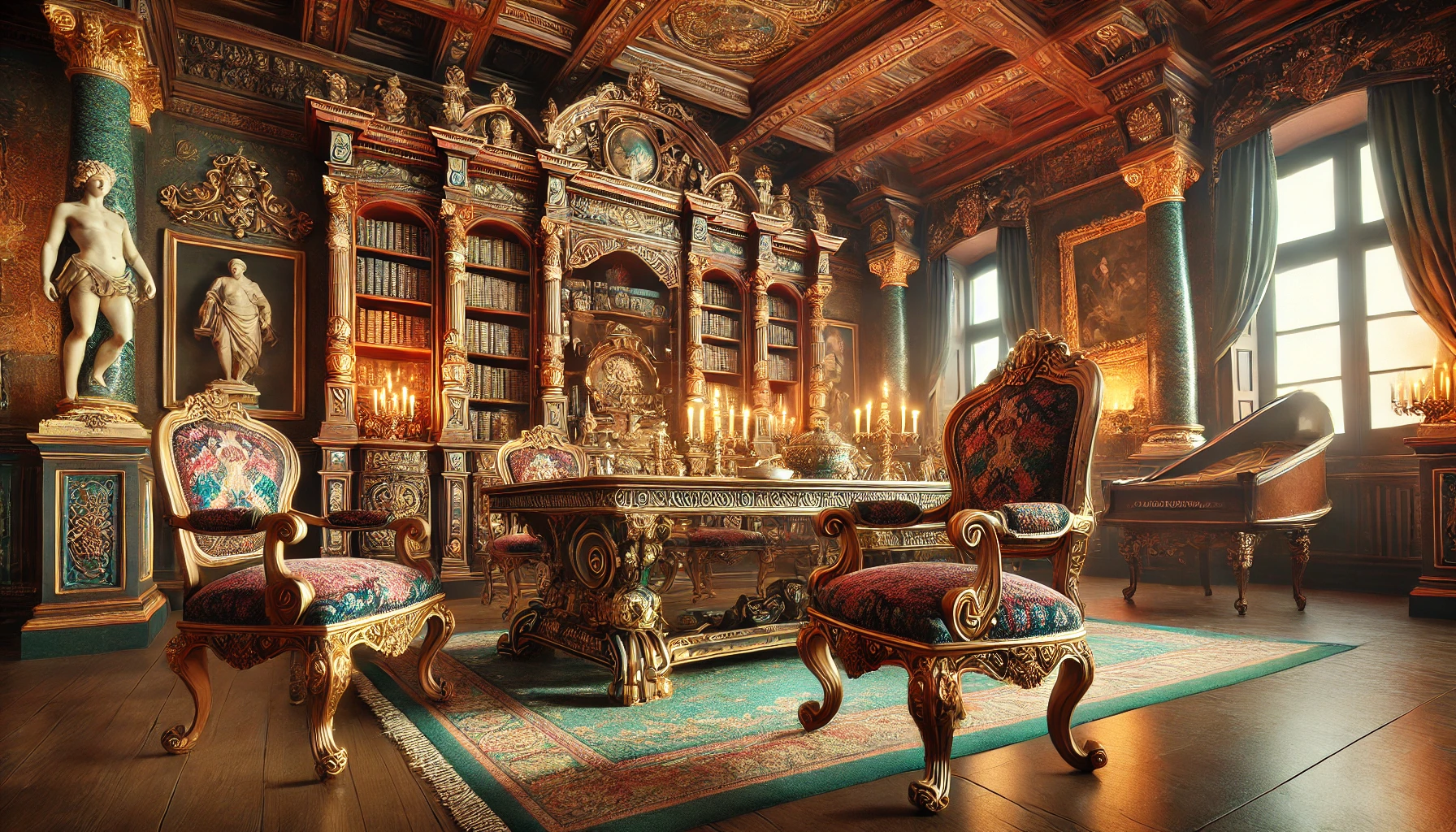
During the 19th century, the world of furniture was characterized by an extraordinary stylistic variety, giving rise to what is now known as the era of Eclecticism and Historical Revival. With the industrial revolution and a growing interest in rediscovering past eras, architects and artisans began to combine elements from different styles, reinterpreting the past and merging it with the new needs of bourgeois society. This period marks one of the most creative phases in furniture history, where aesthetics, functionality, and tradition intertwine to create unique and highly individual pieces.
1. The Characteristics of Eclecticism and Historical Revival
Eclecticism developed as a response to the increasing cultural globalization of the time, leading to a blend of artistic influences ranging from Gothic to Renaissance, Orientalism, and Art Nouveau. Unlike previous styles, which were based on well-defined aesthetic rules, Eclecticism did not have a single stylistic code, but freely drew from different eras and cultures, reinterpreting them with modern materials and techniques.
Historical Revival, on the other hand, focused on the faithful reproduction of past styles, with particular attention to Neo-Gothic, Neo-Renaissance, Neo-Baroque, and Neoclassicism. These movements were often driven by a desire to evoke the grandeur and prestige of previous eras, giving rise to majestic and richly decorated furniture.
Key features of furniture from this period include:
- Elaborate decorations and rich carvings: Furniture was often adorned with sculpted elements inspired by acanthus leaves, mythological figures, Gothic and floral motifs.
- Combination of precious materials: The use of mahogany, ebony, and rosewood was combined with inserts in brass, gilded bronze, and mother-of-pearl.
- Reinterpretation of classic forms: Turned legs typical of the Renaissance style were combined with softer, curved lines and decorations inspired by the Baroque.
- Great variety of styles: Neo-Gothic furniture with pointed arches and tracery coexisted with Neo-Renaissance pieces with symmetrical and austere forms, while Oriental influences made their way through exotic inlays and refined lacquers.
This fusion of elements gives eclectic furniture a unique appearance, making them particularly prized by antique collectors.
2. Types of Eclectic and Historical Revival Furniture
The 19th century was an era of great innovation in furniture, with a variety of pieces designed to meet the new needs of the emerging bourgeoisie. Some of the most representative furniture from this period include:
- Monumental Neo-Gothic bookcases: Large structures with imposing shelving, characterized by openwork decorations and carvings with medieval architectural motifs.
- Sofas and armchairs with high backs: Often inspired by the Renaissance or Baroque, these feature richly decorated fabrics and sculpted armrests.
- Massive dining tables: Decorated with carved legs, capitals, and ornamental friezes, these tables reflect the opulence and majesty of Neo-Renaissance interiors.
- Neo-Renaissance sideboards and buffets: Characterized by panels decorated with historical scenes and relief motifs.
- Neo-Gothic and Neo-Baroque beds: Often equipped with headboards carved with floral details or allegorical figures.
This furniture was intended for large and sophisticated interiors, where the layering of styles contributed to creating a sense of opulence and refinement.
3. Techniques of Craftsmanship and Decoration
During the eclectic era, processing techniques were perfected thanks to the technological innovation brought about by the Industrial Revolution. This period saw a fusion of traditional craftsmanship and more modern production methods, which made it possible to create increasingly detailed furniture, rich in ornaments.
- Ornamental carving: The surfaces of the furniture were decorated with motifs inspired by historical eras, carved with precision thanks to the use of mechanical tools.
- The use of inlays and gilded bronze applications: Metal decorations were applied to sideboards, tables, and desks to enhance their elegance.
- Elaborate paints and lacquers: Shellac polishing gave a shiny and refined appearance, while multi-layer lacquers made it possible to obtain rich and deep finishes.
- Upholstery with precious fabrics: Sofas and armchairs were upholstered with damask velvets, embroidered silks, and decorative tapestries.
Thanks to these techniques, eclectic furniture acquired an extraordinary variety of styles, managing to combine the best of past eras with the aesthetic and functional needs of the 19th century.
4. The Influence of Eclecticism and Historical Revival in Antiques and Contemporary Design
Today, eclectic furniture and those inspired by historical revivals are highly appreciated by antique enthusiasts. Their charm lies in their ability to unite different eras in a single harmonious composition, making them perfect for both classic environments and interiors with a more modern and sophisticated taste.
In contemporary design, eclectic inspiration continues to influence many trends. The combination of historical elements with modern furnishings creates environments with a strong visual impact, where the decorative richness of 19th-century furniture marries with more minimalist lines.
Even in the world of cinema and theater, Eclecticism plays a fundamental role in the reconstruction of suggestive historical settings, helping to recreate luxurious and full of personality atmospheres.
5. Conclusion
Eclecticism and Historical Revival represent a fascinating chapter in the history of furniture, where the past and present merge into a timeless aesthetic harmony. The ability to mix different influences and reinterpret them with precious materials makes this furniture extraordinarily versatile and always current. Even today, those who choose to furnish with eclectic pieces embrace a rich and sophisticated aesthetic, which celebrates history and design in a single, fascinating fusion of styles.