

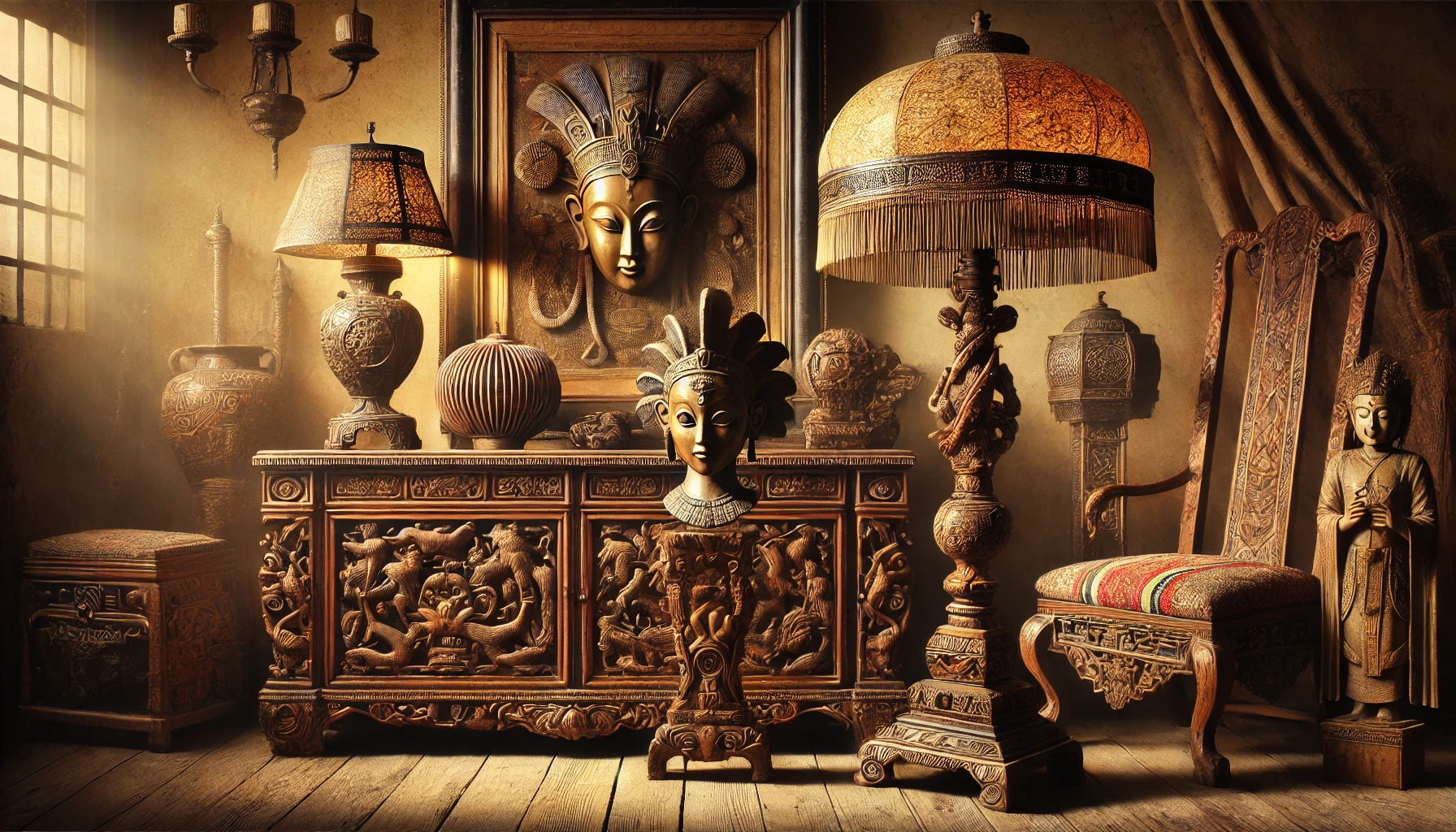
Antiques represent a bridge between the past and the present, a tangible witness to the traditions, craftsmanship, and aesthetic taste of different eras and cultures. Every corner of the world has developed its own unique style in furniture and decorative arts, giving rise to pieces that are now sought after by collectors and history enthusiasts. Let’s explore how antiques manifest in different cultures around the world.
1. European Antiques: Elegance and Refinement
Europe has been the cradle of artistic movements for centuries, deeply influencing design and craftsmanship.
- France: French furniture, with its Baroque, Rococo, and Neoclassical styles, stands out for its elaborate decorations, gilding, and the use of precious materials such as inlaid wood and marble.
- Italy: Renowned for its Renaissance and Baroque furniture, Italy has produced finely carved pieces decorated with mythological details and gilded finishes.
- United Kingdom: Georgian and Victorian styles are characterized by solid structures, the use of fine woods such as mahogany, and elegant yet sober lines.
2. Asian Antiques: Harmony and Symbolism
The East has a long tradition of craftsmanship, with furniture and objects that reflect philosophy, spirituality, and a deep connection with nature.
- China: Chinese furniture, particularly from the Ming and Qing dynasties, is distinguished by its nail-free construction, the use of rosewood, and red and black lacquer enhanced with gold decorations.
- Japan: Minimalism and functionality define Japanese furniture, such as the famous tansu (modular chests), made of lightweight wood and designed for easy transport.
- India: Indian antique art includes finely inlaid furniture, doors, and decorative panels rich in floral and geometric motifs, often embellished with carvings and precious metals.
3. African Antiques: Tribal Craftsmanship and Spirituality
African antiques are deeply connected to tribal traditions and spirituality.
- Tribal masks and wooden sculptures are among the most sought-after pieces, often used in religious rites and spiritual communication.
- Ancient textiles, such as Ghanaian kente and Malian bogolanfini, are appreciated for their dyeing techniques and the cultural symbols they represent.
- African furniture is often hand-carved with symbolic designs and crafted from durable local woods like mahogany and teak.
4. American Antiques: From Colonialism to Art Deco
America has a relatively recent history compared to other continents, but it has still developed unique styles over time.
- North America: Colonial-style furniture, inspired by European traditions, is characterized by robust and functional designs, while Art Deco and Mid-Century Modern introduced geometric lines and innovative materials.
- Latin America: Latin American antiques blend indigenous influences with European elements, creating hand-carved furniture with floral motifs and sturdy structures in fine woods.
5. Middle Eastern Antiques: Luxury and Ornamental Details
The Middle East boasts a long tradition of craftsmanship, influenced by Islamic art and trade along the Silk Road.
- Inlaid furniture with mother-of-pearl and ivory, typical of countries like Syria and Morocco, is among the most appreciated.
- Antique Persian rugs are considered true treasures, featuring geometric and floral motifs that tell stories and convey centuries-old symbolism.
- Colored glass lamps and mosaics are distinctive elements of Middle Eastern antique decor, used to create suggestive and luxurious atmospheres.
Conclusion
Antiques are much more than just a collection of old objects—they are a journey through history and cultures worldwide. Each piece tells a story and represents a fragment of the past that continues to live in today’s homes. Whether it’s finely carved furniture, antique rugs, or unique decorative objects, antiques offer a privileged window into the traditions and artistry of civilizations from different times and places.
Are you passionate about antiques? Which culture fascinates you the most?