

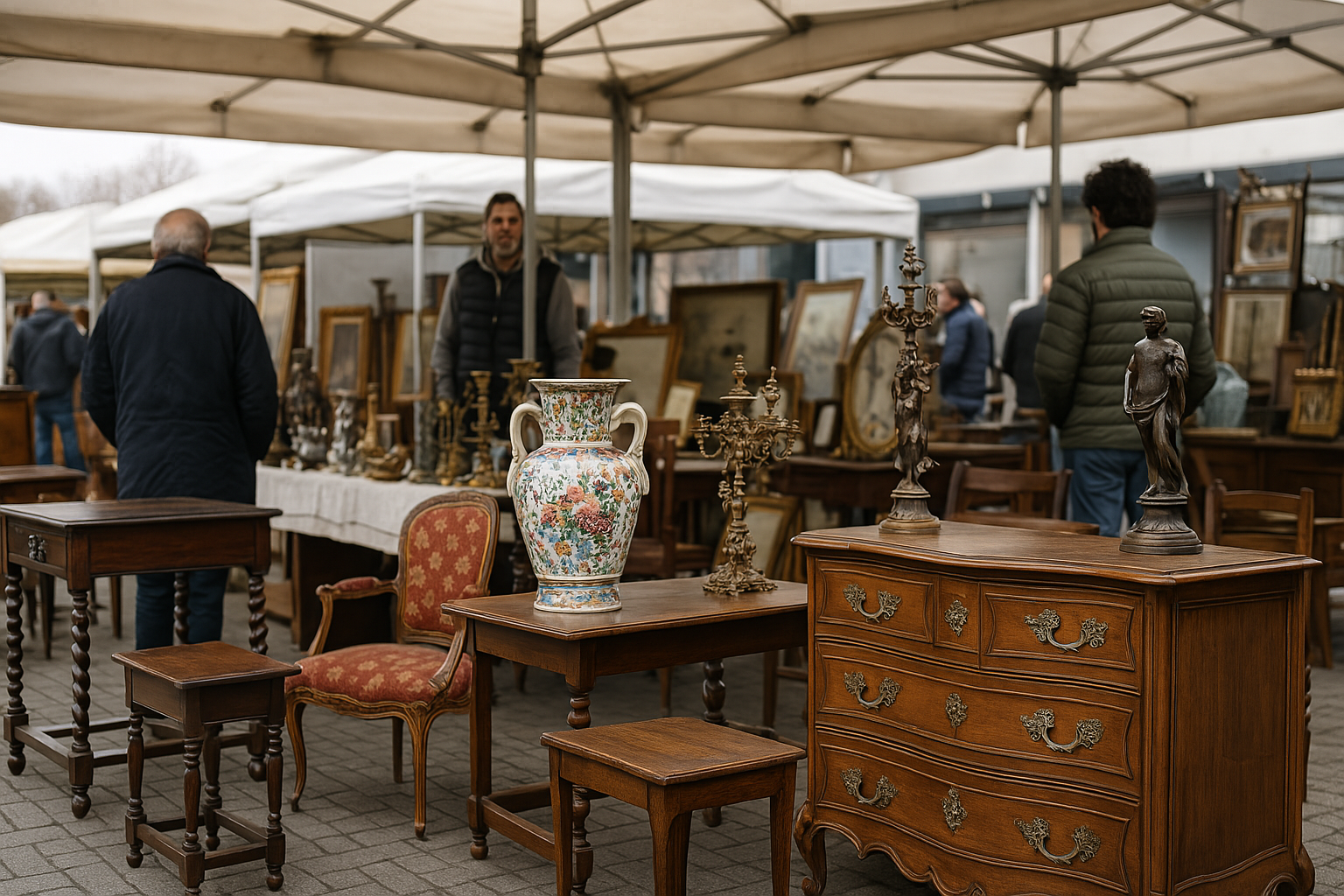
When strolling through the stalls of an antique market, captivated by the beauty of an inlaid piece of furniture, the rarity of an antique print, or the patina of an old clock, one rarely imagines the long journey these objects have undertaken before arriving on that table, under that cloth, in the hands of a knowledgeable vendor. Even more invisible is the work that goes into each individual display: a labor of miles traveled, auctions attended, patient restorations, negotiations, transport, and above all, a passion fueled by decades of experience.
Antique markets, in fact, are not events that are built overnight. Each object on display is the result of continuous, silent, often solitary activity that begins months before the market date itself. The work of the exhibitor is similar to that of a museum curator and, in some cases, even that of an investigator. It is they who must unearth, select, and understand what may be of interest and what is not. But not only that: they must be able to ‘read’ an object, decipher its provenance, identify its stylistic features, distinguish the original from the copy, and assess its condition.
The moment of purchase, for an antique dealer, is anything but impulsive. Each piece must be chosen with care, sometimes treated, sometimes restored. In artisan workshops scattered throughout Italy and Europe, hundreds of objects are cleaned, consolidated, and restored using traditional techniques that respect the era and the material. This type of restoration is not only for “beauty” or functionality, but is an act of respect towards the piece and the future buyer.
Once ready, the objects are carefully packed – because even the smallest bump can compromise a corner, a leg, a slab of marble – and loaded onto vans that often travel hundreds of miles, from one city to another, from one market to another. Exhibitors live a nomadic life, made of early morning wake-ups, set-ups in the rain, waiting, dialogues, and comparisons. The hours before the start of a market are a hive of activity unseen by the visitor: vendors precisely arrange each element, curate the display, clean the objects one by one, and arrange them as in a small personal exhibition.
Because the market, even if outdoors and chaotic, has its own aesthetic. Each exhibitor has a style: some work only with antique books, others bring small pieces of travel furniture, others specialize in folk ceramics, and still others in nineteenth-century silverware. Consistency, quality, and even the way the story of an object is told make all the difference. The best antique dealers know how to sell not only the piece, but its soul: they tell you where it comes from, how it was found, and why it’s interesting.
Many objects displayed in antique markets have had unsuspected lives. An enameled plate found in a barn in the Po Valley could come from a Ligurian furnace from the eighteenth century. An unpretentious beech chair may conceal a hidden signature, a distinctive feature that makes it rare. Some antique dealers specialize precisely in this: in recovering “anonymous” pieces and restoring their narrative and dignity.
Then there’s the fascinating and little-told topic of emotional value. Many objects arrive at antique dealers not through markets or auctions, but from private individuals. Families emptying attics, people deciding to part with an inheritance. Often, unexpected relationships are established: the antique dealer listens, welcomes, explains, and in some cases helps to understand whether an object has value, or only emotional significance. And in that passage, an invisible bond is created, which continues to live even when the object finds a new owner.
Behind every antique market, in short, there is a world that is not seen. It is made of roads traveled at night, of catalogs leafed through for hours, of auctions followed with bated breath, of warehouses full of pieces waiting for their opportunity. But it is also made of silence, of listening, of hands that touch with respect, of voices that tell of the value of things.
When you buy an antique object in a market, you are not just buying a chair or a painting. You are becoming part of a longer journey. And perhaps, precisely for this reason, even just walking around a market means participating, for a moment, in a collective story that continues to live on.