

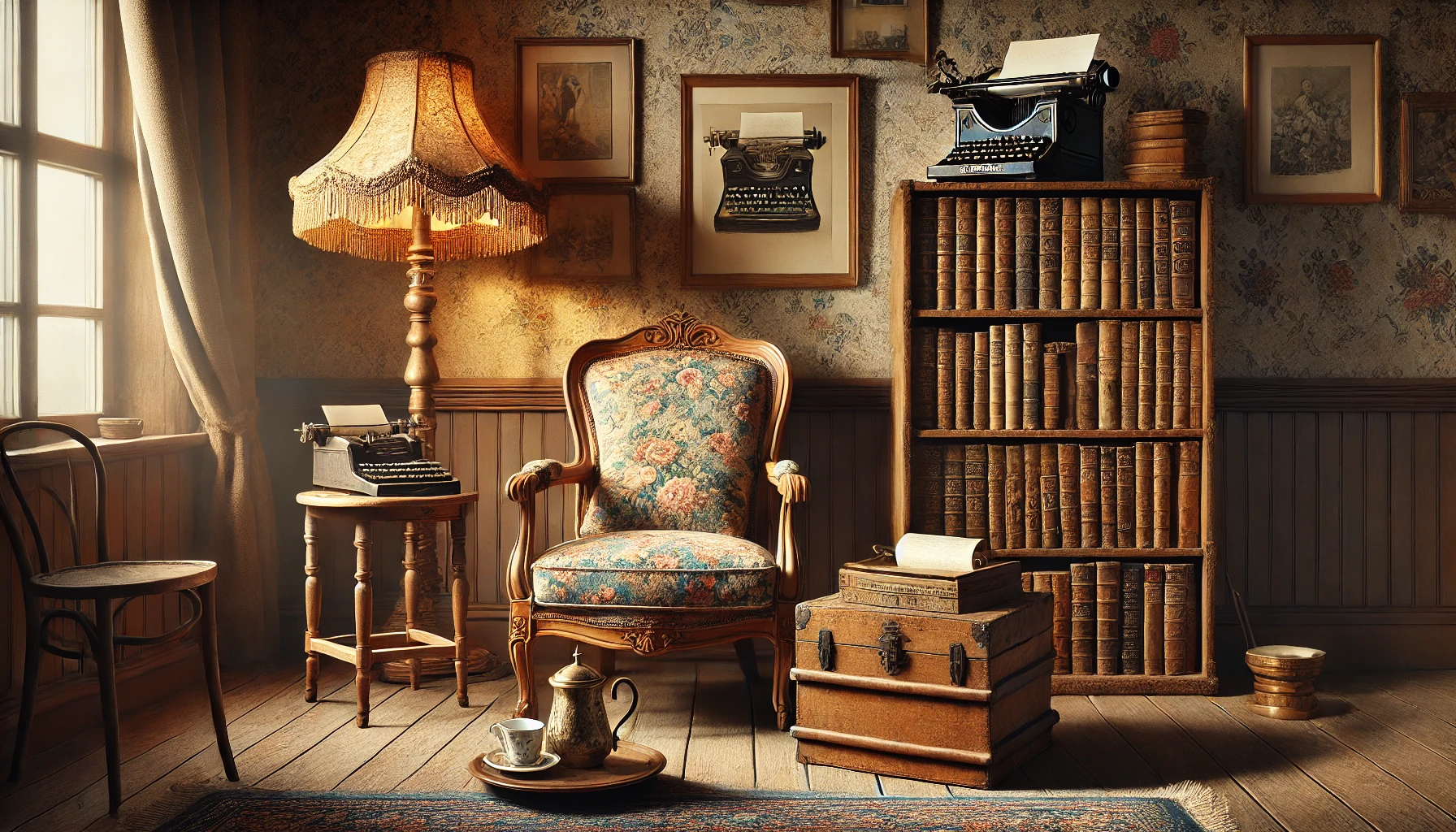
Adding a vintage touch to your home doesn’t mean turning every room into a museum. Sometimes, a small corner dedicated to vintage objects is enough to infuse a sense of warmth and authenticity into your living space. The allure of vintage lies in its ability to tell stories through furniture, accessories, and décor that have lived through another era and carry a unique soul. But how can you create a space that evokes the charm of the past without feeling chaotic or out of place? In this guide, I’ll walk you through creating a vintage corner, explaining how to choose a style, where to find the right objects, and how to integrate them harmoniously with the rest of your décor.
Choosing Your Style and Era
Before you start searching for the items that will compose your vintage corner, it’s essential to decide which historical period you want to evoke. The concept of “vintage” is extremely broad and can range from the elegance of the early 20th century to the colorful energy of the ’60s and ’70s. If you love the refined atmosphere of Art Deco, you might opt for furniture with geometric lines, mirrors with golden frames, and lamps with colored glass shades. If you prefer the warmth of rustic style, you might choose solid wood furniture, wrought iron objects, and decorated ceramic details. For a more retro and pop setting, inspired by the ’50s and ’60s, you could focus on elements like old advertising signs, jukeboxes, Formica chairs, and pastel colors.
The choice of style should also consider the existing décor in your home. A vintage corner shouldn’t feel out of place but should integrate harmoniously with the rest of the environment. If your home has a modern and minimalist look, you can create a fascinating contrast by incorporating an antique piece of furniture or an old typewriter on a designer table. If your home already has a classic feel, you can accentuate this character with vintage details that blend naturally with the surrounding environment.
Where to Find the Right Objects
Once you’ve established the style of your vintage corner, it’s time to look for the items that will bring your vision to life. Fortunately, there are many places where you can find authentic vintage treasures. Antique markets are undoubtedly one of the best places to find unique pieces: strolling through the stalls in search of an old brass alarm clock or a leather suitcase worn by time can be an exciting and rewarding experience. Antique dealers and junk shops are another valuable resource, as they often keep restored objects ready to be placed in your home décor.
If you don’t have the opportunity to visit markets and physical stores, you can always rely on online classifieds sites, auctions, and platforms specializing in the sale of vintage items. However, it’s often necessary to have a keen eye to recognize the authenticity of a piece and assess its real value. Another place often underestimated but incredibly rich in opportunity are family attics and cellars. How often are old objects of great sentimental and historical value forgotten in dusty boxes? Giving a second life to a piece of furniture that belonged to your grandparents or a radio that broadcast songs from another era not only enriches the environment but adds invaluable emotional weight to your vintage corner.
How to Arrange Objects to Create Visual Harmony
The arrangement of elements is a fundamental aspect in creating a balanced and fascinating vintage corner. It’s not simply about accumulating vintage objects in one part of the home but about creating a harmonious composition that tells a story. An old trunk can become a perfect coffee table when paired with a retro-style lamp and some antique books. An antique armchair placed next to a small bookshelf filled with yellowed volumes can transform into a reading nook with a timeless atmosphere.
Lighting plays a key role in enhancing the chosen objects. A warm, soft light, perhaps achieved with an oil lamp or a lampshade with a decorated fabric lampshade, will help create an enveloping and intimate atmosphere. The colors of the walls and fabrics can also make a difference: pastel shades, beige, or shades of sage green blend perfectly with vintage charm. If you want to give more prominence to your vintage objects, you can use wallpaper with retro patterns or paint a wall with a slightly aged tone, such as a cream white or a dusty gray.
Integrating Vintage with Modern for a Balanced Result
One of the most common mistakes when creating a vintage corner is overdoing it with vintage elements to the point of making it look like a theatrical setting rather than a real living space. The secret to a successful result is finding the right balance between old and new. A piece of antique furniture can be enhanced by the presence of a modern lamp, just as an old rotary phone can find space next to a computer. This mix of eras creates an interesting contrast and makes the environment dynamic and original.
If you want your vintage corner to have a more authentic character, don’t be afraid to show the signs of time on the objects. A piece of furniture with some scratches, a suitcase with slightly oxidized buckles, or a frame with the original patina tell a story and add charm to the whole. However, it’s important to take care of these pieces to prevent them from deteriorating further: a light polishing, a gentle cleaning, or a small conservative restoration can keep them in good condition without altering their authenticity.
Conclusion
Creating a vintage corner in your home is a fascinating experience that allows you to give new life to objects from the past and surround yourself with unique pieces of great aesthetic and emotional value. With the right selection of elements, a harmonious arrangement, and a touch of creativity, you can create a space that conveys warmth, history, and personality. Whether it’s a reading corner with an old leather armchair or a table decorated with vintage accessories, vintage has the power to transform a simple space into a place full of charm and suggestion.