

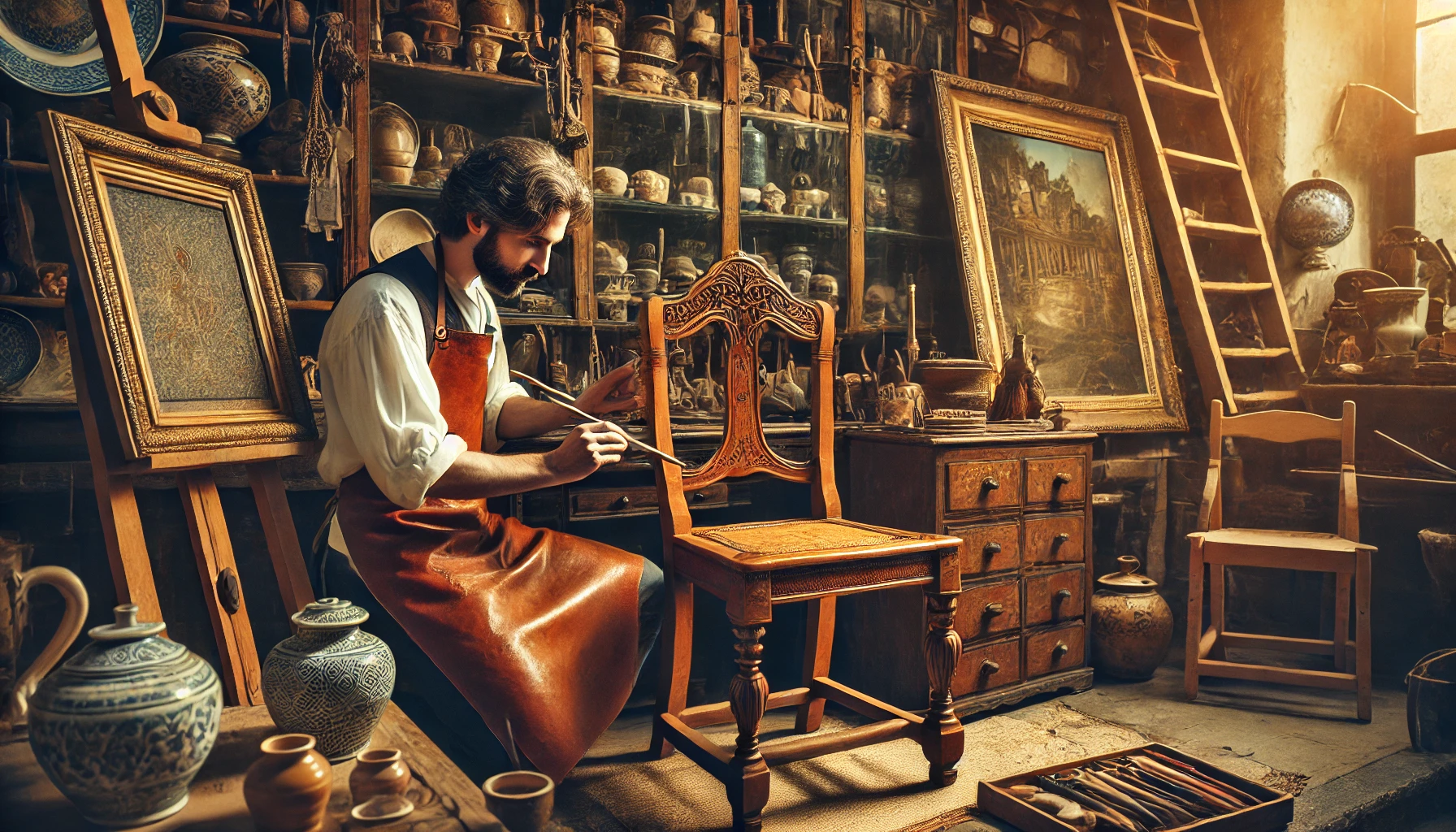
Every antique object carries a story of time, wear, and transformation. Furniture, paintings, sculptures, and precious artifacts suffer the passage of years, risking deterioration to the point of losing their original beauty. To prevent time from erasing these treasures, the art of restoration has become a fundamental discipline in the world of historical and artistic heritage conservation.
But how are antique objects restored without altering their authenticity? What techniques do master artisans use to preserve furniture, paintings, and ancient artifacts? In this article, we’ll explore the fascinating world of restoration, uncovering the secrets that keep the masterpieces of the past alive.
The Importance of Restoration: Saving the Past for the Future
Restoration is not just an aesthetic operation; its primary goal is to preserve the history and identity of a work. Every scratch, every sign of time tells a part of its life, and the restorer’s job is to intervene respectfully, without erasing the memory of time.
In the case of antique furniture, for example, restoration does not mean returning it to a perfect condition as if it were newly built, but rather preserving it in its integrity, maintaining the signs of the era without altering its structure. This also applies to paintings, tapestries, and sculptures: the goal is to restore their stability and legibility without distorting their historic value.
In recent decades, restoration has taken on an increasingly scientific role, integrating traditional craftsmanship with advanced studies on materials and aging processes. Modern technologies, such as the use of X-rays or chemical analyses, help restorers to better understand the composition of a work and to choose the most appropriate methods for its conservation.
Wood Restoration: Recovering Antique Furniture
Wood restoration is one of the most common practices in the world of antiques. Furniture, frames, and decorative wooden objects can suffer damage due to humidity, woodworms, or simply the wear and tear of time.
The first phase of wood restoration is surface cleaning, to remove dust, accumulated dirt, and layers of paint altered by time. Gentle solvents are often used that do not damage the original patina – that thin, natural layer that wood develops over the years, giving antique furniture its lived-in appearance.
If the wood has structural damage, such as cracks or missing parts, the restorer can intervene with wax or resin fillings, which allow filling the gaps without compromising the originality of the object. In more serious cases, when a part of a piece of furniture is irreparably deteriorated, the technique of wood insertion is used, that is, replacing the damaged part with a piece of wood of the same type and color.
A fundamental aspect of wood restoration is woodworm treatment. Woodworms can seriously compromise the solidity of a piece of furniture, digging tunnels inside the wood. Specific products are used to eliminate them, often applied under vacuum or through direct infiltration into the cracks.
Finally, the restored furniture is protected with natural waxes or shellac-based paints, which enhance the beauty of the wood without altering its original texture.
Painting Restoration: An Art of Precision
Painting restoration is one of the most delicate disciplines, because an incorrect intervention can forever compromise a work of art. Ancient paintings, over time, suffer the action of atmospheric agents, dust, and temperature variations, which can cause cracks, fading, and detachments of the paint.
The first step is cleaning the painting, which is done with gentle solvents to remove dirt, soot, and yellowed paints. In some cases, swabs soaked in specific solutions that dissolve the dirt without affecting the original paint are used.
If the color has cracks or detachments, the consolidation of the paint film proceeds, gluing the detached parts with special natural-based glues. When the painting has suffered color loss, the restorer can intervene with pictorial reintegration, which consists of repainting the missing parts with water colors that are perfectly compatible with the original ones. This operation is always reversible, so that it can be removed in the future without damaging the work.
In more complex restorations, advanced technologies such as X-rays and infrared reflectography are used, which allow analyzing the layers of color and identifying any retouching done in previous centuries.
Restoration of Ancient Objects and Metals
In addition to furniture and paintings, metal, ceramic, and glass artifacts may require restoration interventions. Objects made of bronze or silver, for example, tend to oxidize over time, developing a patina that can alter their aesthetics. In these cases, specific solutions are used to remove oxidation without affecting the surface.
For ceramics and glass, restoration is even more complex. If an object is broken, the first step is the consolidation of the fragments, using transparent glues that do not alter the structure. In more complex cases, reconstruction with synthetic materials can be used, which allows recreating the missing parts without damaging the original.
Conclusion
The art of restoration is a discipline that combines science, technique, and artistic sensitivity. Each intervention must respect the authenticity of the object, avoiding irreversible alterations that compromise its historical value. Thanks to the experience of master craftsmen and the use of increasingly advanced technologies, today it is possible to preserve antique furniture, paintings, and artifacts, ensuring that their beauty can be admired for many generations to come.
Restoration is not just an act of conservation, but a true bridge between the past and the future, an art that allows objects to tell their story even in the centuries to come.