

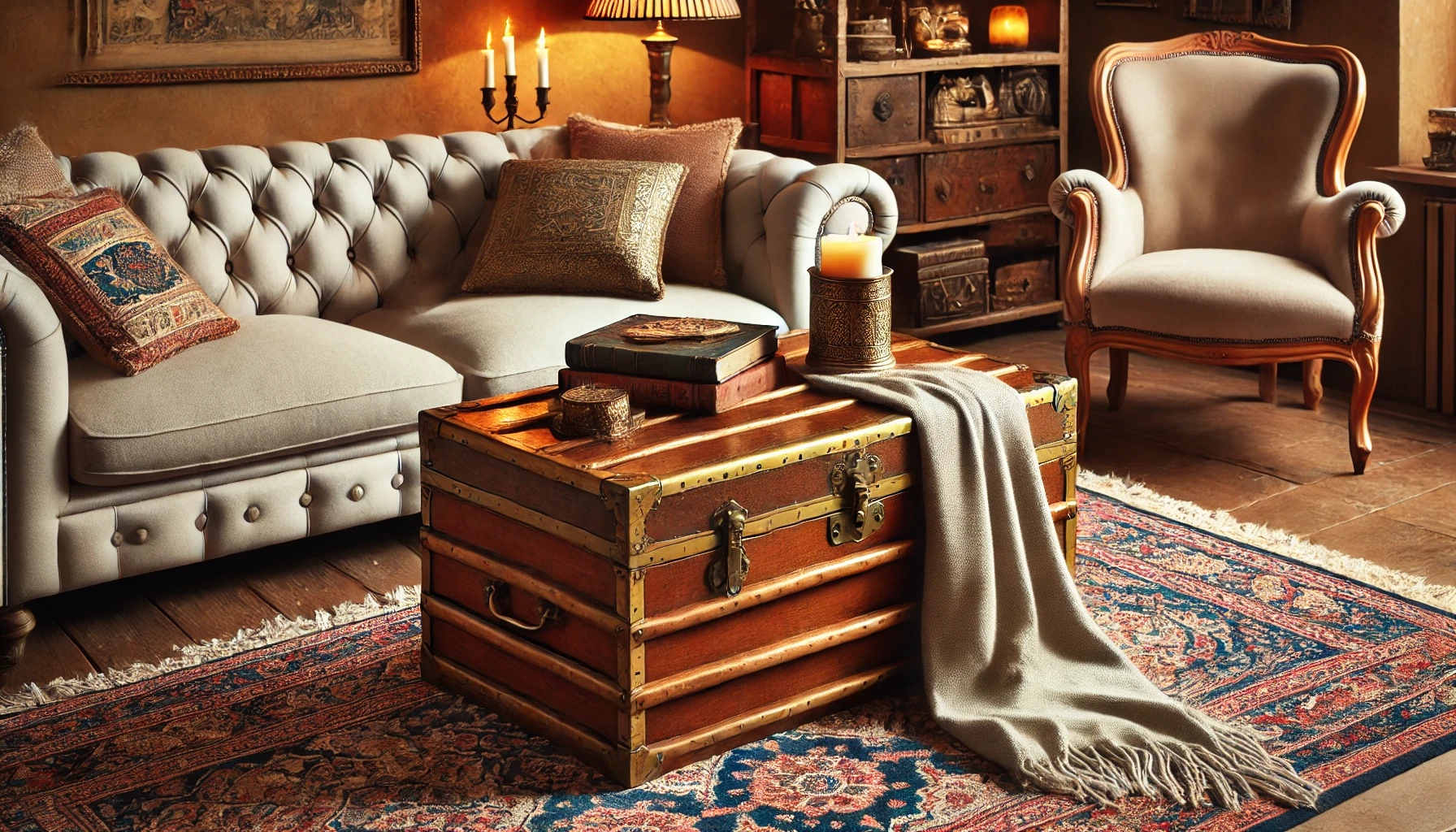
Antique trunks are not just precious relics of bygone eras, but also extremely versatile furnishing elements. Once indispensable for travelers and noble families, these fascinating artifacts are now finding new life in modern homes, becoming coffee tables, elegant storage containers, or even striking decorative elements. However, to seamlessly integrate them into a contemporary setting, it’s often necessary to restore them and reclaim their original beauty. In this article, we’ll explore how to rejuvenate an antique trunk, which techniques to use for cleaning and restoration, and how to transform it into a functional and charming addition to your home decor.
How to Assess the Condition of an Antique Trunk
Before embarking on the restoration, it’s crucial to analyze the trunk’s condition to understand which interventions are necessary. A primary aspect to verify is the structural integrity: checking that the wood doesn’t have deep cracks, signs of woodworms, or rotten parts is essential to ensure the object’s sturdiness.
Metal parts, such as hinges, locks, and reinforcements, often show signs of oxidation or rust. In some cases, the patina of time adds character to the object, but if the metal is too corroded, specific treatment may be necessary to restore its original functionality and beauty.
Another important aspect is the presence of interior linings. Many antique trunks were lined with decorative paper or fine fabrics, but over the years these materials may have deteriorated. If the interior lining is severely compromised, you might consider replacing it with a similar fabric to maintain the original style.
Cleaning and Restoring the Trunk
Once you’ve assessed the trunk’s condition, you can proceed with cleaning and restoration. The first step involves removing dust and dirt accumulated over time. For wood, it’s advisable to use a soft cloth lightly dampened and, if necessary, a solution of lukewarm water and mild soap. For more stubborn encrustations, you can use fine steel wool or a soft-bristled brush to avoid damaging the surface.
To remove rust from metal parts, an effective method is to use a mixture of white vinegar and baking soda. Applying this solution with a cloth and gently rubbing, you can reduce oxidation without compromising the metal. If the rust is deeper, you can use specific commercial products or a fine-bristled wire brush.
If the trunk shows signs of woodworms, an anti-woodworm treatment is essential. There are specific products available on the market that can be applied to the infested areas, then sealing the trunk in a plastic bag for a few days to ensure the treatment is effective. After this procedure, it’s advisable to apply a protective wax to nourish the wood and preserve its beauty.
Ideas for Repurposing an Antique Trunk
A restored antique trunk can be transformed into an original and functional piece of furniture, capable of adapting to different rooms in the house.
One of the most common uses is as a coffee table. Placed in front of a sofa, a vintage trunk can become an elegant surface for books, candles, and small decorative objects. If you want a more refined effect, you can add a glass top to protect it and make it more practical.
In the bedroom, an antique trunk can be placed at the foot of the bed as a storage container for blankets, pillows, or linens. This not only enhances its original function but also adds a touch of charm to the room.
In the entryway, a trunk can become a practical solution for storing shoes or accessories, while also serving as a bench to sit on while putting on footwear. If it has a still-functioning lock, it can also be used to store valuables discreetly and securely.
Finally, a vintage trunk can also find its place in a study or library, becoming an original storage unit for documents, magazines, or work tools. If the trunk has a particularly fine interior lining, leaving it open with antique books on display can create a dramatic and impactful effect.
Conclusion
Restoring an antique trunk and repurposing it creatively not only allows you to preserve a piece of history but also enriches your home with a unique furnishing element with timeless appeal. With the right restoration techniques and a bit of imagination, it’s possible to give new life to these extraordinary objects, transforming them into design elements that combine elegance, practicality, and a touch of nostalgia.