

By Marco Bellini, journalist specializing in antiques — Updated: March 10, 2026
Over 20 years of experience in telling stories of rare objects, private collections and period paintings between antique markets and European galleries.
Note of direct experience: this article is born from years of visits to antique shops, auction houses and private collections, where I was able to observe hundreds of antique paintings up close, talking with restorers, art historians and collectors.
Why learn to recognize an antique painting
Those who love antiques know it: every object carries a story with it.
But in front of an antique painting that story becomes even more alive. The brushstrokes tell the artist’s gesture, the colors reveal the era, while the style tells us about the culture and sensitivity of a historical period.
Many enthusiasts think that to understand an antique painting requires years of academic study. In reality, this is not always the case. With a little attention and curiosity, it is possible to learn to recognize some fundamental signals: the quality of the brushstrokes, the choice of colors, the composition and the general style.
This article was created with the idea of accompanying you on this journey. Not an academic lesson, but a practical guide to observe paintings with more attentive eyes and discover what lies behind the surface of a canvas.
How to observe an antique painting: where to start
When you are in front of an antique painting, the first instinct is often to look for the artist’s signature. It is understandable, but in reality it is not the most important thing.
Expert antique dealers almost always start from three elements:
- The brushstroke
- The color palette
- The compositional style
These aspects are like clues in a small artistic investigation. Even without knowing the painter, they can suggest the era or school of belonging.
A simple tip: observe the painting from two different distances. First from afar, to grasp the whole, then up close, to discover the details of the pictorial material.
Often it is just a few centimeters from the canvas that the most interesting stories emerge.
The brushstrokes: the gesture of the artist
The brushstroke is probably the most personal sign of a painter.
Every artist, like every calligrapher, develops a unique gesture over time.
In antique paintings we can recognize different types of brushstrokes.
Soft and blurred brushstroke
Typical of many works between the sixteenth and seventeenth centuries.
The artists tried to make the light transitions almost invisible, creating velvety and delicate surfaces.
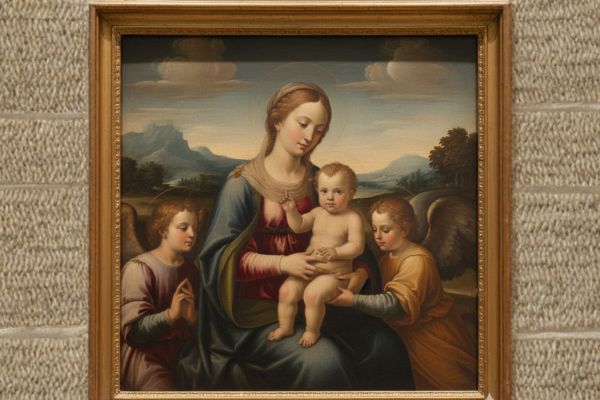
In these cases the brushstrokes are difficult to distinguish: the color almost seems to merge into the canvas.
This technique required great patience and numerous layers of color.
Visible and material brushstroke
Over the centuries, especially between the eighteenth and nineteenth centuries, some painters began to leave the pictorial gesture more evident.
The brushstrokes therefore become:
- wider
- more dynamic
- often overlapping
Looking closely you can perceive real reliefs on the surface.
For many collectors this feature makes the painting even more fascinating: it is like seeing the artist’s hand in motion.
The colors: the palette of the eras
Another very interesting element for recognizing an antique painting is the choice of colors.
In the past, artists did not have the same pigments available as today. The colors were produced with natural materials: earths, minerals and vegetable pigments.
This profoundly influenced the appearance of the works.
The warm colors of the seventeenth century
Many paintings of the 17th century have deep and intense tones:
- brownish reds
- golden ochre
- dark greens
- velvety blacks
The light often emerges from a dark background, creating a theatrical effect.
This chromatic style was very common in religious paintings and portraits of the time.
The bright colors of the eighteenth century
In the eighteenth century the palette lightens.
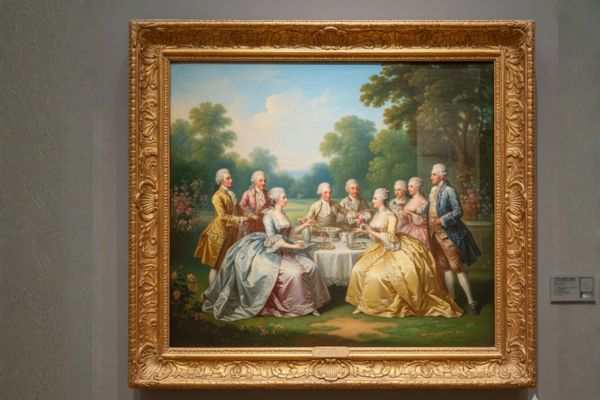
Artists begin to use:
- more delicate blues
- bright pinks
- light greens
- pastel shades
Many scenes become lighter and more decorative: landscapes, scenes of daily life, aristocratic parties.
Observing the colors you can therefore guess a lot about the historical period.
The style: the personality of an era
If brushstrokes and colors are technical clues, the style is the cultural expression of a period.
Every era has had its own artistic sensibility.
Paintings of the Renaissance
Characterized by balance and harmony.
The figures are often composed with great attention to proportion and perspective. The scenes appear orderly, almost serene.
Baroque painting
Here everything becomes more dramatic.
The compositions are dynamic, the contrasts of light very strong and the emotions of the characters more intense.
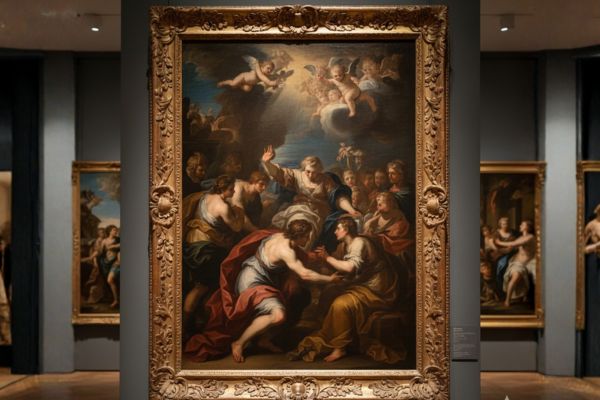
Looking at a Baroque painting you often have the feeling of witnessing a theatrical scene.
Nineteenth-century painting
In the nineteenth century the artistic world changes profoundly.
Many painters begin to paint landscapes, scenes of daily life or intimate moments of domestic life.
Painting becomes more personal, less linked to religious or mythological themes.
Small details that tell a lot
Antique dealers and restorers often observe details that may seem insignificant to non-experts.
Among these:
- the canvas or panel on which the painting is painted
- the type of protective varnish
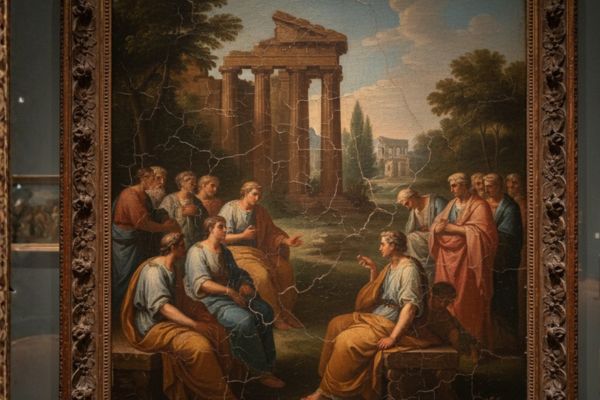
- the cracking of the surface
The small cracks in the painting, called craquelure, form naturally over the decades.
They are not defects, but traces of time that make the painting even more authentic.
Of course, it is necessary to distinguish between natural aging and modern imitations. And this is where the experience of antique dealers and restorers comes into play.
The charm of the stories behind the paintings
One of the best things about collecting is discovering the history of objects.
Behind every antique painting there may be surprising events: passages between collectors, travels across Europe, family inheritances or chance rediscoveries.
I still remember a small nineteenth-century landscape found years ago in a country house. Apparently it was a simple, almost anonymous painting. But a careful analysis revealed an interesting hand and an unexpected provenance from a private collection.
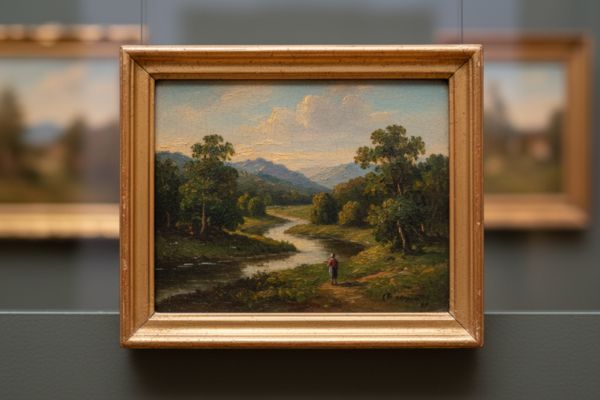
This is precisely the most exciting side of antiques: every object can become a small adventure.
How to train the eye over time
Recognizing an antique painting is not a skill that is born in a day.
It develops slowly, observing many works.
Here are some useful tips for training the eye:
- visit museums and art galleries
- observe authentic paintings at antique fairs
- compare different styles
- talk to antique dealers and restorers
The more you observe, the easier it becomes to recognize details and differences.
It’s a bit like learning a new language: at first everything seems the same, but over time the nuances become evident.
The role of experts and appraisals
Even the most trained eye has limits.
When it comes to buying an important painting, it is always advisable to rely on professionals in the sector.
Experts can analyze:
- pigments and materials
- painting techniques
- historical provenance
- documentation
These checks allow to establish with greater certainty authenticity and value of the work.
For a collector, having a reliable appraisal is essential.
Why antique paintings continue to fascinate us
In an era dominated by speed and digital images, antique paintings retain a special charm.
Each canvas is the result of hours, days or months of manual work.
Each color has been carefully chosen.
Each brushstroke represents a precise moment in the life of an artist.
Looking at an antique painting therefore means coming into contact with a fragment of the past. Not only art history, but human history.
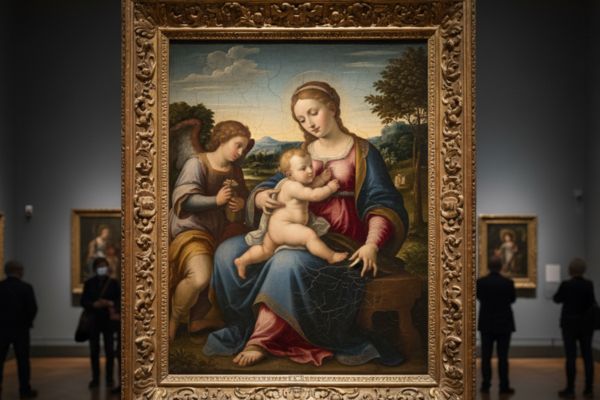
Perhaps this is what makes antiques so irresistible.
Learning to recognize brushstrokes, colors and styles of the era does not mean immediately becoming art experts. It simply means observing more carefully.
An antique painting is not just a decorative object.
It is a testimony of time, culture and the imagination of those who created it.
The next time you find yourself in front of a painting in an antique gallery or in an art market, stop a few more minutes.
Look at the brushstrokes.
Observe the colors.
Let yourself be guided by the style.
You might discover that that canvas has much more to tell than you thought.
Author
Marco Bellini — Journalist and author specializing in antiques
For over twenty years he has been telling the world of period objects, from European private collections to the most fascinating antique markets. He collaborates with galleries, restorers and auction houses to document the history and cultural value of antique paintings, with particular attention to painting between the 17th and 19th centuries.