

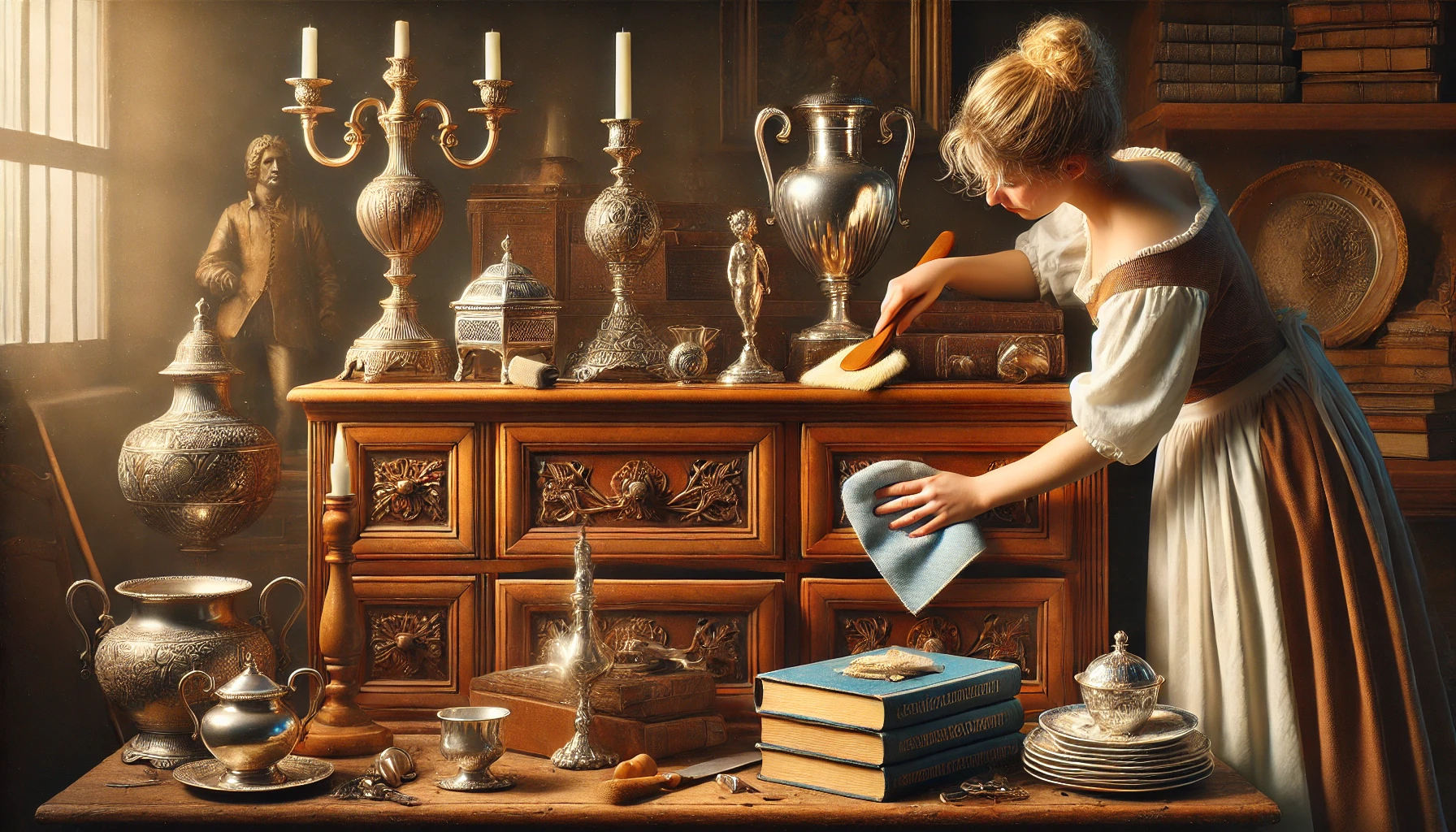
Antiques are unique pieces that tell the story and artistry of bygone eras. To keep them in perfect condition over time, it’s essential to use appropriate cleaning and maintenance techniques, avoiding harsh products or methods that could compromise their integrity. This guide will show you how to care for antique furniture, metals, ceramics, fabrics, and books, preserving their beauty and value.
1. Cleaning and Maintaining Antique Furniture
Antique furniture is often made with fine woods and delicate finishes. Here’s how to care for it:
Dust Removal: Use a soft microfiber or cotton cloth to remove dust without scratching surfaces.
Deep Cleaning: Avoid harsh chemical products. For gentle cleaning, mix lukewarm water with mild soap and apply with a soft cloth.
Polishing: Use natural beeswax or specific antique furniture oils to nourish the wood and protect it from moisture.
Protection from Light and Humidity: Avoid direct sunlight and heat sources to prevent fading and warping.
2. Caring for and Cleaning Antique Metals and Silverware
Silver, bronze, copper, and brass items require specific cleaning to prevent oxidation or surface damage.
Silver: To remove oxidation, use a soft cloth and a specific silver cleaner. For a natural solution, mix baking soda and water.
Bronze and Brass: Clean with a mixture of vinegar and salt, applying with a soft cloth and rinsing with lukewarm water.
Avoid Abrasion: Do not use metal sponges or harsh chemicals that could scratch the surface.
3. Cleaning and Preserving Ceramics and Porcelain
Antique ceramics, especially hand-painted ones, are very delicate and must be treated with care.
Gentle Cleaning: Wash with lukewarm water and mild soap, avoiding prolonged immersion.
Avoid Thermal Shock: Do not use water that is too hot or cold to prevent cracks or surface damage.
Storage: If you have fragile pieces, store them in closed display cases or with fabric supports to avoid bumps and falls.
4. Maintaining and Cleaning Antique Fabrics and Tapestries
Antique fabrics, such as carpets, tapestries, and vintage curtains, require special attention to preserve their colors and integrity.
Regular Dusting: Use a low-power vacuum cleaner with specific attachments for delicate fabrics.
Washing: Avoid machine washing. In case of stains, use a damp cloth with mild soap, dabbing gently.
Protection from Humidity: Store fabrics in dry environments to prevent mold and fiber deterioration.
5. Cleaning and Preserving Antique Books and Documents
Antique books and documents are particularly sensitive to humidity, light, and dust.
Dust Removal: Use a soft-bristled brush to gently clean the pages and covers.
Protection from Humidity: Store books in dry environments with good air circulation.
Exposure: Avoid direct sunlight to prevent yellowing and paper deterioration.
Conclusion
Taking care of antiques means preserving their history and value over time. With the right care and appropriate cleaning methods, it is possible to maintain antique furniture, metals, ceramics, fabrics, and books in optimal condition, ensuring they continue to tell their stories to future generations.