

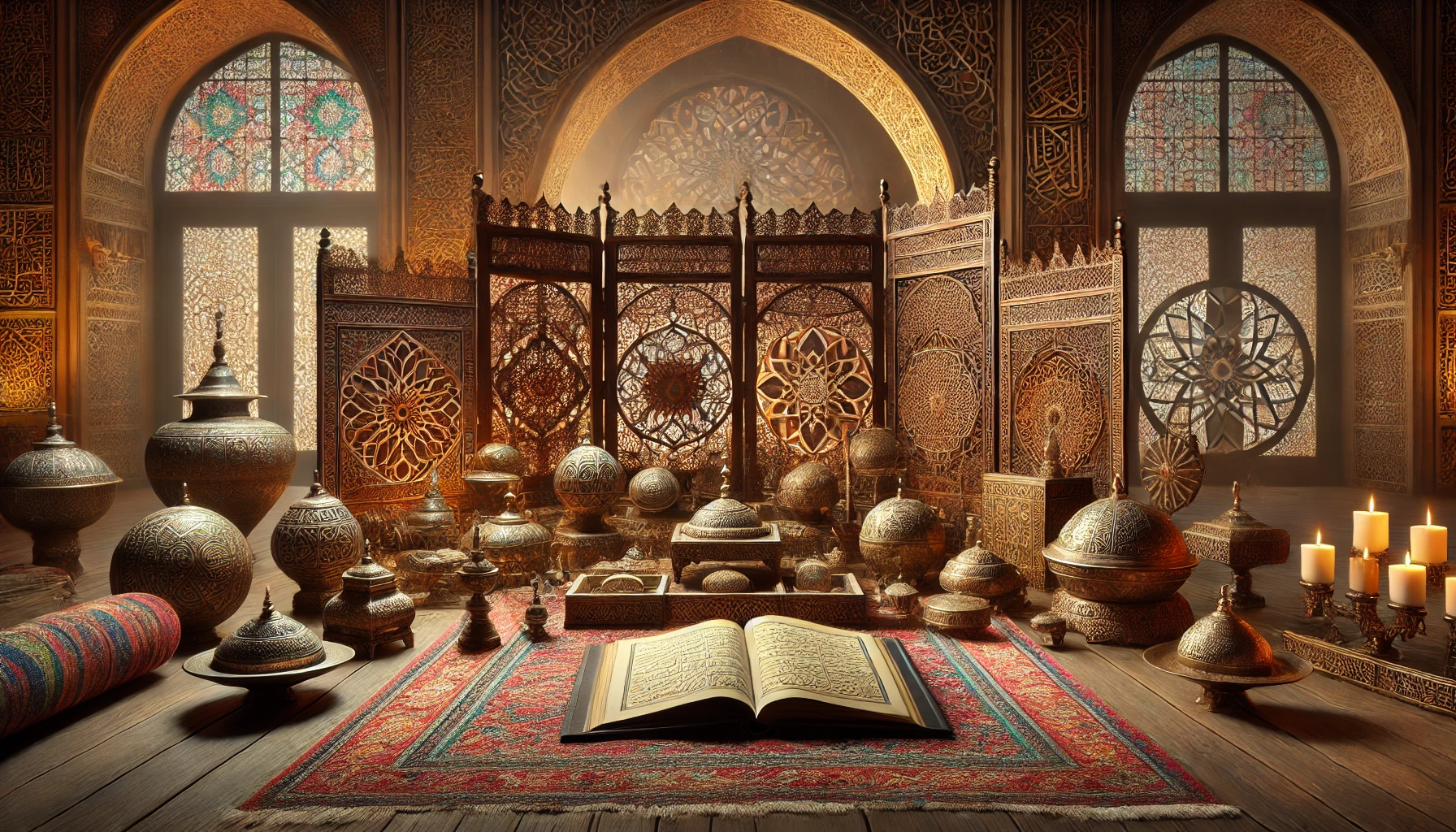
Islamic antiquities represent one of the most refined and historically rich artistic expressions, characterized by extraordinary attention to detail, deep symbolism, and unparalleled craftsmanship. Islamic art and design have influenced decorative traditions worldwide for centuries, from Moorish Spain to Persia, from the Ottoman Empire to Mughal India. Each Islamic antique is a witness to the past, carrying beauty, culture, and profound meaning.
1. Characteristics of Islamic Antiquities
Islamic art is distinguished by unique stylistic and decorative elements, developed in accordance with religious principles and geometric and calligraphic aesthetics. The main characteristics of Islamic antiquities include:
- Geometric Patterns and Arabesques: The absence of direct figurative representations, due to religious traditions, led Islamic artists to develop intricate geometric and floral decorations. Arabesques, created with remarkable mathematical precision, generate illusions of movement and depth.
- Ornamental Calligraphy: Arabic script is considered a sacred art and is widely used in decorating furniture, ceramics, carpets, and metal objects. Inscriptions often feature Quranic verses, poetry, prayers, or auspicious sayings.
- Refined Materials: Islamic antiquities are known for their use of precious materials, including inlaid wood, glazed ceramics, finely crafted metals (bronze, brass, and silver), blown glass, and luxurious textiles such as silk and velvet.
- Symmetry and Modularity: Islamic art is based on perfect visual balance, with symmetrical and modular repetitions that express the concept of infinity and cosmic order.
2. Major Centers of Islamic Antiquities Production
Islamic art developed across various empires and dynasties, each leaving behind an extraordinary artistic and artisanal legacy.
- The Persian World: Iran and the Safavid Persia (16th-18th century) are renowned for hand-knotted carpets, miniature paintings on paper, and glazed ceramics in shades of blue and turquoise.
- The Ottoman Empire: Ottoman Turkey (14th-20th century) produced some of the finest objects, including inlaid wooden furniture with mother-of-pearl, textiles embroidered with gold and silver, and Iznik ceramic tiles, famous for their floral and calligraphic motifs.
- Mughal India: The Mughal period (16th-18th century) saw the creation of jewelry adorned with precious stones, inlaid ivory artifacts, miniatures depicting courtly scenes, and lacquered furniture with ivory and metal inlays.
- Andalusia and North Africa: Moorish influences in Spain and the Maghreb region led to the creation of decorative plasterwork (muqarnas), perforated metal lamps, and painted furniture with arabesque motifs.
3. Objects and Artifacts of Islamic Antiquities
Islamic antiquities encompass a wide variety of objects, varying by region and historical period.
- Persian and Ottoman Carpets: Created using hand-knotting techniques, Islamic carpets are not only decorative elements but also valuable investments in art. Each carpet tells a story through its floral, geometric, and calligraphic motifs.
- Inlaid and Lacquered Furniture: Islamic furniture is distinguished by meticulous craftsmanship, with details in mother-of-pearl, bone, or ivory. Credenzas, chests, and Ottoman thrones were often adorned with calligraphic engravings and arabesques.
- Perforated Metal Lamps and Lanterns: Islamic artisans perfected metalwork, creating brass and copper lamps and lanterns with intricate perforations, casting mesmerizing light and shadow effects.
- Glazed Tiles and Ceramics: Iznik tiles and Persian ceramics are among the most sought-after pieces, known for their vibrant colors and intricate designs. These were used to decorate palaces, mosques, and noble residences.
- Weapons and Engraved Metal Objects: Swords, daggers, and shields adorned with calligraphic inscriptions and floral motifs were symbols of power and were often commissioned by sultans and dignitaries.
4. The Market for Islamic Antiquities Today
Islamic antiquities are highly valued in the world of collecting, but it is a field that requires knowledge and caution.
- Authenticity and Provenance: Increasing demand has led to a rise in counterfeits and modern reproductions. It is crucial to purchase from reputable dealers and request authenticity certificates.
- Preservation and Restoration: Ancient Islamic objects require specific care. Inlaid surfaces must be protected from humidity, carpets need delicate cleaning, and ceramics must be handled with extreme care.
- Historical and Cultural Value: Beyond their aesthetic and economic worth, Islamic artifacts hold significant historical and cultural importance. Some pieces, particularly those of religious origin, should be treated with appropriate respect.
Conclusion
Islamic antiquities serve as a remarkable testament to the culture and artistry of civilizations that shaped the history of the Mediterranean, the Middle East, and Asia. Each object tells a story of masterful craftsmanship and aesthetic refinement, making it a precious element in the world of collecting and antique furnishing.
Are you fascinated by Islamic art? Which object or style intrigues you the most?