

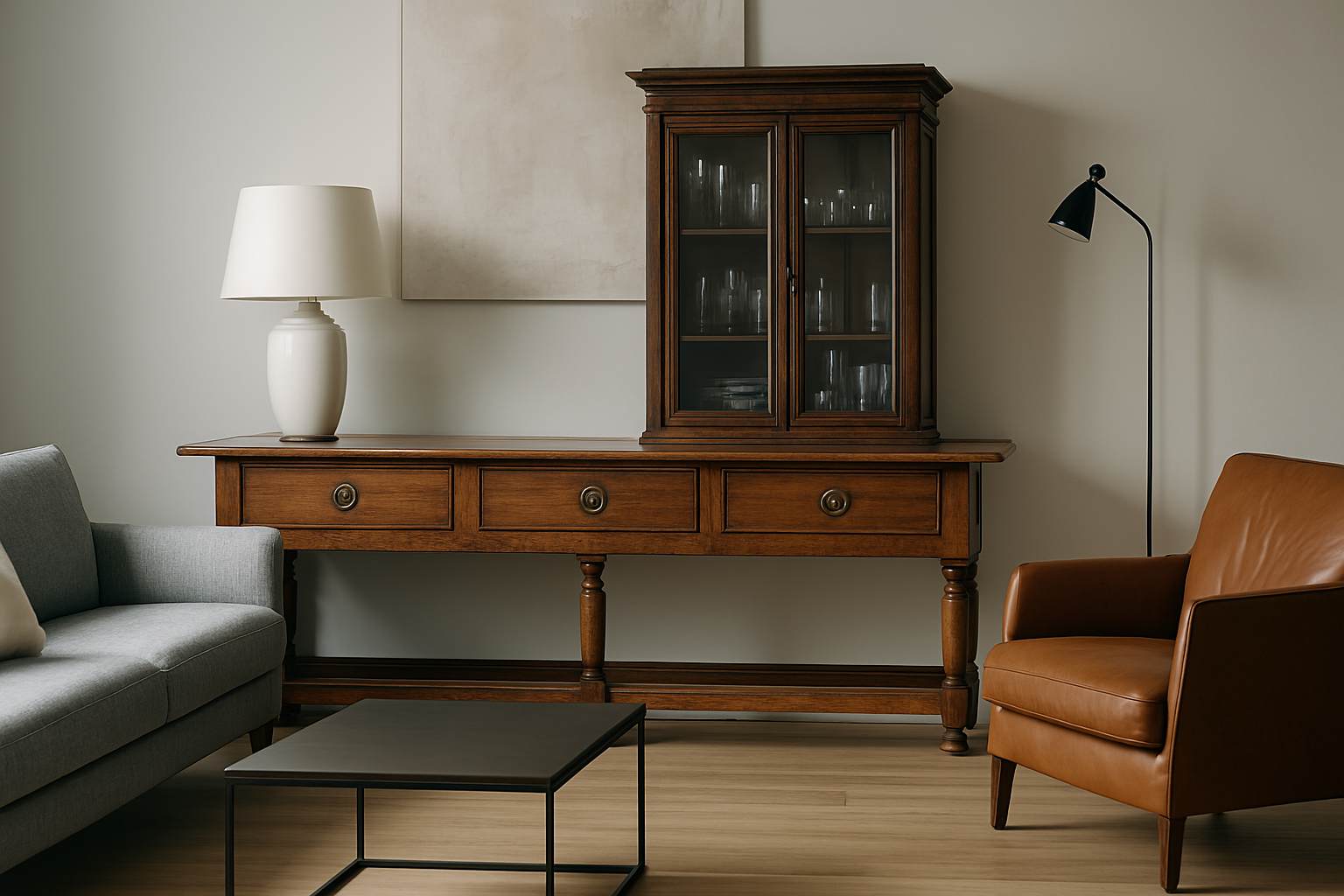
Integrating antique furniture into homes with a contemporary aesthetic is one of the most fascinating challenges in modern interior design. Far from the notion that antiques should only reside in period homes or classically styled environments, more and more architects and interior designers are rediscovering the value of contrast, visual layering, and the hybridization of distant styles. In this context, antique furniture becomes a vibrant, charismatic presence, capable of imprinting character and depth even on the most minimalist spaces.
This isn’t just an aesthetic game, but a subtle dialogue between eras, materials, proportions, and atmospheres. When well-calibrated, this integration can transform an otherwise impersonal interior into a unique space where identity and memory merge with functionality and innovation.
For example, an 18th-century dining table placed at the center of a kitchen with resin or steel surfaces doesn’t disrupt the harmony of the environment; it enriches it. The imperfections of the antique wood, the signs of wear, and the worn grains dialogue with the linearity of the new surfaces, offering a warmer and more authentic visual experience. Similarly, a 19th-century display cabinet inserted into a minimalist living room can become not only a focal point but also a sort of visual narrative, a treasure trove of objects that breaks the monochrome and restores depth to the space.
The secret to integrating antique furniture into modern environments lies in measure. You don’t need to fill the house with period pieces to achieve an interesting effect. A few pieces, carefully chosen and placed in strategic locations, are enough to create a harmonious tension between past and present. A neoclassical chest of drawers can find its place in a contemporary entryway, becoming a surface for a designer lamp. An old sideboard, flanked by modern leather seats, creates a play of material references that stimulates sight and touch.
Many contemporary designers play precisely on these combinations: essential lines interrupted by a carved piece of furniture, smooth materials juxtaposed with rough and aged surfaces. Antique furniture is no longer seen as “out of place” but as a narrative element, capable of adding meaning and soul. The house thus becomes a space that tells a story, but does so in a personal, non-didactic way, without nostalgia but with awareness.
Another interesting aspect of this coexistence is the chromatic balance. The warm tones of antique wood – walnut, cherry, chestnut – perfectly dialogue with modern neutral palettes such as grays, taupes, and sands. Finally, the use of lighting plays a crucial role: well-studied lighting can enhance the constructive details of a period piece of furniture even in an urban and minimalist context.
In a world that tends towards standardization, the antique object is today more than ever a gesture of authenticity. Not only for its historical or material value but for its power to evoke, to ground the space, to create emotion. Integrating the old into the new is not a passing trend but a cultural choice that speaks of respect, memory, and timeless beauty.