

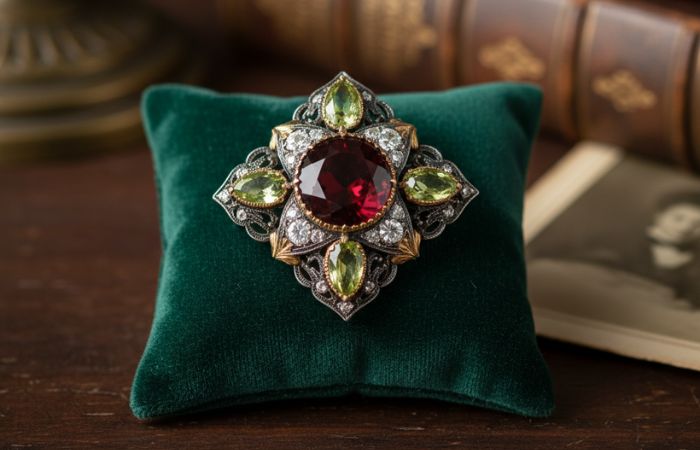
There’s a particular moment that every antique enthusiast knows well. It’s that first instant when you lay your eyes on an antique object and perceive, without rational explanations, that it has something to tell. In 19th-century bijoux, this moment is even more intense. It’s not just visual beauty, it’s not simple craftsmanship or luxury: it’s liquid memory, imprisoned in gold, stones, enamelling, in the tiny details that survive time. Holding a Victorian brooch or a handmade ring over a hundred years old means feeling history pulsing under your skin, as if every gesture of the hands that created it were still there, suspended between present and past.
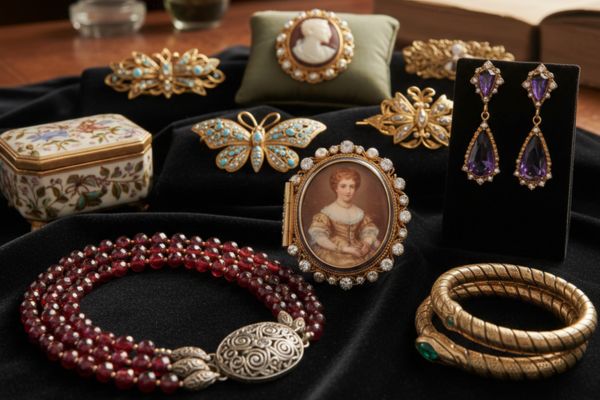
Many collectors, when approaching these pieces, start by looking at the object in a technical way, looking for marks, hallmarks or materials. But 19th-century bijoux ask for something more: they ask to be listened to. Every small engraving, every nuance in the gold, every imperfection in a stone is a breath of time. It is the voice of the wearer, of the giver, of the one who carefully guarded it. Ignoring this dimension means losing the very essence of the jewel.
The hidden charm of the hands of the past
I often think of the artisans of the 19th century, of those skilled hands that worked metals and stones with patience, passion and an almost religious respect for the material. There were no industrial machines like today: every gesture was human, unique, unrepeatable. A handmade clasp, a gold thread precisely shaped, a small cameo meticulously carved: every detail bore the imprint of the creator. And today, when we dwell on these bijoux, we can still perceive that presence.
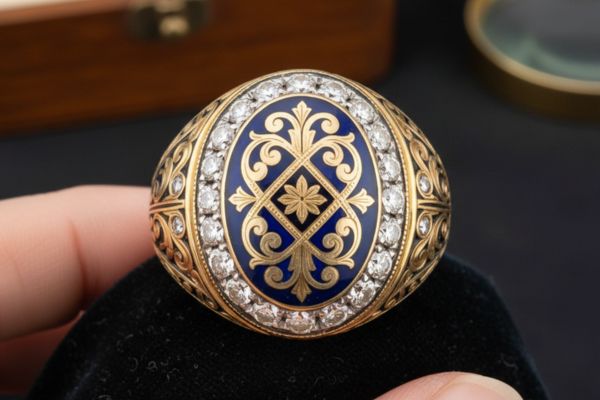
Observing an authentic jewel means feeling this silent mastery. Take, for example, a Victorian ring with enamel and diamonds. From afar it is beautiful, of course, but only by looking at it closely do you notice the irregularity of the stones, the small imperfection of the enamel, the warmth of the gold that has absorbed light and hands for more than a hundred years. These small details are not defects: they are living testimonies of time, and ignoring them means losing the poetry of the object.
The patina of time: reading the life of a jewel
One of the most fascinating aspects of vintage bijoux is the patina. It is something that cannot be artificially replicated: it is the subtle trace that time leaves on materials. A soft, slightly darkened gold, a pearl that has lost some of its original brilliance, a small dent in the silver: everything tells a story. And every story is unique.
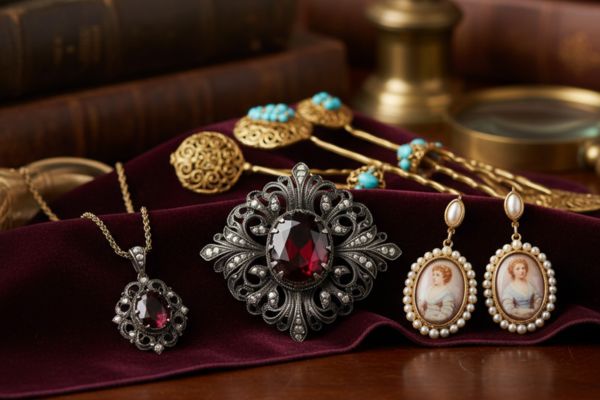
When you look at a jewel, try to ask yourself: how many hands have touched it? How many times has it been worn, admired, caressed? The patina is the sign of these past lives. It is not just aesthetics: it is emotion, it is memory, it is connection. And it is this connection that makes a vintage bijoux infinitely more precious than a modern object, however perfect it may seem.
The art of details
If you really want to get closer to the world of 19th-century bijoux, you have to learn to read the details like an open book. The clasps, the mountings, the small hidden hallmarks: every element speaks, if we know how to listen. Some jewels bear the marks of the jeweller, often so small as to be almost invisible. Others have intimate engravings: initials of those who received them as gifts, dates of important events, symbols that tell of affective or religious bonds.
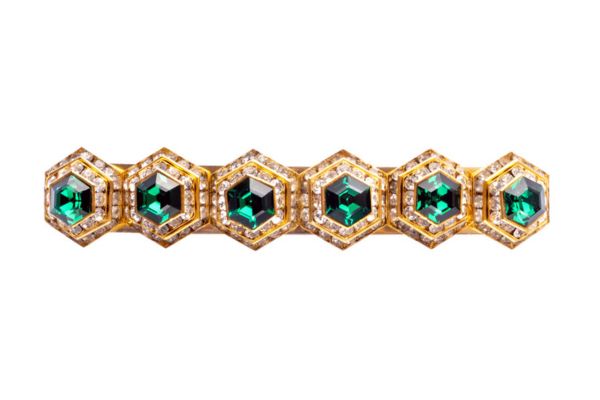
These details transform an object into something alive. They are not mere decorations: they are messages, small bridges between past and present. And here is born the magic of bijoux: we are not just looking at gold and stones, we are reading stories of love, friendship, memories that have crossed centuries.
Materials that breathe
The use of materials in the 19th century is another aspect that never ceases to amaze. Gold, silver, enamels, natural pearls, diamonds and precious stones were carefully selected, and combined in ways that today seem almost poetic. Observing an authentic bijoux, you perceive the respect for the material: each stone is chosen to harmonise with the whole, each gold thread is shaped to enhance the light and shapes.
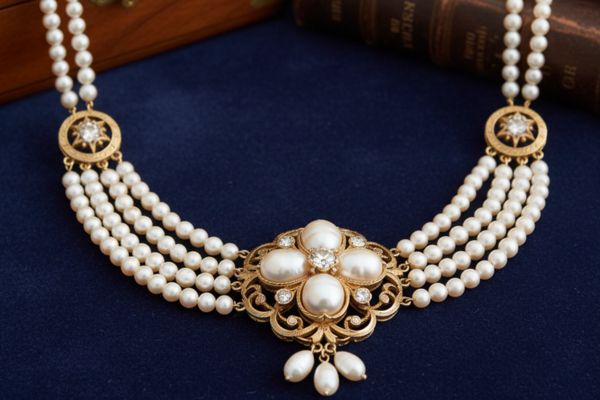
Natural pearls, for example, have a warmth that cultured or synthetic pearls do not possess. They seem to breathe, and their irregularity is a sign of authenticity. Enamels may have small cracks, signs of time that tell their story without the need for words. And also the precious stones: cuts not perfectly regular, facets a little imperfect, reflections that change in the sunlight. Every imperfection becomes poetry.
Fashion and symbolism
A 19th-century bijoux is never just decorative. It is a mirror of the fashions, tastes, emotions of the time. Romantic brooches, hearts, love knots, religious symbols, cameos with female faces or mythological scenes: each piece tells something about its world. Recognising these influences allows us to place the jewel in its historical context and appreciate it in its entirety.
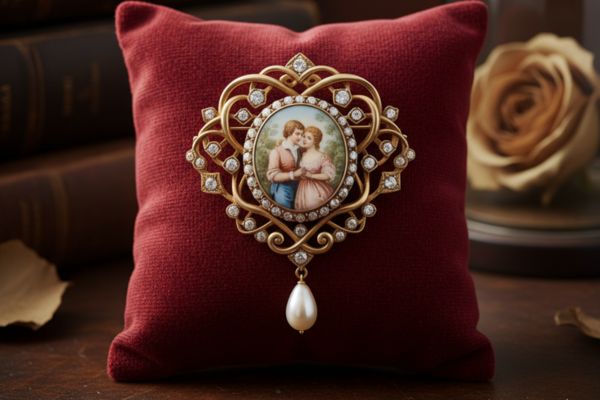
But there is more: many pieces were love gifts, amulets, family memories. In them, symbolism is intertwined with beauty, and knowing these meanings brings us even closer to the history of the object. It is not just a question of technique or economic value: it is pure emotion.
Mistakes to avoid
The biggest risk when approaching vintage bijoux is to look only for aesthetic perfection or material value. You can be deceived by replicas, fakes, poorly restored pieces. But authenticity is not measured only with instruments: it is perceived, it is felt. The lightness of the metal, the softness of a stone, the depth of a patina: everything communicates.
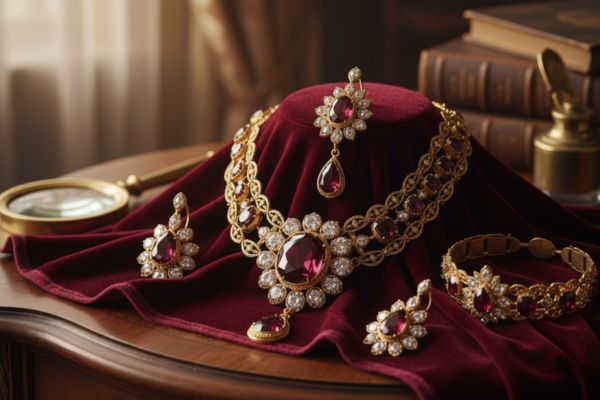
Ignoring these signals means losing the very essence of the jewel. For those who love antique bijoux, the real treasure is not just possessing, but understanding and feeling. Each piece has a voice, and only those who know how to listen can truly appreciate it.
The thrill of discovery
There is a particular emotion that is never forgotten: the moment when you recognise an authentic piece among many others, when history seems to unfold between your fingers. It is a subtle thrill, a mixture of amazement and respect. Holding a carved cameo in your hands, noticing the irregularity of a diamond, feeling the warmth of the gold that has crossed centuries: all this binds us to past lives, makes us feel part of a continuum that goes beyond time.
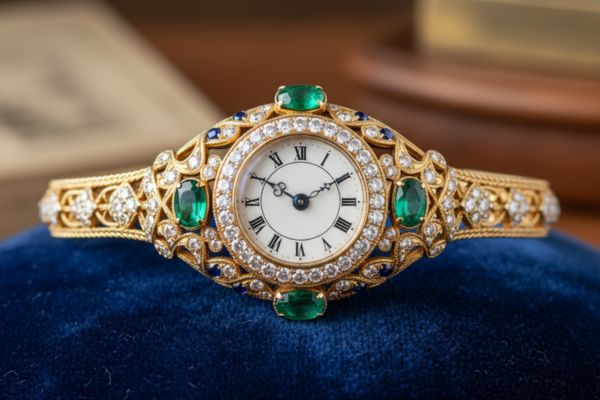
This is what makes collecting vintage bijoux so fascinating: it is not accumulation, it is not just investment. It is a silent dialogue with the past, a way to preserve and respect memories that would otherwise be lost.
Tips for those approaching antique bijoux
If you are a beginner, remember that the heart counts as much as the eye. Observe calmly, touch with respect, let yourself be guided by sensations. Look for details, learn about the fashion and symbols of the time, and rely on experienced hands for restorations or evaluations. Don’t be in a hurry: every jewel deserves attention, and every moment spent understanding it will enrich you as collectors and as lovers of history.
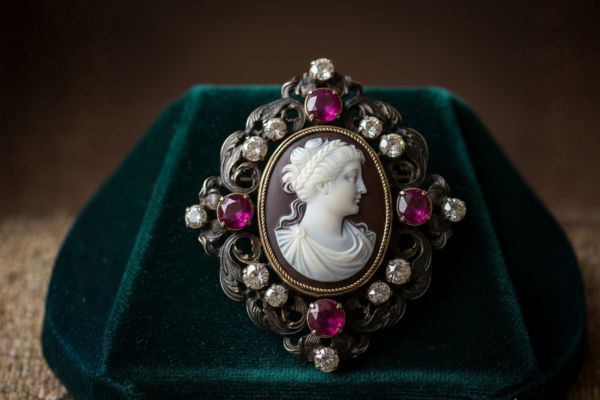
19th-century vintage bijoux are more than just objects. They are small worlds, enclosed in metal and stones, guardians of stories, emotions and hands that have shaped them with patience and love. Approaching these jewels means learning to read time, to feel memory and to respect authentic beauty. It is a slow, sensitive, exciting journey: and every authentic piece you encounter along the way will be a small miracle worth knowing and preserving.
Remember: it’s not just about owning, but about listening, feeling and dialoguing with the past. And when you can do that, you will truly understand why a 19th-century bijoux is never just an ornament, but a fragment of life that continues to vibrate, silently, in our hands.