

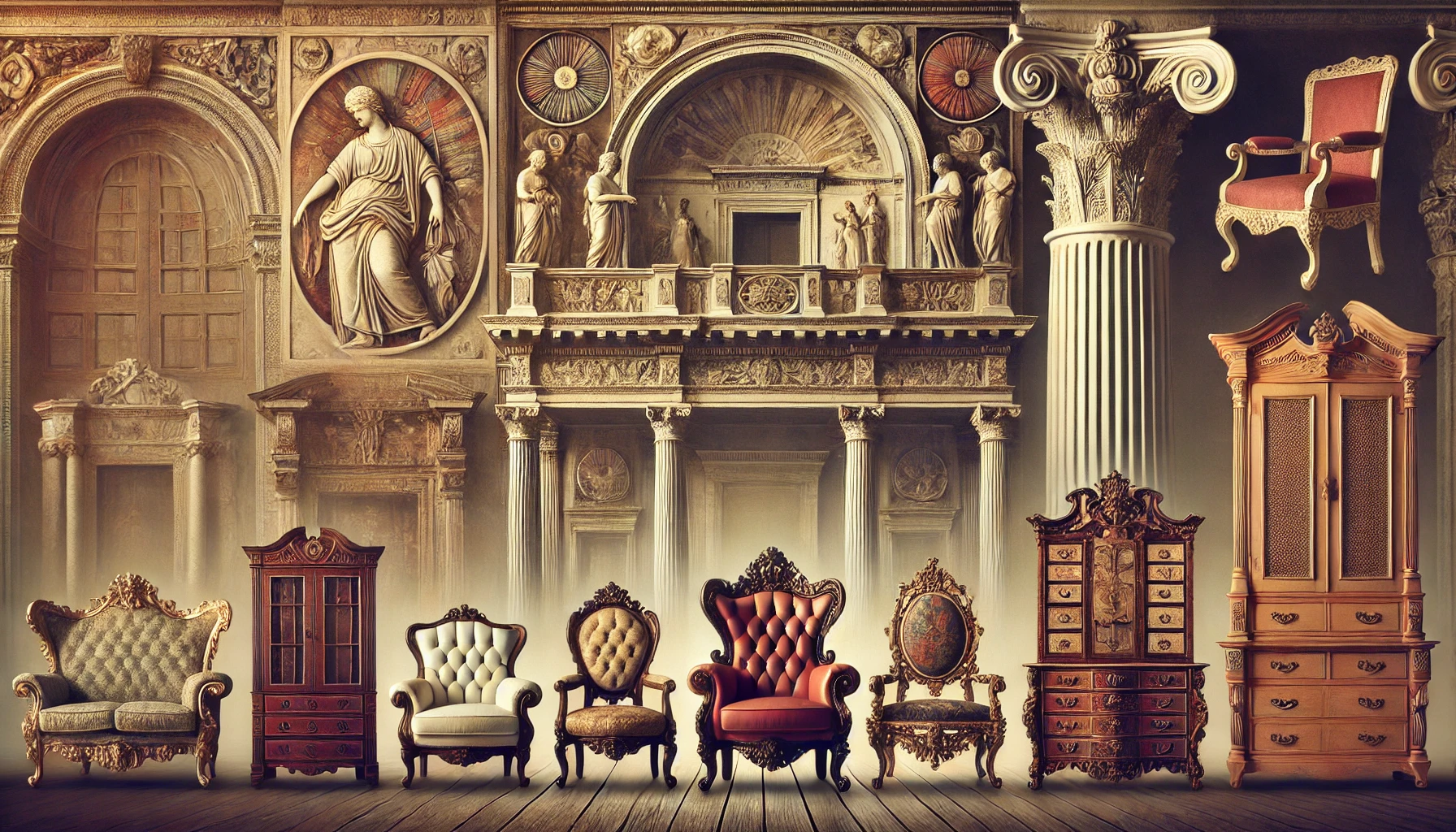
Imagine stepping into a historic mansion, surrounded by furniture and decorations that tell stories of past eras. Every table, chair, and wardrobe whispers tales of skilled hands that carved them, families that owned them, and rooms where centuries of history unfolded. Antique furniture is not just a testimony of the past but a tangible expression of artistic styles and movements that have profoundly influenced the way spaces have been designed and furnished over the centuries. Let’s explore the main trends that have shaped the aesthetics of the past and continue to captivate lovers of beauty and elegance today.
Classicism and Greco-Roman Influence
If you love timeless elegance and the pursuit of perfect harmony, the classical style inspired by Greek and Roman art will enchant you with its refined sobriety. The clean and rigorous lines of the furniture are combined with noble materials such as marble, bronze, and inlaid wood. Imagine stepping into a Roman villa, where sculpted columns support frescoed ceilings, and mosaic floors tell mythological stories. The furniture follows the same principles: symmetry, balance, and an aesthetic that celebrates ideal beauty. Each piece is not just a functional object but a tribute to formal perfection and the culture of an era that still inspires art and design today.
Gothic and Its Elongated Forms
In the heart of the Middle Ages, Gothic furniture emerged with its grandeur and almost mystical charm. Lines stretch upward, like cathedral spires, and decorations become intricate and masterfully carved. Step into a medieval hall and let yourself be enveloped by the solemn atmosphere of large decorated chests, massive credenzas, and finely carved chairs. Here, every piece of furniture tells the story of a time when craftsmanship was an art form and the home a refuge from the outside world. Floral motifs, zoomorphic figures, and architectural elements like pointed arches and rose windows transform furniture into true works of art, evoking the mystery and spirituality of the time.
The Renaissance: Beauty and Proportions
With the Renaissance, the desire to rediscover the harmony and rationality of classical art is reflected in furniture as well. The interiors of Renaissance homes are characterized by majestic sobriety: balanced shapes, perfect proportions, and precious materials. Italian furniture from the 15th and 16th centuries features refined details such as exotic wood inlays, golden decorations, and mythological scenes engraved with extraordinary precision. Walking into a Renaissance hall means breathing the air of an era where art, culture, and science intertwine to create spaces of great elegance and sophistication.
Baroque and Opulence
While Renaissance art sought harmony, the Baroque embraced drama and grandeur. Baroque furniture seems to transcend reality with its exuberant decorations: sinuous curves, complex carvings, lacquered surfaces, and golden details create lavish and theatrical environments. Imagine standing in a 17th-century palace, where crystal chandeliers reflect light onto gilded and inlaid furniture, and where every corner is designed to amaze. This style, created to impress and enchant, transforms every piece of furniture into a masterpiece—a symbol of power and wealth that still takes one’s breath away today.
Rococo: Grace and Lightness
After the grandeur of the Baroque, Rococo introduced a sense of lightness and grace, almost like a fluid dance in space. Forms become softer, colors lighter, and decorations more delicate. Rococo furniture, characterized by sinuous lines and floral decorations, evokes a refined and carefree world, perfect for the aristocratic salons of 18th-century France. Imagine walking through a room with pastel-upholstered armchairs, ornate mirrors, and elegantly curved furniture that seems to whisper stories of love and gallantry. This frivolous and seductive style continues to captivate with its timeless romanticism.
Neoclassicism and the Return to Order
By the late 18th century, Rococo gave way to a new aesthetic ideal: Neoclassicism. In a world rediscovering antiquity with a more rational and rigorous spirit, furniture returned to clean lines and geometric forms. Decorations became more measured, directly inspired by Greek and Roman temples, with columns, friezes, and sober yet elegant ornamental motifs. Close your eyes, and you can imagine a Neoclassical setting: walls in soft tones, smooth-surfaced furniture, and finely chiseled details that convey a sense of composure and refinement. It is the perfect style for those who love the balance between beauty and functionality, between past and present.
Conclusion
Antique furniture is a journey through time, a story told through materials, forms, and decorations that speak of different eras and cultures. Every style, from classical rigor to Baroque extravagance, has left an indelible mark on the history of design, transforming functional objects into true works of art. Today, these pieces are not just relics of the past but also sources of inspiration for those who appreciate the charm of history and the quality of craftsmanship.
And you, which of these styles do you feel most connected to? Which era would you like to relive through its furniture?