

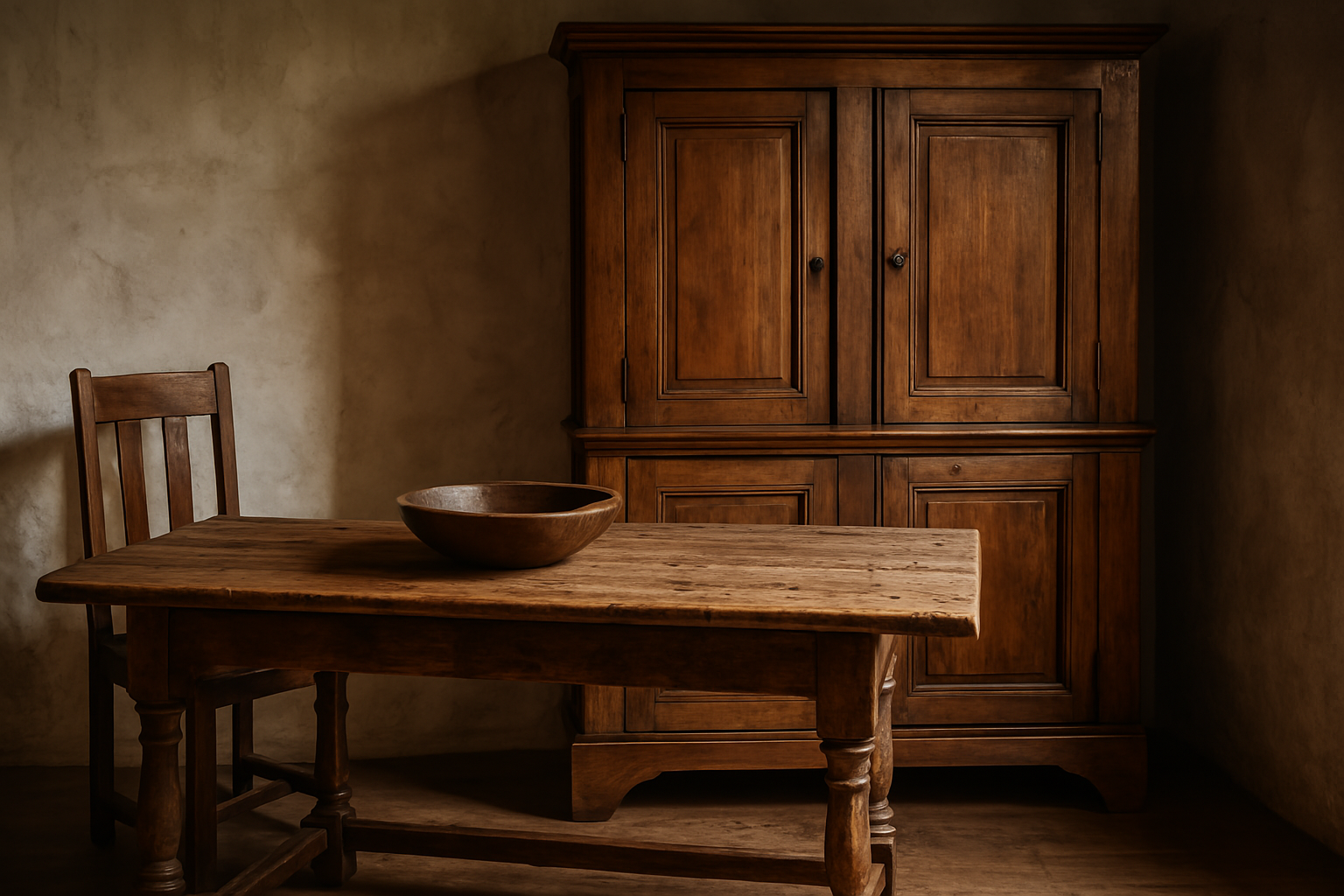
There’s something deeply evocative about reclaimed wood. More than any other material, wood carries within it the marks of time: knots, cracks, variations in color, signs left by use, light, and hands. When it enters a home, it’s never a neutral object: it asserts itself with its physical presence, its subtle scent, its ability to absorb light and radiate warmth. That’s why, in the field of interior design, reclaimed wood isn’t just an aesthetic choice, but a gesture of profound meaning.
Using vintage wood furniture or cladding within a contemporary home means introducing not only lived-in material but also memory. Each plank, each board, each door panel tells a story. It was part of a farmhouse, a barn, a workshop. It witnessed winters, generations, everyday gestures repeated for decades. That wood is no longer a mere decorative element: it’s a witness.
In an increasingly digital world, the attraction to natural, imperfect materials is almost a form of resistance. Reclaimed wood brings us back to a tactile, sensory dimension. Its sound underfoot, its slightly uneven surface, its temperature that changes with the seasons – all contribute to creating an intimate, authentic environment. Those who choose it for their home aren’t just seeking “beauty”: they seek emotion, authenticity, rootedness.
Many interior designers today are leveraging reclaimed wood not only for furniture but also for walls, ceilings, and floors. A wall clad in reclaimed wood planks can completely transform the perception of a modern space, adding depth and materiality. A ceiling with exposed beams, perhaps treated to preserve their original patina, becomes a focal point – an element of visual storytelling that captures attention and warms the atmosphere.
Furniture can also be reinterpreted in a contemporary key. An old workbench becomes a console table for the entryway. A solid wood door, with an iron lock, transforms into a headboard for a bed. Even old barn planks can find new life as shelves, kitchen countertops, or custom dining tables. Reclaimed wood lends itself to endless transformations, but in every metamorphosis, it retains its original character.
What makes the use of vintage wood truly special, however, is its relationship with light. Unlike industrial materials, reclaimed wood absorbs and reflects light unevenly, creating soft shadows, warm glows, and continuous variations. This interplay makes the spaces feel alive, never static, and capable of changing throughout the day.
The success of reclaimed wood in modern interiors isn’t just a matter of fashion or “rustic chic style.” It’s a response to a deeper need: to inhabit spaces that speak of us, but also of those who came before us. Spaces where time isn’t erased but visible. Where the material isn’t smoothed to the point of losing its identity but embraced in its imperfection.
Those who choose to bring reclaimed wood into their home are building a dialogue between the present and the past, between a life lived and a life to be lived. And in this dialogue, every knot, every crack, every discoloration becomes a language. A silent, but powerful, language.