

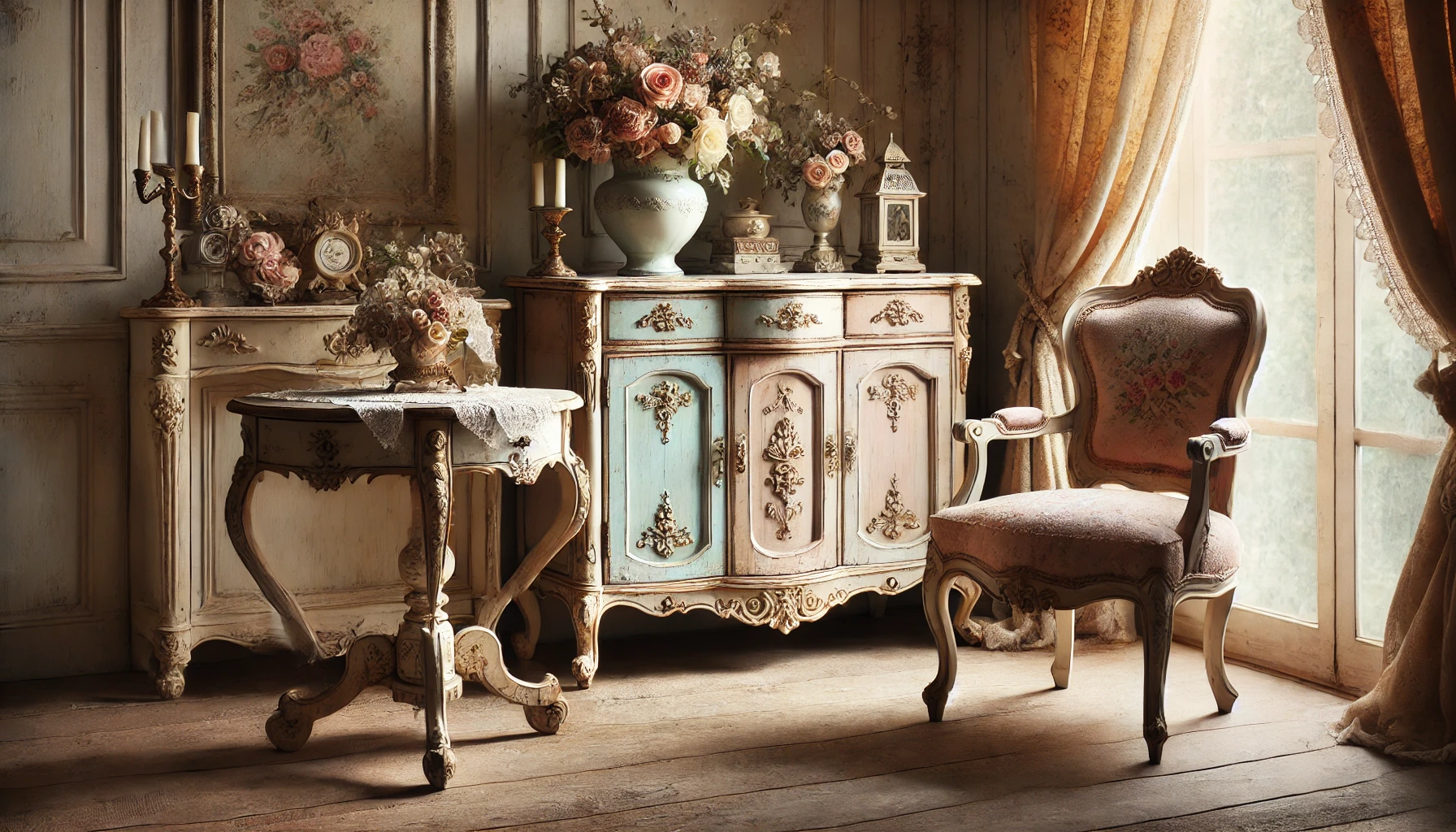
Shabby chic is one of the most beloved interior design styles, thanks to its ability to blend elegance and simplicity with a romantic and lived-in touch. But where does this trend come from? In this article, we will explore the origin of shabby chic, its historical influences, and how it has evolved to become one of the most popular choices in interior design.
1. The Origins of Shabby Chic Style
Shabby chic has its roots in the English country houses of the 18th and 19th centuries, where the furniture was characterized by quality pieces, often passed down from generation to generation and marked by time.
- The English Influence: The grand country estates of the Victorian era featured elegant but worn furniture, with weathered finishes that gave a sense of warmth and authenticity.
- The French Contribution: The Provençal style greatly influenced shabby chic, with the use of white, distressed furniture, natural fabrics, and floral decorations.
- The Charm of Time Passing: Shabby chic furnishings are not seen as just old, but as elements that tell a story through their imperfections.
2. Rachel Ashwell’s Role in Spreading the Style
In the 1980s, British designer Rachel Ashwell popularized the term “shabby chic” by launching her furniture line in the United States.
- The Concept of Accessible Luxury: Ashwell made the aesthetic of the lived-in an art, demonstrating how vintage furniture and salvaged objects could transform environments into sophisticated but welcoming spaces.
- Influence in the Media: Her style has appeared in numerous design magazines and has inspired thousands of home decor enthusiasts to re-evaluate antiques with a modern twist.
- The Shabby Chic Boom: In the 1990s and 2000s, this style spread worldwide, becoming a popular choice for those seeking an elegant yet relaxed environment.
3. The Differences Between Shabby Chic, Provençal, and Country Chic
Shabby chic is often confused with other similar styles, but there are fundamental differences between these trends:
- Shabby Chic: Light tones, distressed furniture, romantic details, and a mix of elegance and natural wear.
- Provençal: More rustic and authentic style, with raw wood and colors inspired by the French countryside.
- Country Chic: Closer to the style of American country houses, with sturdy materials and vintage decorations.
Understanding these differences helps in choosing the right furniture and mixing elements harmoniously.
4. Why Choose Shabby Chic Today?
The shabby chic style continues to be popular for several reasons:
- Sustainability: The reuse and restoration of vintage furniture reduces waste and gives new life to quality pieces.
- Versatility: It adapts to any environment, from beach houses to city apartments.
- Welcoming Atmosphere: It creates relaxing environments, thanks to neutral colors and natural materials.
Conclusion
The shabby chic style has a timeless charm that continues to captivate decor lovers. With a history rooted in English and French mansions and a global spread thanks to designers like Rachel Ashwell, this style has become an icon of interior design. Elegance, romance, and a touch of nostalgia make it perfect for those seeking a warm and welcoming home.