

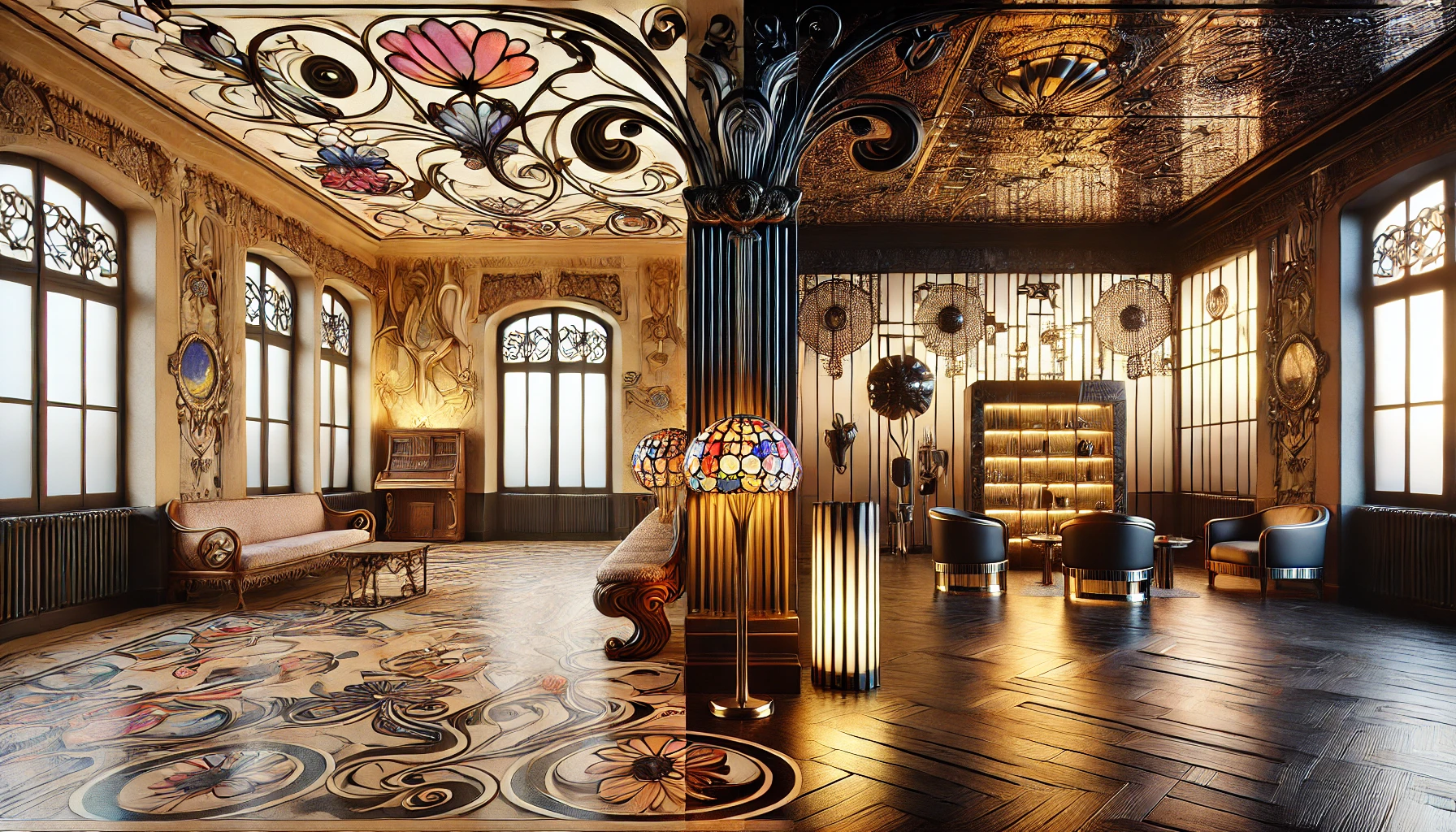
Art Nouveau and Art Déco are two art movements that have indelibly marked design and décor history. Following our previous exploration of their main features and value in antiques, this in-depth look uncovers lesser-known details, curiosities, and the enduring influence of these styles on collecting and restoration.
1. Nature’s Embrace in Art Nouveau, Symbolic Evolution in Art Déco
Art Nouveau draws heavily from nature, not just in decorative motifs but also in its design philosophy:
- Furniture and objects were designed to feel integral to their environment, featuring fluid and harmonious lines.
- Floral and animal motifs like swans, dragonflies, and peacocks were ever-present, symbolizing elegance and lightness.
- Some designers experimented with organic materials like ivory and horn, now rare and subject to restrictions for environmental protection.
In contrast, Art Déco forgoes naturalistic inspiration to focus on symbols of progress and modernity:
- Geometric patterns and references to ancient civilizations (Egypt, Mesopotamia) symbolized the development and affluence of the 1920s.
- Luxury was expressed through the use of precious materials like marble, ebony, mother-of-pearl, and chrome-plated metal.
- Art Déco was a global style, influenced by travel and colonial explorations, introducing tribal and oriental elements.
2. The Allure of Glass Vases and Tiffany Lamps
One of the most beloved aspects of Art Nouveau is the use of decorated glass, particularly in the works of Émile Gallé and Louis Comfort Tiffany:
- Gallé experimented with the cameo-etched glass technique, layering colored glass and etching it to create three-dimensional effects.
- Tiffany, famous for his lamps, used opalescent and leaded glass to achieve incredible plays of light. Tiffany lamps are among the most collected items of the era.
Many vases and lamps from this era still command high prices in antique auctions today.
Art Déco, while retaining glass as a decorative material, radically changed its style:
- René Lalique became famous for his sculptures in frosted and opalescent glass, with stylized motifs and bold shapes.
- Art Déco lamps adopted more rigid and geometric forms, with the use of frosted glass and chrome-plated metal structures.
3. The Great Names of Design and Their Iconic Creations
In addition to Gallé, Tiffany, and Lalique, here are some other masters who made these movements famous:
- Hector Guimard: Famous for the Art Nouveau wrought-iron entrances of the Paris Métro.
- Jacques-Émile Ruhlmann: One of the greatest Art Déco designers; his ebony and ivory furniture pieces are among the most sought after by collectors.
- Eileen Gray: A pioneer of modern design, she combined Art Déco with functionalism, creating iconic pieces like the Bibendum chair.
Many of these pieces are exhibited in the world’s most prestigious museums, including the Musée d’Orsay in Paris and the Victoria and Albert Museum in London.
4. Art Nouveau and Art Déco Today: Restoration and Appraisal in Antiques
Both styles are highly sought after in the antiques market, but it’s important to know how to recognize authentic pieces:
- How to assess an original object? Check the artist’s signature, the quality of the materials, and the patina of age.
- Restoring Art Nouveau and Art Déco furniture requires specific techniques: while Art Nouveau furniture must maintain its sinuous lines and hand-painted details, Art Déco pieces require special care for lacquering and metal finishes.
- Reproductions and fakes: Unfortunately, there are many modern reproductions of furniture and lamps from these periods. Relying on experts and requesting certificates of authenticity is essential.
Conclusion
Art Nouveau and Art Déco continue to be two of the most iconic and beloved styles in the world of collecting and décor. While the former embodies the harmony of nature and the refinement of handcrafted detail, the latter represents luxury, modernity, and geometric innovation.
Owning an original piece from these eras means not only having a work of art but also preserving a fragment of design history. Knowing the techniques, materials, and curiosities behind these movements helps to understand their value and preserve their authenticity over time.