
In an era where the protection of cultural heritage increasingly seems to fall upon public institutions, museums, and foundations, there exists a figure who often acts behind the scenes, with discretion but significant impact: the private collector. Those who gather and preserve antique objects, unique pieces, works of art, or testimonies of the past are not simply owners; they make a substantial contribution to safeguarding historical memory.
The private collector does not replace the museum but operates where museums cannot reach. Many items risk disappearing because they are too “modest,” too difficult to classify, too fragmented, or too expensive to maintain. It is then that personal collections come into play, often taking charge of the restoration, preservation, and study of marginal pieces that, however, together tell a complete, widespread, and profoundly human story.
Consider the thousands of vernacular photographs, the small everyday objects—cans, work tools, toys, clothing, labels, membership cards—that rarely find a place in public collections. Yet, thanks to passionate individuals, they have been cataloged, saved, and donated, giving rise to local museums, digital archives, and temporary exhibitions. In these cases, the collector becomes a mediator between the past and the future, a guarantor of the diversity of memory.
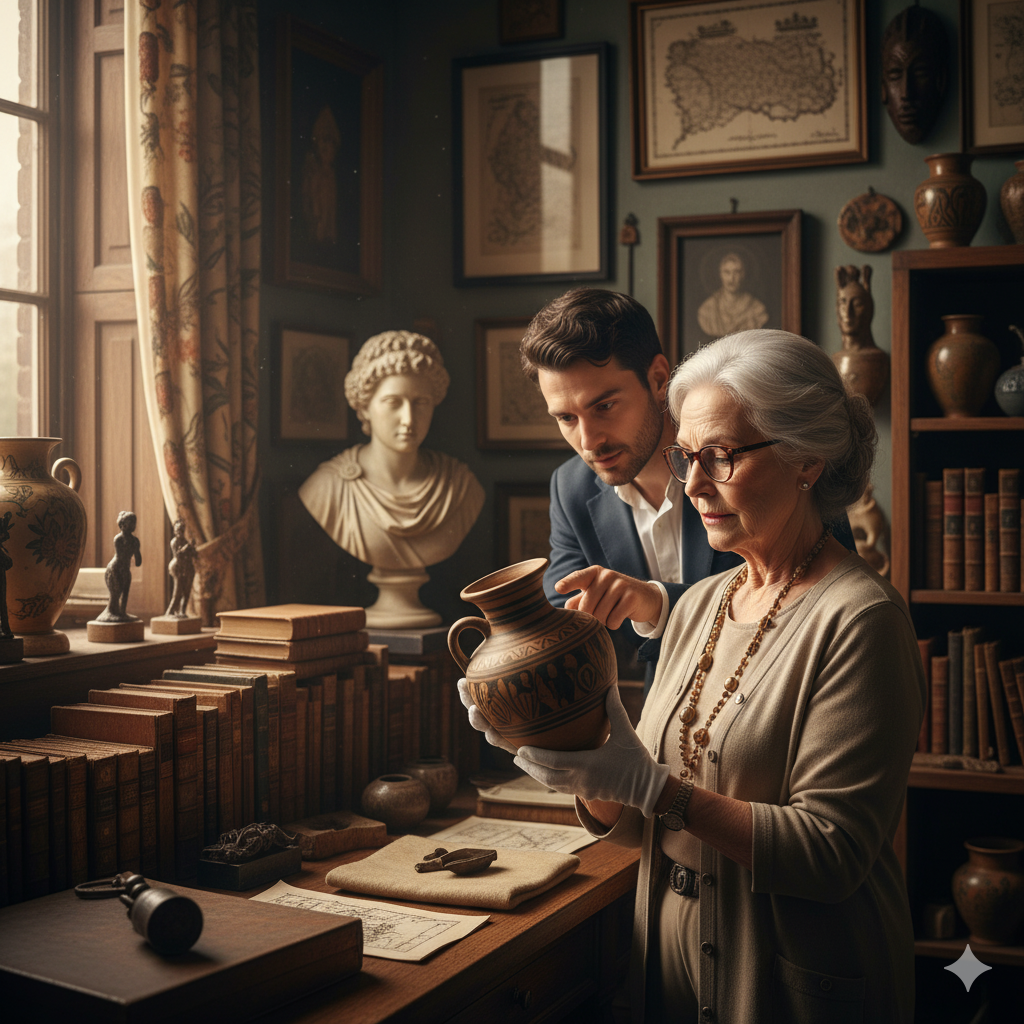
The collector’s conservation role is also expressed through the material care of the object. Many individuals restore at their own expense, using scientific or artisanal methods, relying on professionals or learning ancient techniques. This means physically saving pieces destined for decay, stabilizing them, contextualizing them, and documenting them. A bookshelf, a market crate, a chipped porcelain can come back to life thanks to the intervention of those who, with patience and respect, take responsibility for their future.
But conservation is not just technical. It is also about access and dissemination. More and more collectors today choose to open their collections to the public, creating spaces to visit, publishing catalogs, and collaborating with cultural institutions. Some, like the founders of house museums, have transformed their homes into small cultural centers; others exhibit online, on websites, blogs, and social media channels, offering an authentic and personal perspective on material history. In all cases, the transition from private ownership to public enjoyment is an act of cultural generosity.
Of course, this role also carries ethical responsibilities. The conscientious collector questions the provenance of their objects, ensures they do not fuel illegal markets, and seeks dialogue with scholars, conservators, and art historians. Their collection is not a treasure to be hoarded but a temporary repository of memory. They are aware that each object has lived other lives, has passed through eras and families, and that their job is to protect it until it is time to pass it on to others.
In this sense, collecting becomes an act of custody and restitution. And in many cases, collectors have been instrumental in the recovery of stolen works, the discovery of forgotten authors, and the preservation of fundamental documents. They anticipated the market, sensed trends, and made courageous choices where others saw only old and worthless objects.
Today more than ever, in the midst of a cultural and ecological transition, collecting is a political and cultural gesture. It means believing that what has been deserves to be heard again. And every collector who chooses to conserve with love, rigor, and awareness becomes, in effect, a custodian of our collective heritage.