

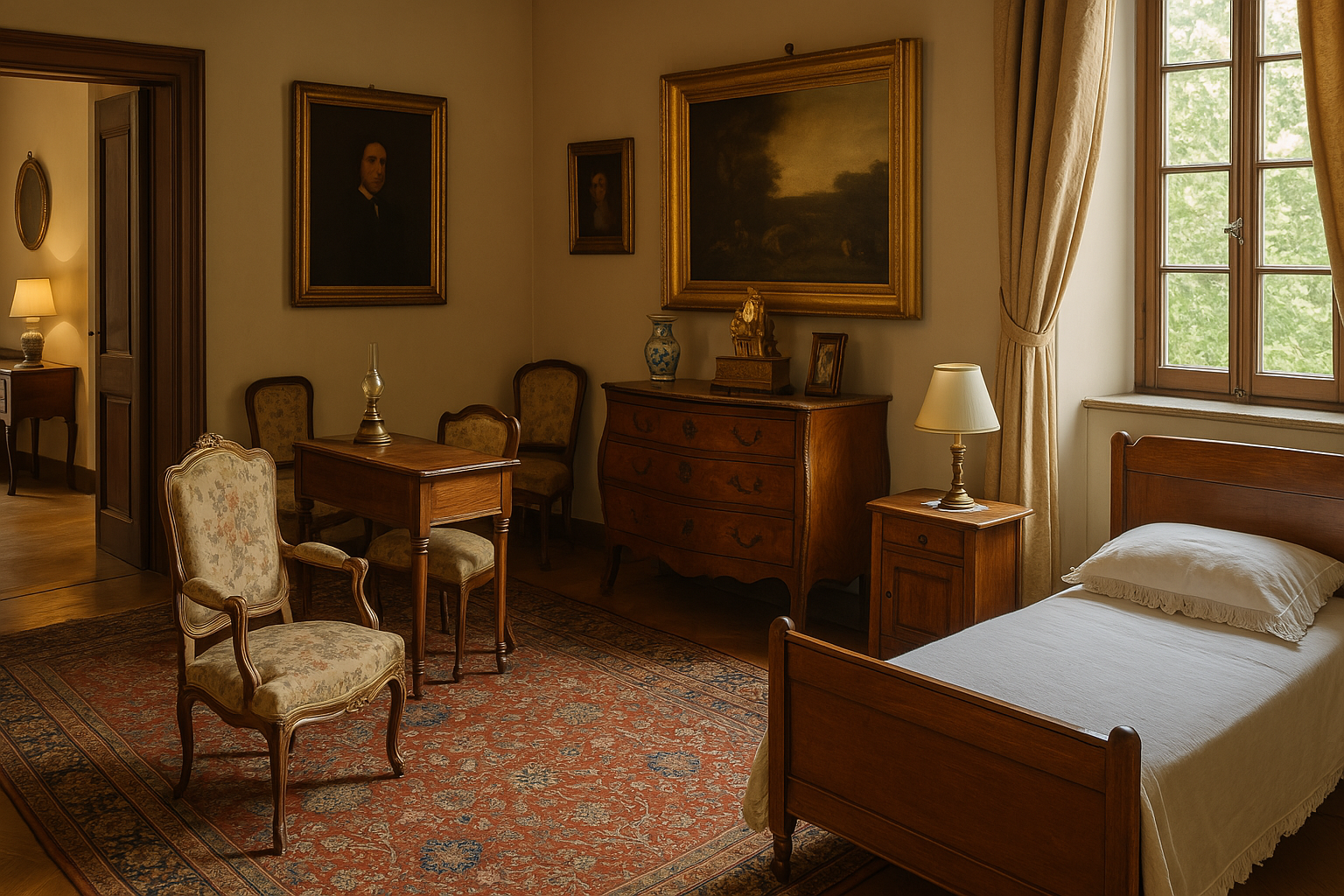
There’s a moment when a dwelling ceases to be just a house and transforms into a shared heritage, a place open to the public, a collective narrative. When this happens, a house museum is born: not merely an elegant architectural setting or a period arrangement, but a true story made of lived lives, carefully chosen objects, and a memory that continues to speak through every detail.
Often, these houses belonged to bourgeois or aristocratic families who lived within their walls for generations. The decision to transform them into museums is an act of love towards the past, but also of generosity towards the future. The drawing rooms, private rooms, libraries, and even kitchens become spaces of narration, where each exhibited object holds a meaning that goes beyond its material value.
What makes a house museum authentic and touching is the emotional presence of those who inhabited it. It’s not just a simple didactic display, but a continuous dialogue between the environment and those who passed through it. The bed with the pillows still plumped, the desk with the books open, the cup on the bedside table: everything contributes to creating a sense of truth. It’s as if the homeowners had just stepped out of a room and were about to return any moment.
Many of Europe’s most evocative house museums are born from this feeling of a living legacy. The Giorgio Cini Foundation in Venice, for example, preserves the residence of Count Vittorio Cini and, with it, a rich collection of decorative art, books, and private objects that trace an intimate and refined portrait of one of the most influential families of the 20th-century Italy.
Similarly, the Ivan Bruschi House-Museum in Arezzo, home to one of the most eclectic Italian antique collections, reflects the passionate personality of its founder in every room: each painting, chest of drawers, sculpture, rug tells not only an aesthetic choice, but a biographical journey, a voyage through taste and research.
The transformation of a house into a museum is also a way to preserve the context in which certain antiques take on their most authentic meaning. An 18th-century table, a gilded mirror, an antique Persian rug are better understood when immersed in their original dimension: not as isolated elements, but as part of a daily narrative, made of gestures, rituals, family habits.
Ultimately, what makes visiting a house museum unforgettable is this subtle tension between public and private, between history and life. It’s a threshold that we cross with respect, aware of entering a world that welcomes us but is not our own. And perhaps that’s why it moves us so much: because in those rooms, in those objects, we see our own connections to the past, to memory, to the things that really matter.