

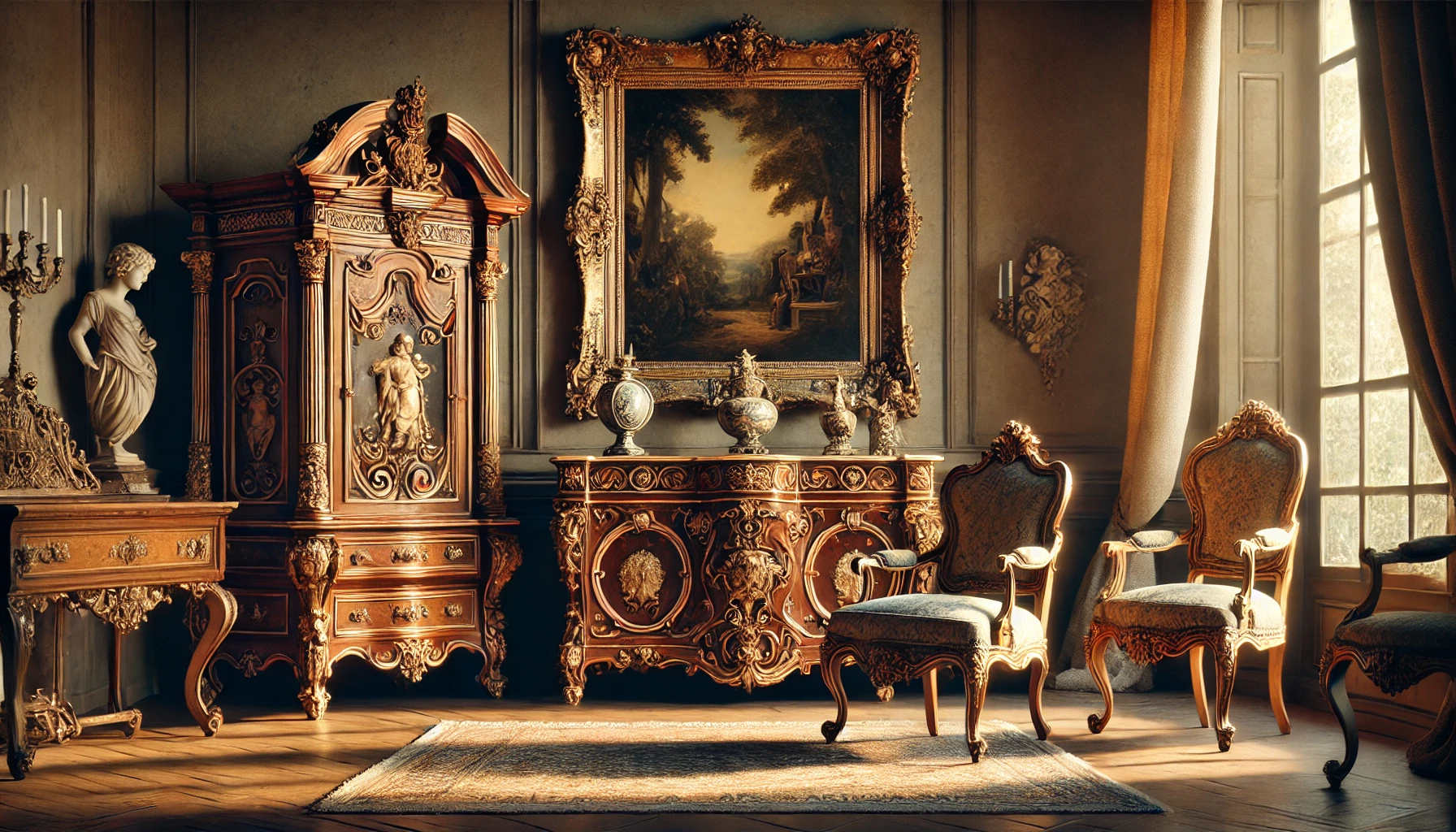
For centuries, Europe has been the cradle of artistic and stylistic movements that have profoundly influenced the world of furniture and interior decoration. European antiques offer a fascinating journey through eras marked by distinctive styles, refined craftsmanship, and a continuous search for aesthetic perfection. Each piece tells a story, an epoch, and a culture that has left an indelible mark on interior design.
1. The Evolution of Styles in European Antiques
Over the centuries, European furniture design has undergone numerous changes, reflecting the historical, social, and economic contexts of each period. Some of the major styles that have defined European antiques include:
- Renaissance (14th-16th century): Characterized by a return to classical symmetry and balance, with solid furniture, intricate mythological carvings, and inlaid decorations using fine woods.
- Baroque (17th century): A lavish and theatrical style, featuring grand, curved furniture, richly detailed carvings, and the use of precious materials like gold and marble.
- Rococo (18th century): A reaction against the heaviness of Baroque, it features fluid lines, delicate decorations, pastel colors, and subtle gilding.
- Neoclassicism (late 18th – early 19th century): Inspired by Greco-Roman models, it emphasizes formal rigor, symmetry, and restrained ornamentation.
- Biedermeier and Empire Style (19th century): Prioritizing functionality and elegance, these styles introduced more essential forms and the use of high-quality local materials.
- Art Nouveau and Art Deco (20th century): The former with flowing, nature-inspired lines, the latter with elegant geometric designs, lacquered surfaces, and a strong modernist appeal.
2. European Antique Centers: Excellence and Tradition
Each European country has contributed uniquely to the richness of antiques:
- France: Renowned for its luxurious and elegant furniture from the Louis XIV, XV, and XVI periods, featuring sophisticated craftsmanship and gilded details that highlight its grandeur.
- Italy: A historical center of design and artisanal production, Italy has produced extraordinary furniture from the Renaissance, Baroque, and Neoclassical periods, marked by meticulous attention to detail and premium materials.
- United Kingdom: Known for the restrained yet refined Georgian and Victorian styles, featuring fine woods such as mahogany and oak, often decorated with ivory and mother-of-pearl inlays.
- Germany and Austria: The Biedermeier and Empire styles introduced a more functional aesthetic while maintaining high artistic and craft quality.
3. Materials and Craftsmanship Techniques
The art of European antiques is synonymous with excellence in the use of high-quality materials and meticulous craftsmanship techniques:
- Premium woods: Such as mahogany, walnut, oak, and rosewood, chosen for their durability and beautiful grain patterns.
- Inlays and marquetry: Fine decorative details made with wood, ivory, mother-of-pearl, and precious metals.
- Bronzes and gilding: Ornamental elements applied to furniture and mirrors, often featuring nature-inspired or mythological motifs.
- Luxury fabrics: Such as brocades, velvets, and silks, used to upholster chairs and armchairs.
4. The European Antique Market Today
Interest in European antiques continues to grow, attracting both seasoned collectors and those looking to enhance their interiors with historical pieces. Antique furniture not only adds character and uniqueness to spaces but also represents a long-term investment.
Some key tips for purchasing vintage antique furniture:
- Verify provenance and request authenticity certificates.
- Pay close attention to construction details and signs of aging.
- Rely on specialized dealers or reputable auction houses to avoid forgeries or poorly executed restorations.
Conclusion
European antiques are not just relics of the past but also an artistic legacy that continues to inspire contemporary design. Each antique piece carries a unique story, told through its craftsmanship and decorative details. Investing in an antique means choosing beauty, quality, and history.
Which European antique style fascinates you the most? Have you ever considered integrating an antique piece into your modern decor?