

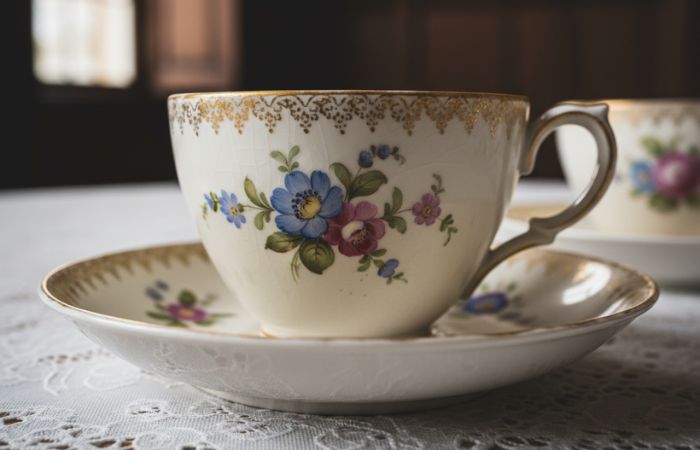
Porcelain as the Language of the European Elite
18th-century European porcelains are not mere decorative objects. They are the result of one of the greatest technical and artistic challenges in the history of Western craftsmanship. In the 18th century, Europe experienced a veritable “porcelain fever,” a race to discover a material that until then had been the exclusive prerogative of Imperial China.
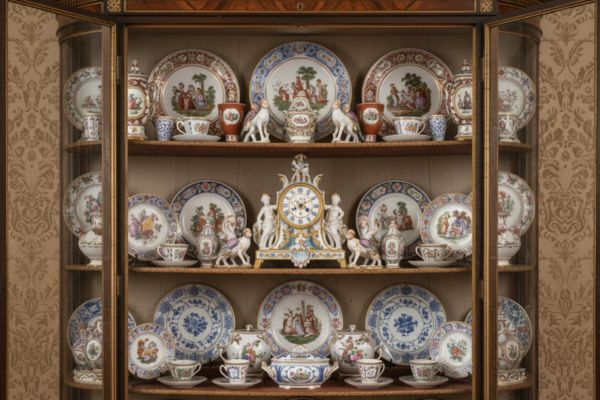
Owning porcelain meant much more than furnishing a table: it meant asserting status, culture, and economic power. European courts competed with each other to create increasingly refined manufactures, transforming porcelain into a political as well as an aesthetic symbol.
This period marks the birth of a new artistic language, where each object becomes a coded message made of shapes, colors, and symbols.
The Meissen Revolution and the Birth of European Porcelain
The First Secret Revealed
The turning point came in Germany, with the Meissen manufactory, founded at the beginning of the 18th century. Here, alchemists and artisans finally managed to replicate the formula for hard-paste porcelain, which until then had been jealously guarded in the East.
The process was neither simple nor immediate. It required years of experimentation, errors, and refinements. The discovery forever changed the history of European art and paved the way for the birth of other great manufactures.
Meissen quickly became a center of excellence, famous for the quality of its glazes and the refinement of its decorations. Its creations were requested by the most important courts in Europe.
The Great European Manufactories
Vienna, Sèvres, Capodimonte and Beyond
After the extraordinary discovery of porcelain in Meissen, the 18th century became a period of great artistic and productive ferment throughout Europe. The technique spread rapidly, and every major European court felt the need to create its own manufactory, not only for economic reasons, but above all to assert prestige, cultural identity, and political power. Thus was born a true European language of porcelain, made of different styles but united by the same pursuit of perfection.
Vienna
The Vienna manufactory established itself as one of the most refined in the Habsburg Empire. Its productions are distinguished by a sober and measured elegance, far from the decorative excesses of other schools. The floral motifs are delicate, often inspired by the nature of the imperial gardens, while the color palette favors pastel tones, harmonious and never aggressive.
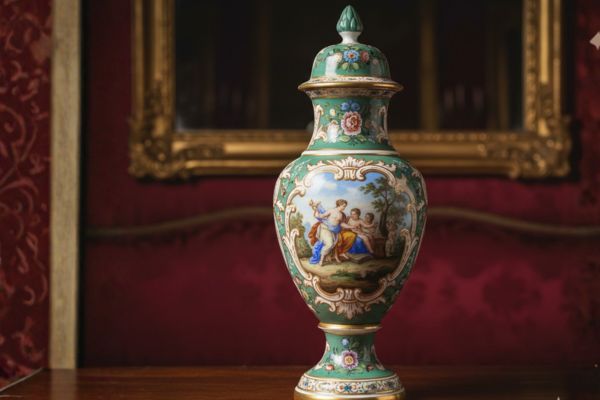
Vienna focuses on a balance between form and decoration, creating objects that convey a sense of order and refinement typical of the Central European culture of the time. This stylistic sobriety makes Viennese porcelains very recognizable and appreciated by collectors today.
Sèvres (France)
In France, the Sèvres manufactory represents the pinnacle of European luxury. Protected directly by the royal court, it became an instrument of diplomatic and cultural representation. Sèvres porcelains are famous for the exceptional quality of their glazes, the richness of their colors, and the complexity of their decorations.
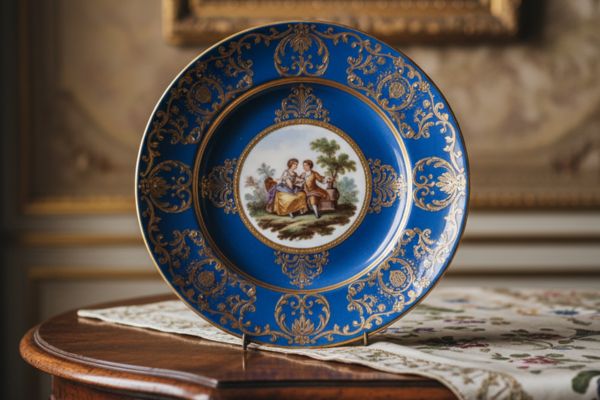
They often depict mythological scenes, allegories, or extremely elaborate floral compositions. Each piece is designed to communicate prestige and refinement, which is why many objects were used as official gifts between monarchs and ambassadors. Sèvres thus became not only an artistic manufactory, but also a high-level political tool.
Capodimonte (Italy)
In Italy, the Capodimonte manufactory was born in Naples under the impulse of the Bourbon dynasty. Here, porcelain takes on a different character compared to the rest of Europe: more expressive, more narrative, and strongly linked to the Italian artistic tradition.
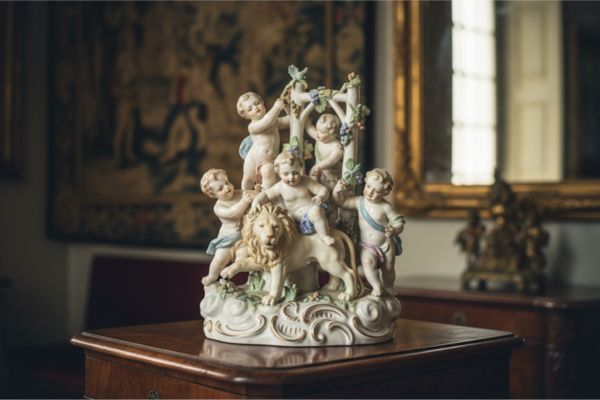
The figures modeled in Capodimonte are often lively, with extraordinary attention to anatomical and naturalistic details. Scenes of daily life, popular characters, and animal subjects are represented with great realism and artistic sensitivity. This ability to “tell stories” through porcelain makes Capodimonte unique in the European landscape.
A Common Identity, Many Expressions
Despite the stylistic differences, Vienna, Sèvres, Capodimonte, and the other European manufactures share a common goal: to transform porcelain into a symbol of artistic and cultural excellence. Each center develops its own identity, but all contribute to the construction of an extraordinarily rich and competitive European heritage. This intertwining of styles and traditions makes the 18th century an unrepeatable era in the history of the decorative arts.
The Secret Language of Marks
How to Read a Hidden Signature
One of the most fascinating aspects for collectors and scholars is the system of marks. These small symbols, often placed under the base of objects, are the key to identifying their origin, era, and quality.
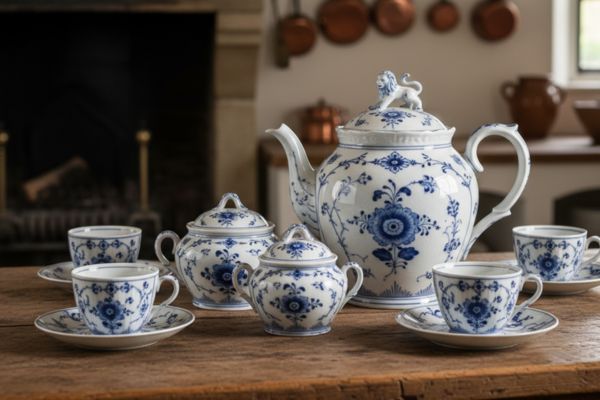
In the 18th century, marks were not always uniform. They varied over time and were often modified for political or productive reasons. This makes their interpretation a true specialist discipline today.
For example:
- Meissen uses the famous crossed swords
- Sèvres uses letters and symbols related to the year of production
- other manufactures adopt acronyms, initials, or floral symbols
The correct reading of a mark can significantly increase the value of a piece.
Production Techniques and Craft Secrets
A Jealously Guarded Knowledge
The production of porcelain in the 18th century is a complex process that combines chemistry, art, and craftsmanship.
The main ingredients – kaolin, feldspar, and quartz – are mixed according to secret formulas. Firing takes place in very high-temperature kilns, and each phase requires extreme precision.
The decoration is done by hand, often in several successive stages. The pigments must withstand the final heat without losing their brilliance.
A minimal error can compromise the entire piece. This explains why each antique object is unique and unrepeatable.
The Role of European Courts
Porcelain as a Political Tool
In the 18th century, porcelain was not only art, but also diplomacy. European courts used these objects as instruments of representation and prestige.
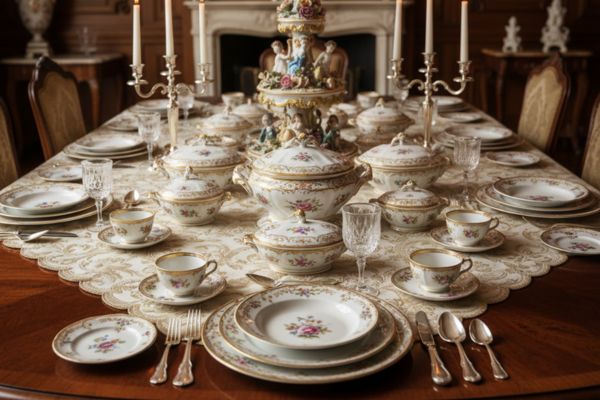
A refined porcelain tableware set could be donated to an ambassador or used during official events to impress foreign guests.
This link between art and power further contributes to elevating the symbolic value of porcelain.
The Aesthetic Taste of the 18th Century
Elegance, Nature, and Imagination
The decorations of 18th-century porcelains reflect the taste of the era. Pastoral scenes, floral motifs, idealized landscapes, and mythological references are among the most common subjects.
The goal is not only to decorate, but to tell an idealized vision of the world. Nature is reinterpreted, made harmonious and perfect.
This style will also profoundly influence the decorative arts of the following centuries.
Collecting Today
A Market Between History and Investment
In the world of contemporary antiques, 18th-century porcelains occupy a position of great importance.
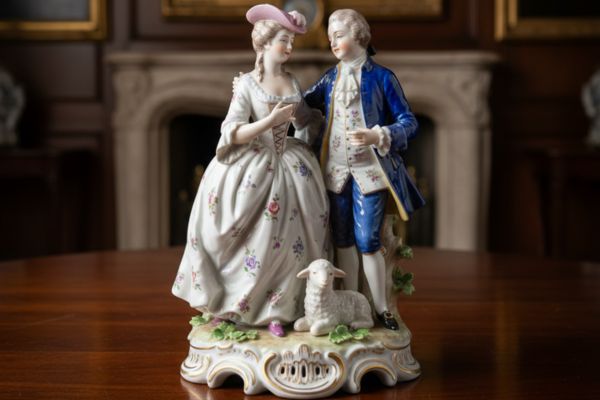
Their value depends on several factors:
- rarity of the piece
- state of preservation
- authenticity of the mark
- historical provenance
The most experienced collectors are not only looking for beautiful objects, but pieces with a documented history. Provenance is often as important as aesthetics.
How to Recognize an vintage Porcelain
The Importance of Observation
Distinguishing an vintage piece from a reproduction requires experience and attention.
Fundamental elements:
- quality of the glazing
- stylistic coherence
- presence of micro-imperfections typical of manual processing
- compatibility of the mark with the era
There is no single certain indicator, but a set of signals that must be read comprehensively.
Objects That Tell Stories
What makes 18th-century porcelains so fascinating is their ability to tell silent stories. Each object is a testimony to the taste, technology, and culture of its time.
Observing them today means taking a journey into the past, coming into contact with a world made of slowness, precision, and artisanal beauty.
Protecting a Fragile Heritage
Porcelain is fragile by nature. For this reason, conservation requires particular attention.
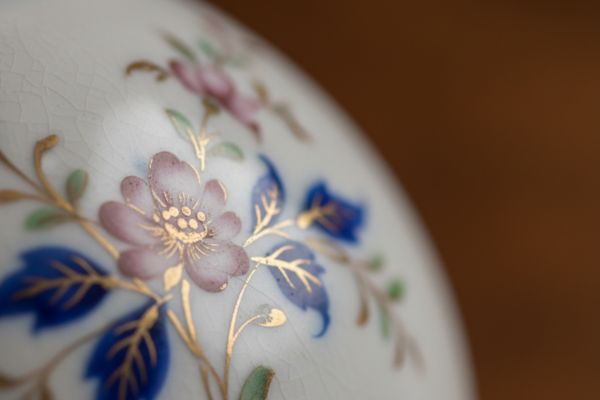
Important factors:
- stable temperature
- absence of excessive humidity
- protection from shocks and vibrations
- controlled exposure to light
Correct conservation allows these objects to be preserved for future generations.
A Cultural Heritage to Understand
18th-century European porcelains represent one of the highest expressions of European artistic craftsmanship. They are not only collectible objects, but living testimonies of an era in which art, science, and power were deeply intertwined.
Studying these works means better understanding the cultural history of Europe and its relationship with beauty and innovation.