

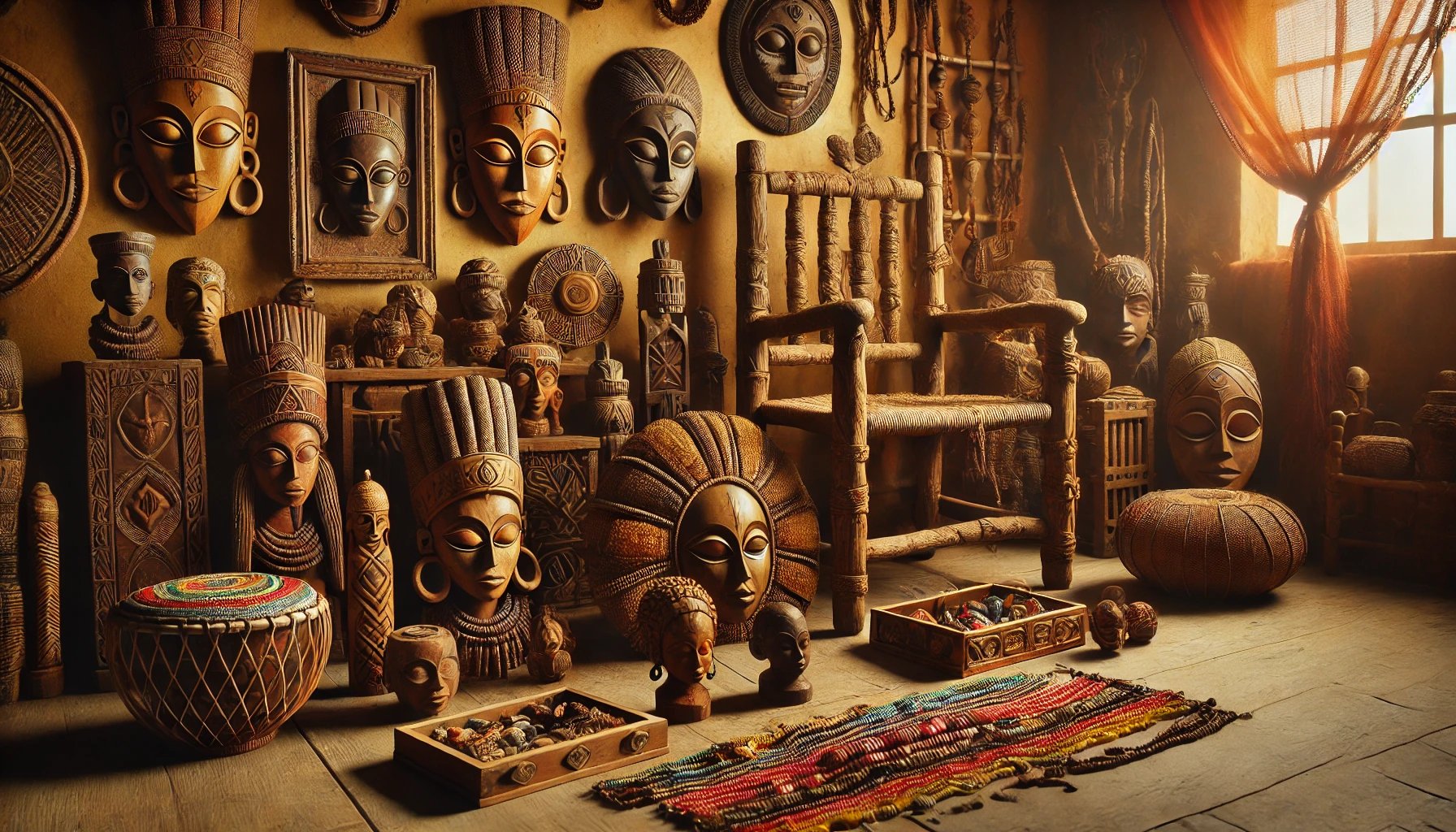
African antiquities represent a fascinating world of objects rich in history, symbolism, and tradition. Each piece, from furniture to tribal masks, carries the legacy of ancient cultures and craftsmanship passed down through generations. African art is deeply connected to spirituality, community, and nature—elements reflected in the materials, decorations, and production techniques. This article explores the characteristics of African antiquities, the materials used, the main artifacts, and the value these objects hold in the world of collecting.
1. Characteristics of African Antiquities
Ancient African art and furnishings are distinguished by a set of unique elements that make them immediately recognizable.
- Symbolism and Spirituality: Every object has a deep meaning and was often used in religious or ritual ceremonies. Tribal masks, for example, represent spirits and deities, while sculptures depict ancestors and community protectors.
- Natural Materials: Wood is the predominant material, often accompanied by metals such as bronze, beads, leather, and woven plant fibers. The choice of materials is not random—each tribe carefully selects natural elements based on their durability and symbolic value.
- Traditional Crafting Techniques: Most objects are handcrafted using techniques orally passed down for centuries. Wood carving, lost-wax bronze casting, and natural fiber weaving are among the most commonly used methods.
- Distinctive Decorations and Styles: African decorations feature geometric patterns, ancestral symbols, and stylized representations of humans and animals. Each region develops its own aesthetic, influenced by local culture and traditions.
2. Major Centers of African Antiquities Production
Africa is a vast continent with a variety of styles and traditions that vary by region and ethnic group.
- West Africa: Countries like Mali, Nigeria, and Ghana are known for producing ritual masks and statues. Dogon sculptures, Benin bronzes, and Baule masks are among the most sought-after pieces by collectors.
- Central Africa: The Democratic Republic of the Congo and Gabon are famous for Fang masks and Nkisi fetishes, objects used for spiritual and protective purposes.
- East Africa: Kenya and Tanzania are known for ebony sculptures and Maasai beadwork, used both for ritual decorations and traditional jewelry making.
- Southern Africa: South Africa has a long tradition of beadwork and decorative textile production, such as the colorful Ndebele designs.
3. Objects and Artifacts in African Antiquities
African antiquities encompass a wide range of objects, each with a specific function and symbolic significance.
- Tribal Masks: Made of wood and often decorated with natural pigments, metals, or feathers, masks were used in religious rituals and ceremonial dances.
- Sculptures and Fetishes: Statues representing ancestors or deities were used for spiritual protection in homes and villages. Some fetishes were made with nails and ropes to symbolize spirits.
- Traditional Furniture: Low carved wooden stools, ceremonial chairs, and royal thrones were symbols of power in tribal communities.
- Textiles and Beads: Fabrics decorated using techniques such as bogolanfini (mud cloth from Mali) or kente (from Ghana) are among the finest expressions of African art.
- Benin Bronzes: Highly detailed sculptures made using the lost-wax technique, used to depict kings and dignitaries.
4. The African Antiquities Market Today
Interest in African antiquities is steadily growing among collectors and enthusiasts of ethnic art. However, the market presents some challenges that buyers should be aware of.
- Authenticity and Provenance: Due to increasing demand, many reproductions and forgeries are circulating in the market. It is essential to purchase pieces with authenticity certificates and verify their provenance.
- Preservation and Restoration: Many antique objects require special care to maintain their integrity. Wood, for example, must be protected from moisture and pests.
- Historical and Cultural Value: Some sacred or ritual objects should be treated with respect and properly contextualized to avoid diminishing their cultural significance.
Conclusion
African antiquities are more than just a form of art—they are the testimony of ancient civilizations, rituals, and traditions that have endured through the centuries. Each object holds a story and deep significance, making it a unique element in the world of collecting and ethnic furnishings.
Are you fascinated by African art? Which object or style intrigues you the most?