

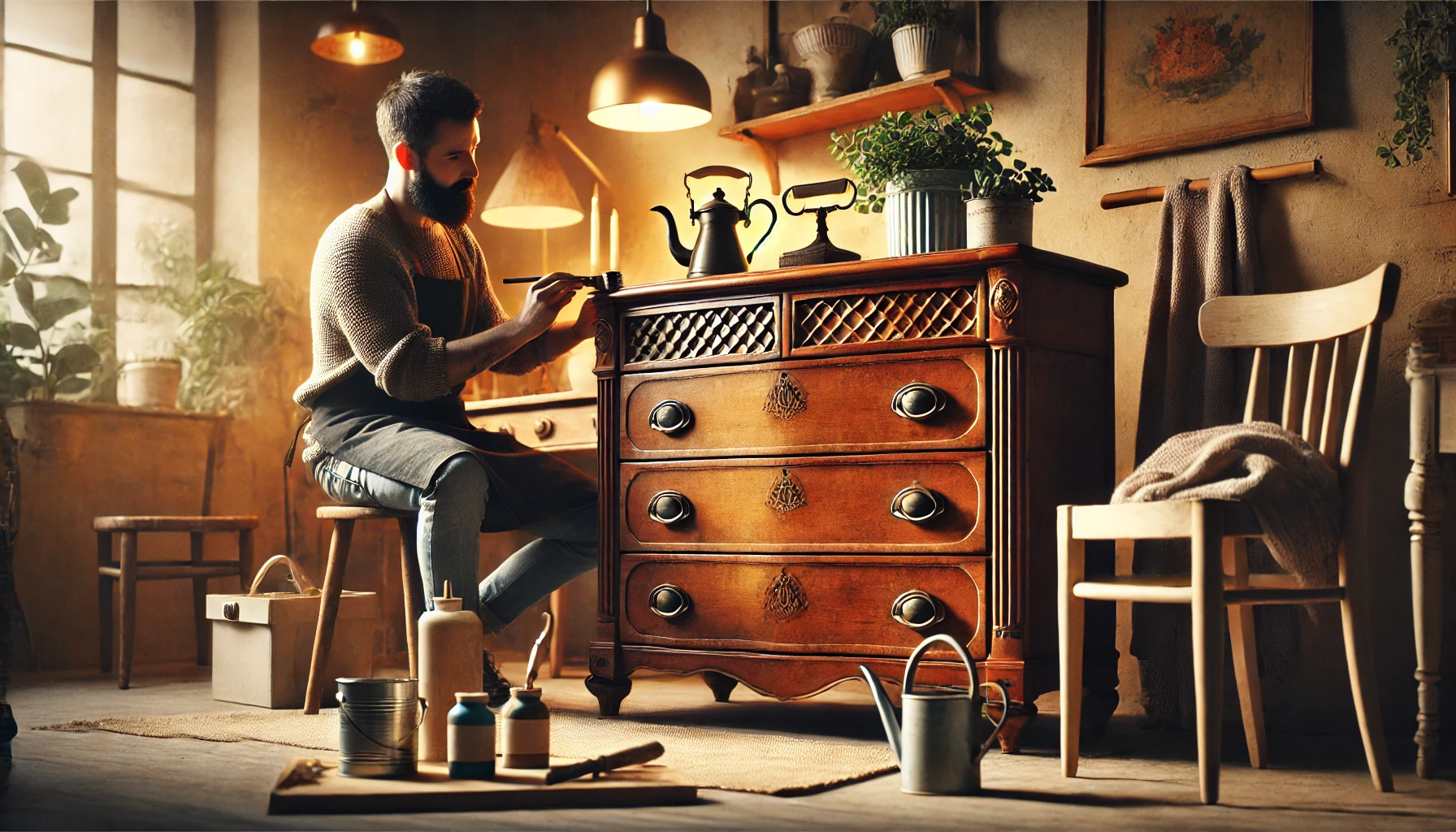
Reusing antique furniture is an art form that breathes new life into historical pieces, creating unique and original interiors. Upcycling, the creative adaptation of vintage furniture, is an increasingly popular practice in interior design, blending aesthetics, sustainability, and personalization. Beyond its eco-friendly nature, this technique preserves the quality and authenticity of furniture crafted with materials and techniques often superior to those of modern manufacturing.
1. Why Reuse Antique Furniture?
Restoring and reinterpreting vintage furniture offers numerous advantages, both aesthetically and functionally.
Sustainability: Recovering furniture reduces material waste and the environmental impact of industrial production. Each year, tons of furniture are discarded to make way for new pieces, often made with less durable and more environmentally damaging materials. Reusing and renovating contributes to a circular and conscious economy.
Uniqueness: Every antique piece has a history and craftsmanship that make it one-of-a-kind. The wood grain, natural imperfections, and traces of time give character and authenticity to each piece of furniture.
Quality: Vintage furniture is often made with premium woods and artisanal techniques that surpass modern production. Oak, walnut, mahogany, and cherry are just a few examples of the strong and durable materials found in antique furniture.
2. Restyling Ideas for Vintage Furniture
Reusing antique furniture means not only preserving it but also transforming it to suit modern needs. Here are some ideas:
An old trunk can become a coffee table, topped with a glass slab to highlight its structure and make it functional without altering its charm.
An antique door can be transformed into a headboard, creating a unique scenic effect, especially when decorated with vintage patinas or finishes.
An antique sewing machine can be repurposed as an entryway console, maintaining the charm of the past with a marble or reclaimed wood surface.
A vintage credenza can be transformed into a bar cabinet or bookcase, repainted in modern colors for a perfect blend of classic and contemporary.
3. Restoration and Personalization Techniques
Some techniques for renovating furniture include:
Wood bleaching, for a shabby chic effect that adds brightness and lightness to spaces.
Glossy lacquering, ideal for integrating antique furniture into a contemporary setting, giving it a new lease on life with a brilliant finish.
Replacing handles and knobs, a small detail that can make a big difference in updating the look of furniture.
Distressing and antiquing, for an vintage vintage effect that enhances the history of the furniture.
Conclusion
Reusing antique furniture is a practice that combines aesthetics, functionality, and respect for tradition, offering endless creative possibilities for decorating with style. It’s not just about preserving the past, but about reinterpreting it in a modern key, keeping the history of each piece alive and making it perfectly suited to contemporary interiors.