

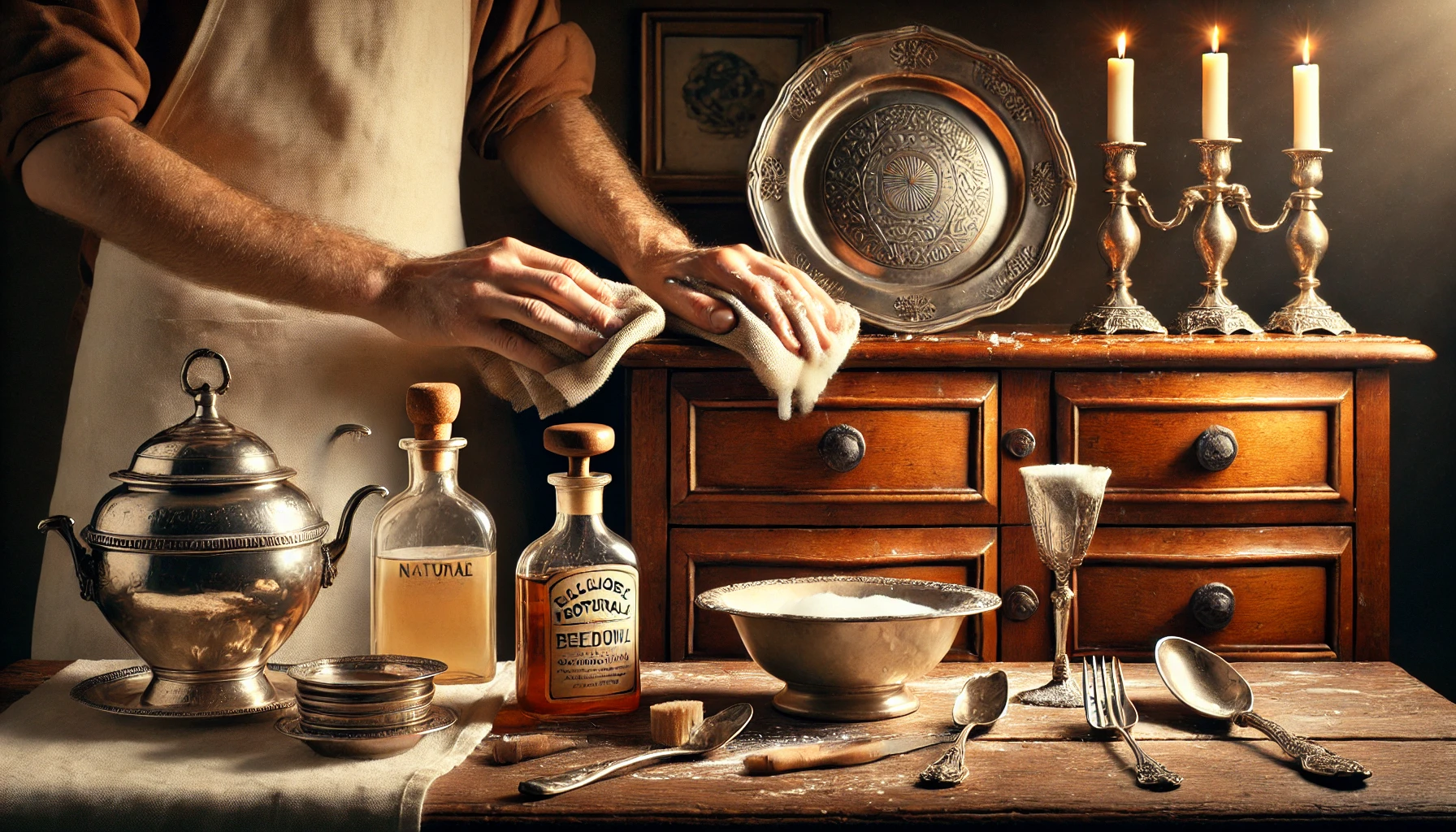
Antique items require specific care to preserve their beauty and value over time. Using harsh chemicals can damage precious woods, antique fabrics, metals, and delicate ceramics. For this reason, many collectors and enthusiasts choose natural cleaning methods that are safe and effective. In this guide, we will explore the best eco-friendly solutions for cleaning and maintaining antique furniture, silverware, ceramics, and textiles.
1. Natural Cleaning of Antique Furniture
Antique wooden furniture needs gentle products that nourish it without altering its original patina.
Olive Oil and Vinegar: A mixture of equal parts olive oil and white vinegar helps to clean and polish the wood, giving it new life.
Natural Beeswax: Perfect for protecting and nourishing surfaces, leaving the wood hydrated and shiny.
Baking Soda for Stubborn Stains: A paste of baking soda and water can remove surface stains without damaging the finish.
2. How to Clean Silverware and Metals Without Chemicals
Silver, bronze, and brass tend to oxidize over time, but they can be cleaned without the use of harsh chemicals.
Baking Soda and Aluminum: For silverware, immerse the items in hot water with baking soda and a sheet of aluminum to help eliminate oxidation without scrubbing.
Vinegar and Salt for Brass and Bronze: A solution of white vinegar and salt applied with a soft cloth removes stains without affecting the surface.
Lemon Juice for Stubborn Stains: Lemon is an excellent natural degreaser and can be used to make metals shine.
3. Natural Remedies for Cleaning Ceramics and Porcelain
Antique ceramics, especially those decorated by hand, are delicate and must be treated with care.
Neutral Soap and Warm Water: The safest method for cleaning antique plates and vases.
Baking Soda for Stains: A light dusting of baking soda with a damp cloth helps to remove stains without scratching.
Hydrogen Peroxide for Whitening: For yellowed ceramics, diluted hydrogen peroxide can restore the original whiteness.
4. Natural Care of Antique Textiles and Tapestries
Vintage fabrics are extremely delicate and require non-invasive cleaning methods.
Low-Power Vacuuming: For rugs and tapestries, regular cleaning with a vacuum cleaner at minimum power helps to remove dust and debris without stressing the fibers.
Water and Vinegar to Refresh Fabrics: Spraying a solution of water and vinegar helps to eliminate odors without damaging the material.
Cornstarch to Remove Stains: Sprinkle cornstarch on a stain and let it sit before brushing it off gently.
5. Natural Preservation and Protection from External Agents
In addition to cleaning, it is important to protect antique items from dust, humidity, and pests.
Lavender and Cloves Against Moths: Perfect for protecting furniture, fabrics, and antique books.
Rice Pouches for Humidity: Placing small bags of rice in cabinets and drawers helps to absorb excess moisture.
Cedar Oil to Keep Wood Healthy: A natural remedy to protect furniture and keep insects away.
Conclusion
Cleaning and maintaining antiques with natural products not only preserves their beauty and authenticity but is also an eco-friendly and safe alternative to harsh chemicals. With the right ingredients, you can guarantee a long life for vintage furniture, metals, ceramics, and textiles without compromising their historical value.