
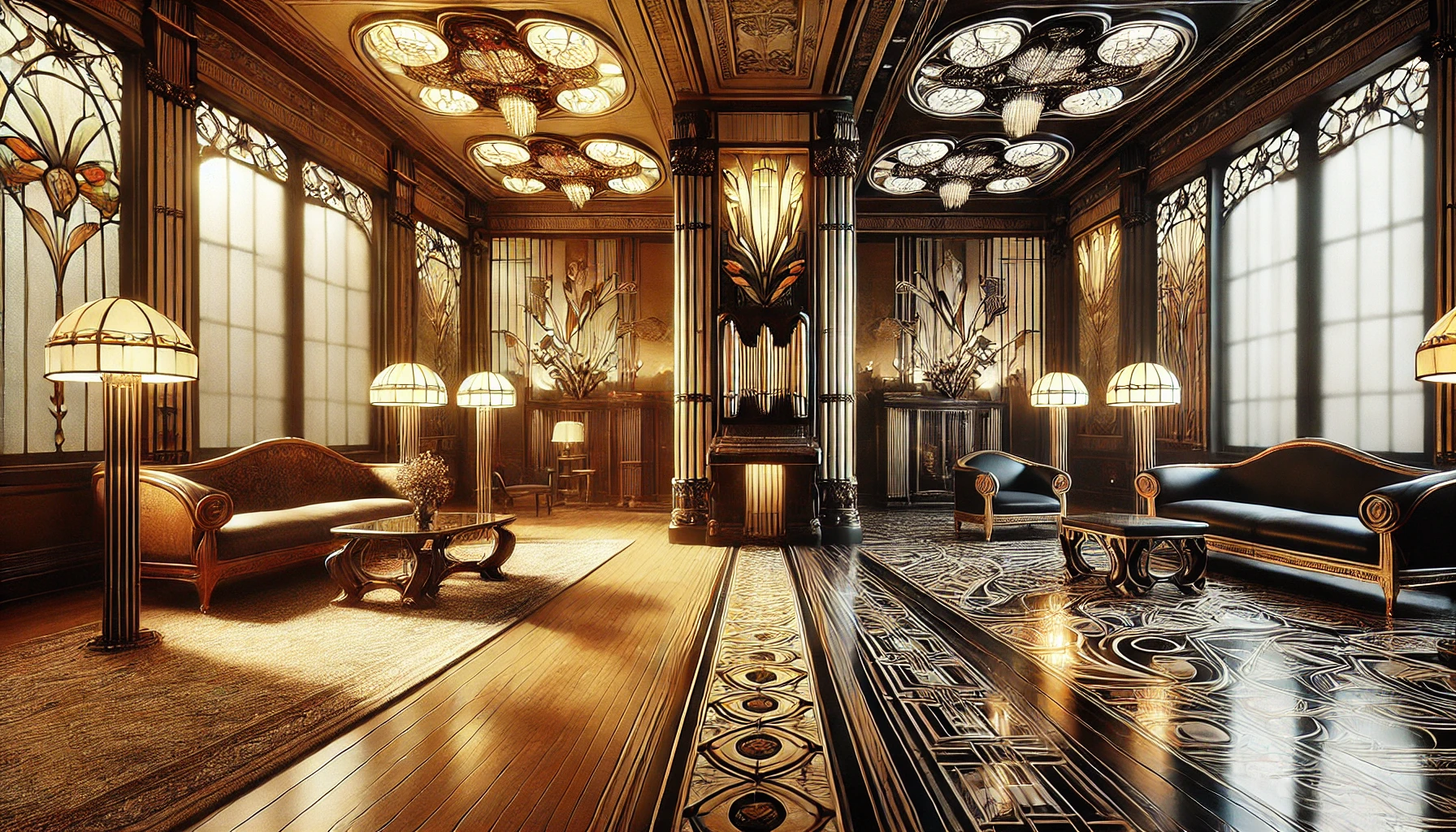
Art Nouveau and Art Deco are two influential artistic and decorative movements that profoundly shaped design and décor from the late 19th to the early 20th centuries. Their impact on the world of antiques remains significant today, with highly prized pieces sought after by collectors and enthusiasts. While distinct in their characteristics, these styles represent eras of great artistic innovation, producing furniture, decorative objects, and artworks that continue to captivate and enhance antique collections.
1. Art Nouveau: Organic Elegance and Decorative Refinement
Art Nouveau emerged in the late 19th century as a reaction against industrialization and the repetitive, mechanical design of mass-produced goods. It is characterized by the use of flowing, dynamic lines inspired by nature, with a strong emphasis on floral and plant motifs. The goal was to create functional works of art, where every detail was carefully considered for its aesthetic harmony and craftsmanship.
Key Motifs: Typical decorations include stylized flowers, intertwined leaves, climbing plants, dragonflies, and peacocks, creating an aesthetic that appears to flow spontaneously. Asymmetry and organic forms dominate the design.
Materials Used: Precious materials such as hand-carved wood, stained glass with intricate leadwork (as seen in the famous Tiffany lamps), wrought iron for railings and furniture, glazed ceramics, and decorated bronzes were commonly used.
Celebrated Artists and Designers: Louis Majorelle and Émile Gallé in France were among the leading cabinetmakers of Art Nouveau, while Antoni Gaudí revolutionized Spanish architecture with his works rich in curves and floral decorations. Hector Guimard, known for the iconic entrances to the Paris Metro, contributed to the style’s spread in urban furnishings.
Influence on Décor: Art Nouveau furniture is refined, with sinuous legs and structures, floral inlays, and elegant finishes. Mirrors and frames are enhanced with intricate ornamental motifs and rounded shapes. Tiffany glass lamps, with their multicolored hues and interplay of light, are among the most iconic and sought-after objects.
Art Nouveau has left an indelible mark on the world of antiques, with unique pieces that today represent true works of art and symbols of an era of great creative experimentation.
2. Art Deco: Geometry and Modern Luxury
Starting in the 1920s, Art Deco emerged as a response to the ornamentation of Art Nouveau, introducing a more structured style characterized by geometric lines and a sophisticated, modern aesthetic. The Art Deco style is a symbol of luxury, innovation, and dynamism, reflecting the technological progress and optimism of the interwar period.
Key Motifs: Unlike Art Nouveau, Art Deco favors symmetry and well-defined geometric shapes. Common motifs include zigzags, radiating patterns, pyramids, fans, and motifs inspired by ancient Egypt (thanks to the discovery of Tutankhamun’s tomb in 1922), as well as influences from African tribal art.
Materials Used: Furnishings are made with innovative and luxurious materials such as ebony, ivory, steel, mirrored glass, and lacquered wood. Chrome metal is widely used in structures and decorations, lending a refined and modern look.
Celebrated Artists and Designers: Jacques-Émile Ruhlmann was one of the leading cabinetmakers of Art Deco, with elegant furniture and clean lines. Eileen Gray revolutionized interior design with functional yet stylistically impeccable furniture. René Lalique, a master of glass, created incredible works in crystal and frosted glass.
Influence on Décor: Art Deco furniture stands out for its rigorous geometric shapes, the use of glossy surfaces, and the inclusion of metallic elements. Lamps are often made of chrome metal and opalescent glass, while decorative objects are characterized by gold and silver details. Art Deco is synonymous with refinement and modernity, still adapting to luxurious and sophisticated interiors today.
Art Deco pieces are highly prized in the world of antiques and are often reinterpreted in contemporary design for their timeless elegance.
3. The Value of Art Nouveau and Art Deco in Antiques
These two styles have a significant impact on the antique market, with pieces reaching very high prices depending on their rarity and signature.
Most Sought-After Items: Among the most coveted items are Tiffany lamps and Gallé glass vases for Art Nouveau, while lacquered furniture, gilded bronze objects, decorated mirrors, and Lalique sculptures stand out for Art Deco.
Where to Buy: Antique markets, international auctions such as Sotheby’s and Christie’s, specialized galleries, and luxury antique shops.
How to Recognize an vintage Piece: To verify the authenticity of a piece, it is essential to check the quality of the materials, the presence of any signatures of the artist or designer, and observe whether there is an original patina, a sign of a well-preserved period object.
Investing in Art Nouveau and Art Deco furniture and decorative objects means owning a piece of art and design history, whose value grows over time.
Conclusion
Art Nouveau and Art Deco continue to exert a strong fascination in the world of antiques. While the former embodies organic beauty and nature, the latter represents elegance and modernity. Both styles marked eras of great artistic and cultural ferment, giving birth to pieces that are still symbols of refinement and high-quality craftsmanship today. Anyone who wants to enrich their collection or furnish their home with a touch of history and class will find an inexhaustible source of inspiration and value in these styles.