

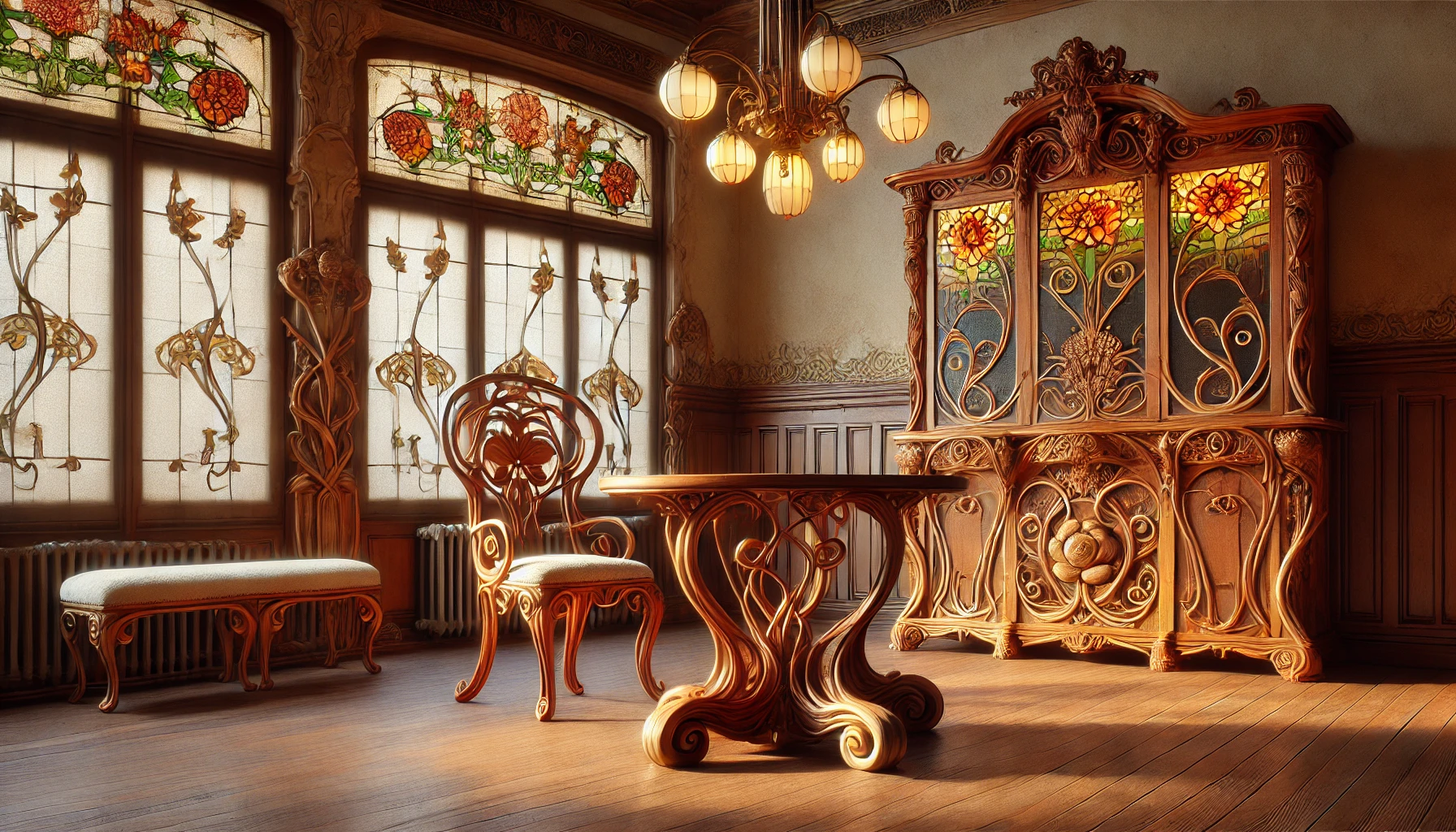
In the late 19th century, amidst an era of significant cultural and technological shifts, Art Nouveau emerged as an artistic movement that revolutionized furniture and design. Celebrated for its natural inspiration, Art Nouveau broke away from traditional historicist styles, emphasizing organic shapes, flowing lines, and floral motifs. This style rapidly gained popularity across Europe, adopting different names in various countries: Jugendstil in Germany, Stile Liberty in Italy, and Modernismo in Spain. Its impact was profound, influencing not only furniture but also architecture, graphic arts, jewelry, and decorative object production.
Unlike its predecessors, which revisited and reworked elements from past eras, Art Nouveau sought to forge a completely new aesthetic, primarily drawing inspiration from nature. This translated into furniture with fluid lines, characterized by decorative elements such as leaves, flowers, interwoven branches, and animal figures. The conception of interior spaces underwent a radical change, with furniture seamlessly integrating with the architecture, contributing to a harmonious and immersive environment.
1. The Characteristics of Art Nouveau Furniture
Art Nouveau is distinguished by its attention to detail and the elegance of its forms. The central theme of this style is nature, reinterpreted through soft curves, floral decorations, and motifs inspired by plants, flowers, and aquatic creatures. Art Nouveau furniture departs from the rigid geometries of the past, embracing fluid and asymmetrical shapes in a constant interplay of movement and harmony.
Among its key features are:
- Sinuous and Organic Lines: Curves dominate every element of the furniture, from the legs of tables and chairs to the backs and armrests, creating a sense of fluidity and lightness.
- Natural and Decorative Motifs: Ginkgo leaves, irises, water lilies, dragonflies, and peacocks are among the most recurring subjects in furniture and inlays.
- Precious and Innovative Materials: Woods such as walnut, cherry, and mahogany are combined with stained glass, wrought iron, and bronze to create pieces of great elegance.
- Artistic Decorations: Carvings and inlays are executed with extraordinary craftsmanship, often enriched with enameled glass elements and polychrome ceramics.
- Asymmetrical Shapes: Unlike previous styles, Art Nouveau breaks traditional symmetry to create objects with innovative and harmonious designs.
These characteristics make Art Nouveau furniture true works of art, still highly sought after in the antique market.
2. Types of Art Nouveau Furniture
Art Nouveau furniture was designed to harmonize with the architecture and decorative elements of interiors, creating refined and immersive environments. Among the most iconic pieces of this style are:
- Chairs and Armchairs with High Backs: Often characterized by curved and carved backs with floral motifs, these seats were light and slender.
- Tables with Arched Legs: Made with sinuous structures, often enriched with wrought iron inserts or bronze details.
- Credenzas and Buffets Decorated with Artistic Stained Glass: The doors of these pieces of furniture were embellished with colored glass inspired by the works of artists like Tiffany.
- Desks with Soft Lines: Often decorated with mother-of-pearl inlays and brass applications.
- Beds and Bedroom Furniture: Characterized by headboards with elaborate curves and carvings that evoke nature.
Each piece of Art Nouveau furniture was designed to enhance the harmony of the environment, blending aesthetics and functionality into a unique artistic vision.
3. Techniques of Craftsmanship and Decoration
Art Nouveau stands out for its use of refined craftsmanship techniques, which allowed for the creation of furniture of great artistic and decorative value. Among the most important techniques are:
- Floral Carving and Inlay: Artisans created decorations carved into the wood, reproducing natural motifs with extraordinary precision.
- Use of Wrought Iron: Curved iron elements were integrated into the furniture, especially in tables, chairs, and chandeliers.
- Stained Glass and Blown Glass: Many pieces of furniture featured artistic glass inserts, decorated with stylized floral motifs.
- Lacquered and Painted Finishes: Smooth and shiny surfaces enhanced the decorative details and the play of light.
- Use of Bronze and Brass for Decorative Details: Often applied to handles, knobs, and ornaments to add a touch of refinement.
These techniques required great artisanal skill, giving Art Nouveau furniture a superior quality and unparalleled artistic value.
4. The Influence of Art Nouveau in Antiques and Contemporary Design
The Art Nouveau style continues to exert a strong influence on the world of antiques and contemporary design. Original furniture from this period is highly sought after by collectors, with pieces signed by designers such as Émile Gallé, Louis Majorelle, and Hector Guimard fetching high prices at international auctions.
In contemporary design, Art Nouveau is often reinterpreted through furniture and accessories inspired by its fluid shapes and natural motifs. Soft curves and floral decorations are still used today to create sophisticated and welcoming environments, in harmony with nature.
The fashion, jewelry, and architecture sectors also continue to draw inspiration from this style, demonstrating how relevant and fascinating Art Nouveau remains.
5. Conclusion
Art Nouveau marked a revolution in the world of furniture, introducing an aesthetic inspired by nature and the fluidity of forms. Its furniture, characterized by sinuous lines, precious materials, and refined decorations, represents an indispensable point of reference in the history of design. Even today, the Art Nouveau style continues to be admired and appreciated for its ability to transform any environment into a work of art, combining beauty and functionality in a perfect synthesis of elegance and harmony.