

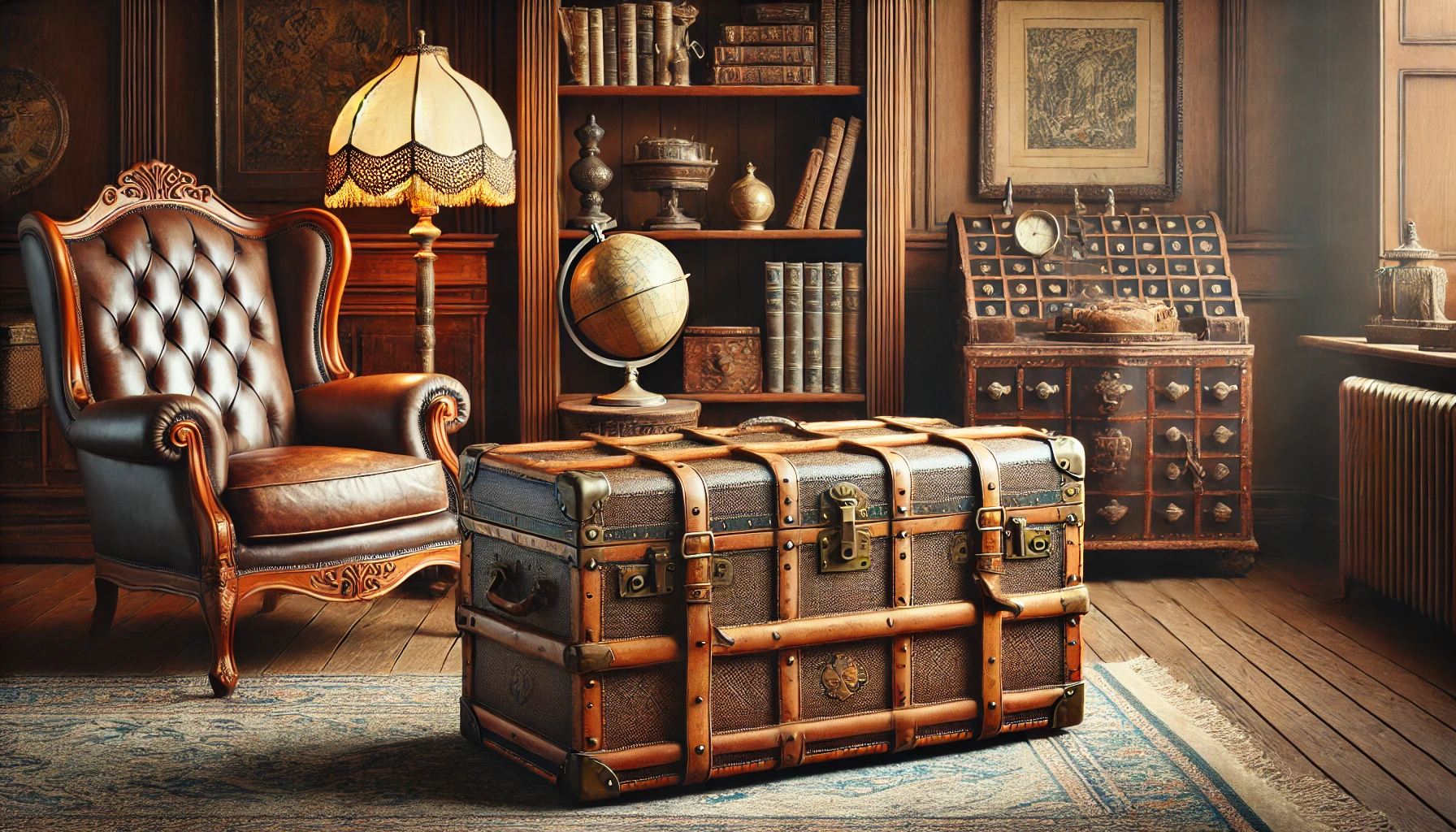
In the vast world of antiques, few objects possess such evocative and timeless charm as antique trunks. Used for centuries as travel containers, guardians of family treasures, and even as decorative elements in noble residences, these extraordinary artifacts tell stories of bygone eras, transoceanic voyages, and now-forgotten domestic uses. Today, their historical and decorative value continues to make them highly sought after by collectors and interior design enthusiasts. In this article, we will explore the origin of antique trunks, the different types that exist, and the criteria for assessing their value.
Origins and Evolution of the Antique Trunk
The use of trunks as a means of transport dates back to ancient times, but it was in the Middle Ages that these containers began to spread as everyday objects. Initially made of solid wood with wrought iron reinforcements, they were used to store precious objects, clothing, and important documents. In the following centuries, trunks took on more refined forms and more elaborate decorations, adapting to the needs of each era.
In the 18th and 19th centuries, with the spread of carriage travel and the first great maritime expeditions, the trunk became an indispensable accessory for high society. The most prized models were covered in leather, waxed canvas, or exotic woods, while the interiors were lined with fine fabrics to protect the contents. Major luxury houses, such as Louis Vuitton, began producing custom-made trunks for the elite, making them true symbols of social status.
Types of Antique Trunks
There are several types of trunks, each with specific characteristics that reflect their original function. Travel trunks, among the most common, were designed to withstand movement and often featured iron reinforcements and elaborate locks. Some models, such as cabin trunks, were more compact and could be easily stored under ship beds or in train carriages.
Domestic trunks, on the other hand, were designed for daily use inside homes. Among these, blanket chests, typical of rural dwellings, were used to store linens and clothing, while dowry chests were intended to contain the trousseau of young brides. Many of these examples were enriched with painted or inlaid decorations, making them vintage works of craftsmanship.
Another fascinating type is represented by military trunks, often small in size and reinforced with metal corners to ensure greater resistance. These were used to transport personal effects during war campaigns and are now highly appreciated for their robust and functional character.
The Value of an Antique Trunk
Determining the value of a vintage trunk depends on several factors. Authenticity is the first element to consider: original trunks, made with traditional techniques and quality materials, are much more sought after than modern reproductions. The period of production is just as important: examples dating back to the 18th or 19th century generally have a higher value than more recent ones.
The state of preservation also significantly affects the price. Trunks with the original patina, without invasive restorations or replacements of essential parts, are particularly appreciated by collectors. Finally, the rarity of the model and the presence of unique decorative details – such as mother-of-pearl inlays, leather coverings, or prestigious manufacturing marks – can significantly increase the value of an antique trunk.
Conclusion
Antique trunks are much more than simple containers: they are witnesses of past stories, symbols of an era in which travel was a luxury and attention to detail was an art. Whether it is a travel trunk, a blanket chest, or a military trunk, each piece embodies a timeless charm and can be transformed into an extraordinary piece of furniture. Investing in an antique trunk means bringing a fragment of history into your home, an object that combines functionality and elegance, and that continues to retain its aesthetic and collectible value even in the modern world.