

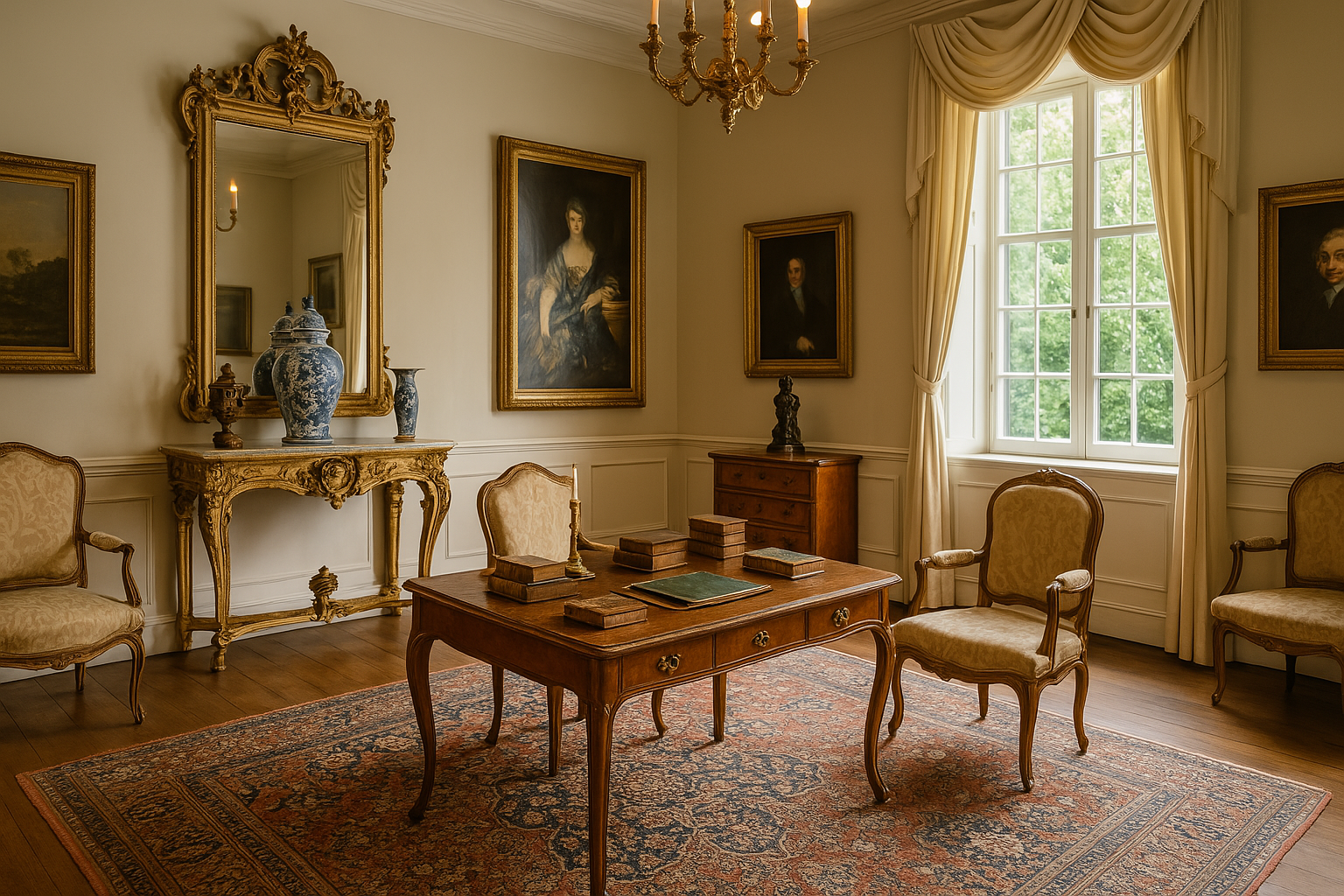
Across Europe, there are places where time seems to stand still, spaces where the furnishings, objects, and atmosphere offer an vintage glimpse into life in centuries past. House museums stand as some of the most fascinating testaments to material history and the aesthetic tastes of bygone eras. These aren’t just museums; they are genuine historic residences, often inhabited until recent times, where every piece of furniture, painting, furnishing, or textile tells a story.
For those who cherish antiques, visiting a house museum is not only an aesthetic experience but a total immersion into a world where art objects are an integral part of the domestic environment. Each room transforms into a living scene; every set table and armchair beside a fireplace seems to await the return of an inhabitant from yesteryear. These locations are precious treasure chests where furniture, tapestries, mirrors, chandeliers, and decorative items coexist harmoniously, providing a unique opportunity to observe historical styles not against a neutral gallery backdrop but in their natural context.
Among Europe’s most captivating house museums is the Musée Nissim de Camondo in Paris, a neoclassical villa that meticulously preserves the refined collection of 18th-century French furniture and objects once owned by the Camondo family. The richly decorated rooms poignantly recount the family’s tragic history and testify to a profound passion for period furnishings.
Another gem is the Sir John Soane’s Museum in London, a small masterpiece of architecture and collecting. Soane himself, a renowned 19th-century English architect, designed his home as a kind of stage for his treasures. Classical artifacts, architectural models, paintings, books, and curious objects follow one another in a fascinating maze of rooms and light.
In Venice, the Casa di Carlo Goldoni offers a journey into the heart of 18th-century Venetian life, with interiors that are simple yet brimming with charm, and a collection that includes ceramics, musical instruments, and prints. Further south, in Sicily, Casa Cuseni in Taormina preserves the refined taste of early 20th-century English collecting in a villa overlooking Mount Etna, featuring one of the most enchanting collections of applied arts in the Mediterranean.
But perhaps the house museum that most enchants antiques lovers is Villa Necchi Campiglio in Milan, where architectural rationalism merges with the bourgeois elegance of the 1930s. The original furnishings, ceramics, paneling, and artworks are perfectly preserved, offering a rare example of period interiors that are modern yet rich in classical allusions.
Exploring these residences is a way to understand antiques not just as artifacts but as integral parts of a culture of living. Each house museum tells the story of those who lived there, as well as those who wanted to preserve it with passion and respect. For the curious visitor, the experience becomes a sensory and cultural journey, where beauty and time meet in every object.