

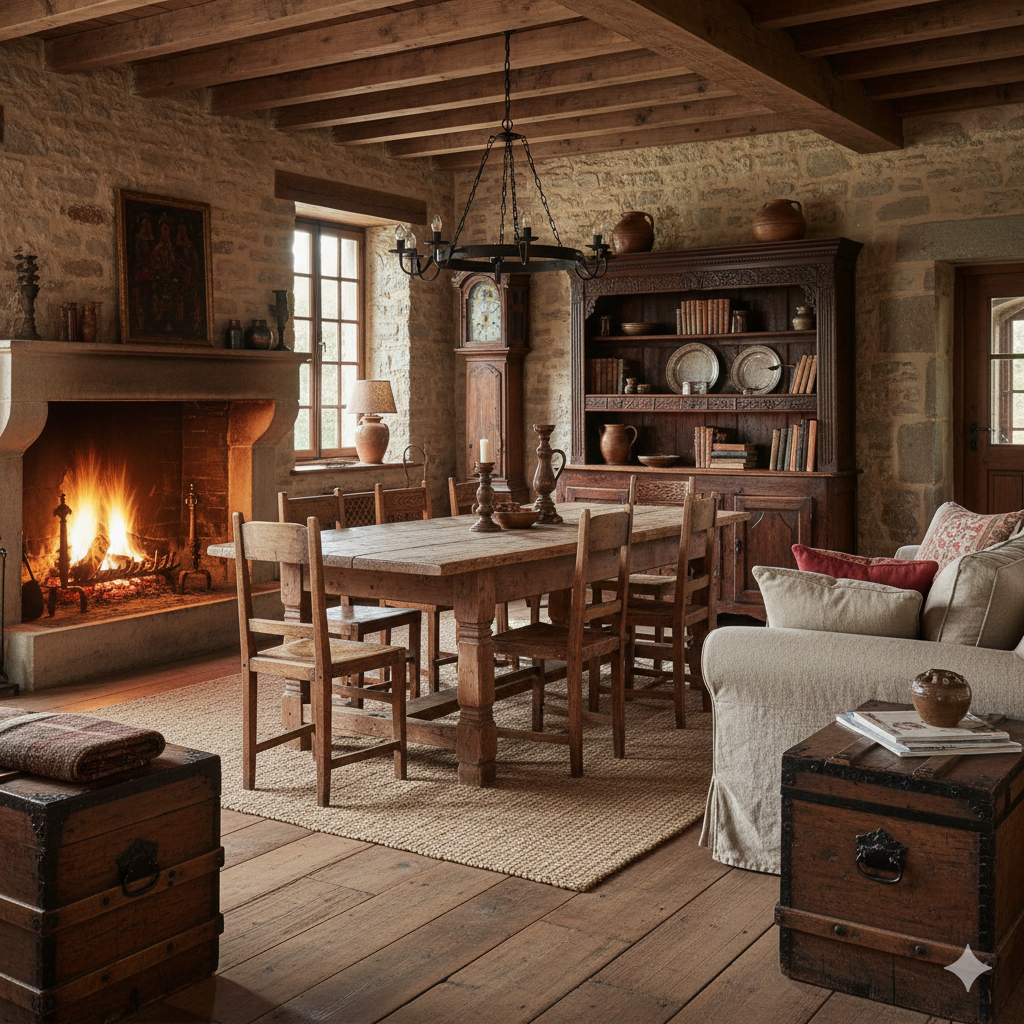
Rustic decor is a stylistic and cultural choice rooted in vintage simplicity, solid forms, and a connection to the land and traditional home life. In an era dominated by minimalist lines and synthetic materials, embracing furniture that evokes the scent of wood, history, and memory makes a distinct statement: it’s about living in warm, welcoming environments where every object has a story and every surface offers genuine texture. It’s within this context that antique furniture finds its most significant expression.
However, not all antique furniture suits the rustic style. Some pieces, excessively adorned with gilding or Baroque details, may clash within spaces that prioritize functionality and simplicity. The pieces perfectly in tune, conversely, are those constructed from local materials, with compact volumes, natural finishes, often marked by time but still full of character.
The most suitable furniture for rustic decor includes pieces originally intended for rural life, in farmsteads, country houses, estates, and mountain retreats: tables with turned legs, double-bodied sideboards, dough boxes, benches, cabinets, display cases, and chests of drawers with squared, solid forms. Crafted in solid wood, often chestnut, walnut, or cherry, these furniture items retain their original patina, bearing witness to daily use, small artisanal repairs, and polishing with natural waxes passed down through generations.
The table is perhaps the most emblematic element. In a rustic living room, a large work or refectory table becomes the centerpiece of the space. Whether it’s raw, with evident knots and imperfections left exposed, or more refined, but always balancing form and substance, the antique table lends weight and warmth to the environment. Paired with mismatched chairs, wooden benches, or upholstered seats in coarse linen, it creates a welcoming, lived-in, profoundly human atmosphere.
Alongside the table, the sideboard represents another anchor point. Historically used for storing tableware, bread, linens, or provisions, the rustic sideboard is distinguished by its modest proportions and essential finishes. In many examples, one can still observe handmade nails, original locks, forged hinges, and often a slight inclination of the shelves, a sign that the furniture was constructed with functional as well as aesthetic criteria in mind.
Other furniture perfect for this style includes dough boxes and blanket chests. Originally intended for storing bread or linens, today they become versatile containers, ideal in an entryway, at the foot of a bed, or beneath a window. The oldest models are often devoid of decoration or embellished with simple floral carvings, rosettes, or geometric motifs typical of local traditions.
Rustic bedrooms can be furnished with eighteenth-century chests of drawers, two-door wardrobes with clean lines, wrought-iron beds accompanied by antique nightstands. The secret is to mix without overloading, combining antique furniture with natural fabrics, neutral tones, and warm lighting. The goal is to recreate an intimate, familiar atmosphere that speaks of roots and well-being.
Rustic kitchens also find precious allies in antique furniture. An old open plate rack, an icebox converted into a storage unit, a work base with deep drawers—these pieces, integrated discreetly into a modern kitchen, add character and authenticity.
Finally, the emotional value of these furniture items should not be overlooked. Each piece carries with it the marks of a concrete past, made of hands that built them, families that used them, lives that unfolded around them. In rustic decor, where time is not erased but valued, these objects fully revive their function: to make the space inhabited, warm, and genuine.