

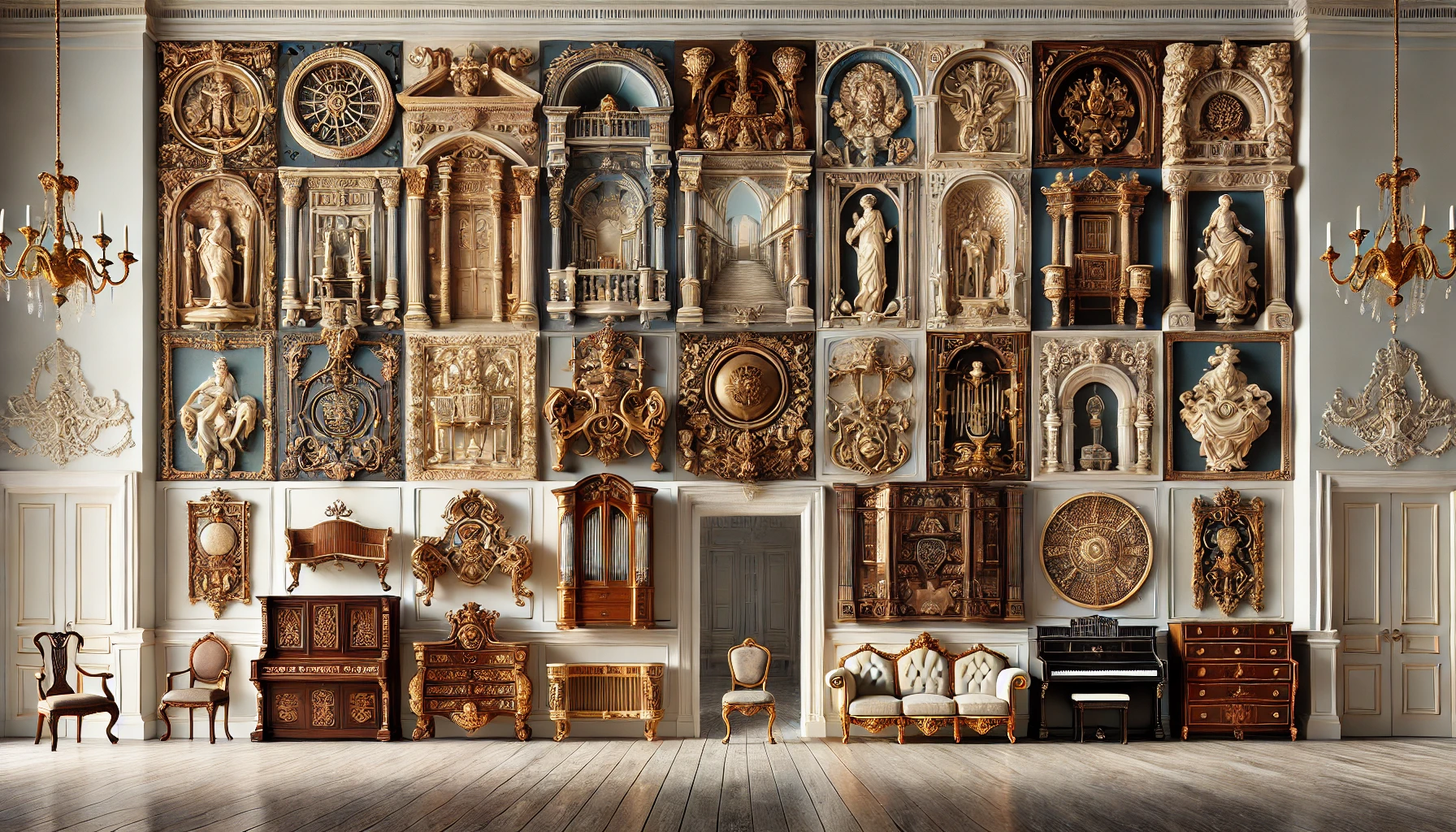
Embarking on an antiques collection is not merely a matter of taste or an aesthetic choice; it’s a personal journey of discovery, study, intuition, and—above all—time. One doesn’t become a collector overnight. It’s a slow process, nurtured through small, thoughtful purchases, meaningful encounters, passionate reading, avoided mistakes, and the occasional lesson learned the hard way. The beauty of this adventure lies in its depth: collecting means learning to see the world with new eyes—slower, more attentive, and filled with questions.
Those who are newly drawn to the world of antiques are often motivated by an immediate fascination: a piece of furniture that evokes a grandparent’s home, an object seen in a shop window, a childhood memory that resurfaces. This initial spark is precious, but it’s not enough. To transform curiosity into passion, and passion into a true collection, you need a method. And above all, you need awareness.
The first important step is deciding what to collect. It may seem trivial, but this is where many stumble. Antiques are a vast universe, and enthusiasm can lead to dispersion, buying a little of everything, attracted by objects that, while beautiful, may not speak to each other. The conscious collector, on the other hand, chooses a guiding principle. You don’t need to be an expert or start with important pieces. It might be a historical period, a type of object, a material, or a style. Some fall in love with 18th-century folk pottery, others with botanical prints, still others with rustic Piedmontese furniture, small scientific instruments, or Venetian glass. It doesn’t matter where you start, as long as there’s a direction. Even the most modest collection, if coherent, has a power that makes it significant.
Once you’ve chosen your field of interest, it’s time for silent study. Read catalogs, visit fairs, go to museums, and observe carefully. Every object seen, touched, and studied becomes a lesson. Over time, you develop a personal view, a kind of sixth sense that allows you to immediately grasp the quality, coherence, truth, or fiction of a piece. This view cannot be taught, but it is built day after day. The collector is, first and foremost, an observer.
In this initial phase, it’s essential to learn to ask questions. Talk to antique dealers, restorers, and other collectors. Dialogue is the key to any good collection. Those who sell, if they are serious, will always be happy to tell, explain, and share knowledge. Those who get annoyed, gloss over questions, or contradict themselves are probably not to be trusted. Antiques are also a matter of human relationships, and building a small circle of trusted reference figures is a great help.
An aspect often underestimated by beginners is space and care. Every antique object needs to be placed and preserved in the right way. It’s not enough to buy; you have to welcome it. A painting, a piece of majolica, an antique print should not only be displayed but protected, understood, and listened to. Not everything can coexist with the humidity of a cellar or the direct light of a window. Knowing this in advance avoids disappointment.
Finally, patience. It’s easy to be seduced by the desire to “complete” the collection, to immediately possess important pieces, to make a big score. But the best collections are those built slowly, with love, without haste. Every object must find its place in the story you are writing, and every purchase must add something, not just fill a void. Common sense, in this journey, is your best ally: it reminds you that a collection is made to last, to grow with you, to tell a part of your view of the world.
Starting to collect is like starting to write a letter to yourself over time. Every object chosen, every piece kept, becomes a word in that story. And when you look back, even after years, you’ll find that the story resembles you more than you ever imagined.