
In the world of antique art, the concept of integrity is far more complex than one might imagine. Unlike modern or contemporary works, an antique painting reaches us after centuries of history, relocations, wars, changes in taste, exhibitions, neglect, and—last but not least—restorations. But where does restoration end, and alteration begin? When does a technical intervention save a work, and when does it irreparably compromise its authenticity or value?
To answer these questions, we must start with a fundamental premise: restoration is part of a work of art’s life. No 16th or 18th-century painting can reach us perfectly preserved without ever having been touched. Indeed, many paintings exist today precisely because of careful restorations carried out in past centuries. The history of art is also the history of its conservation.
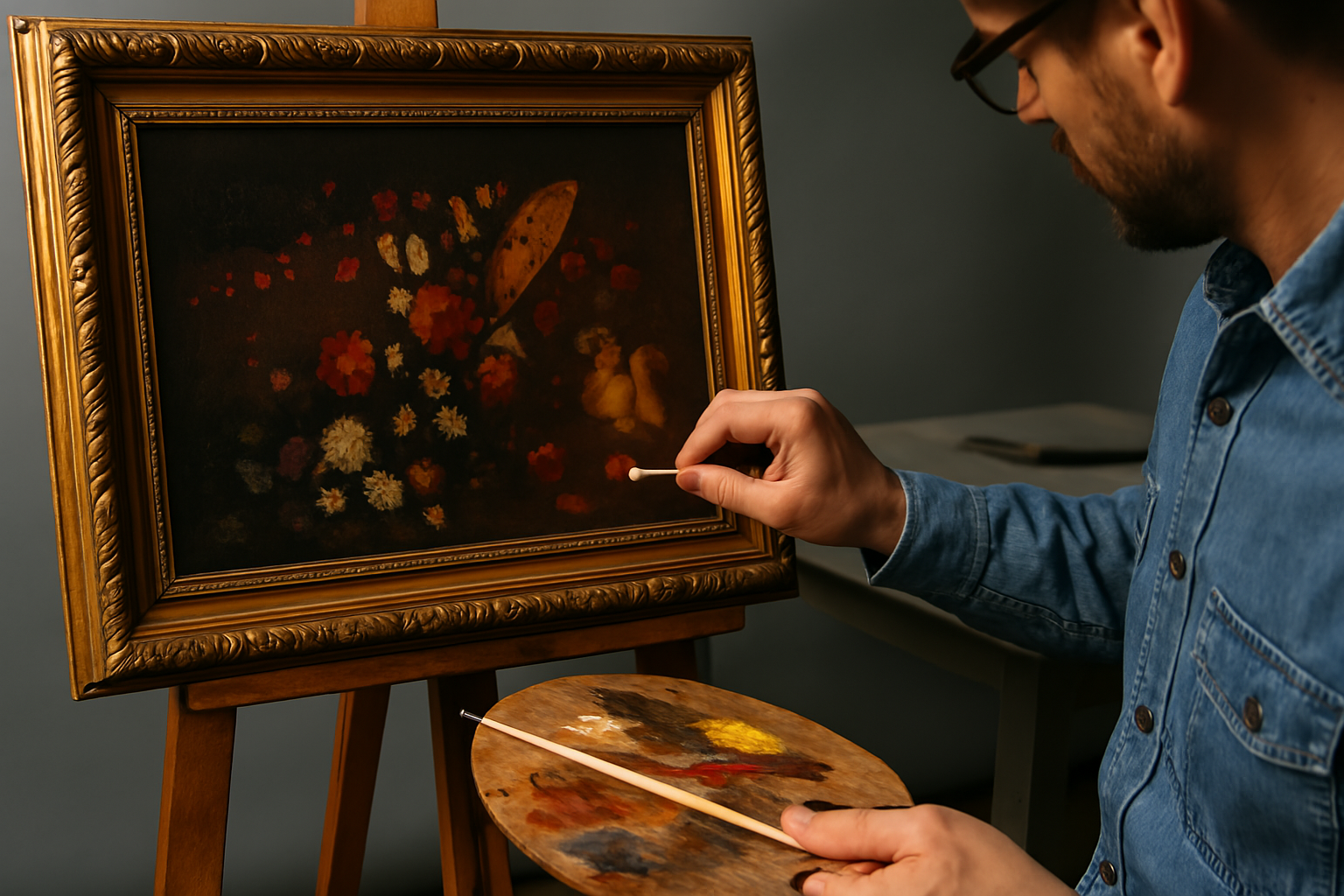
However, not all restorations are equal. There is a wide range of interventions, from the most conservative to the most invasive, and each has a different impact on the work. The most respectful restorers work with reversible materials, intervene only where necessary, keep the signs of age visible (while visually integrating them), and distinguish between the artist’s hand and that of the technician. Their goal is not to “remake” the painting but to stabilize it, protect it, and restore its legibility without falsifying it.
Unfortunately, in the history of antiques, there are also frequent cases of excessive interventions, done to increase the commercial value of the work or to mask its defects. There are restorations in which entire faces have been repainted, in which the original color has been overloaded, in which varnishes have been removed with overly aggressive solvents, forever erasing the depth of the original. Some works, after too many “touch-ups,” lose the material truth that constituted their soul and become—without actually being—copies of themselves.
One of the most problematic aspects is undeclared pictorial integration. In many works, especially in portraits, gaps have been filled with new paints, sometimes indistinguishable from the originals. If this intervention is not documented or visible under UV light, it can lead to a misunderstanding of the work’s authenticity. The same applies to re-linings (when the original canvas is attached to a new one), frame replacements, and the removal of “undesirable” signatures.
Context also plays a role. A restoration done in the 1960s or 70s follows different criteria than those of today. At that time, the goal was often to “clean” the painting to make it more legible, even at the cost of losing glazes, patinas, and transparencies. Today, on the contrary, there is a tendency to preserve the signs of age as an integral part of the work. The contemporary approach values imperfection, while the past tended to hide it.
So, how can a collector or enthusiast understand whether a restoration has compromised or enhanced a work?
First, by observing carefully. A painting that appears too “new,” too bright, too crisp compared to the era it represents may raise concerns. Antique varnishes tend to yellow and dull. A color that is too vibrant, too smooth, too saturated might have been recently retouched.
Second, by asking for documentation. Professional restorations are always accompanied by detailed technical sheets, before-and-after photographs, and an indication of the materials used. A serious seller has no problem showing this data. If, on the other hand, you notice hesitation, omissions, or vague answers, it’s right to ask questions.
Finally, by understanding that restoration, if declared, is not a defect but an act of care. A small integrated gap, a consolidated canvas, a retouch visible under raking light can be perfectly compatible with the authenticity of the work. The important thing is that there is no deception or excess.
There is a subtle balance between preserving and altering. Those who collect, buy, or love antique art must also learn to read the silences of the work: what has been hidden, rewritten, or replaced. A respectful restoration enhances the work; an invasive one disguises it. And it is our job, today, to choose which side to be on.