

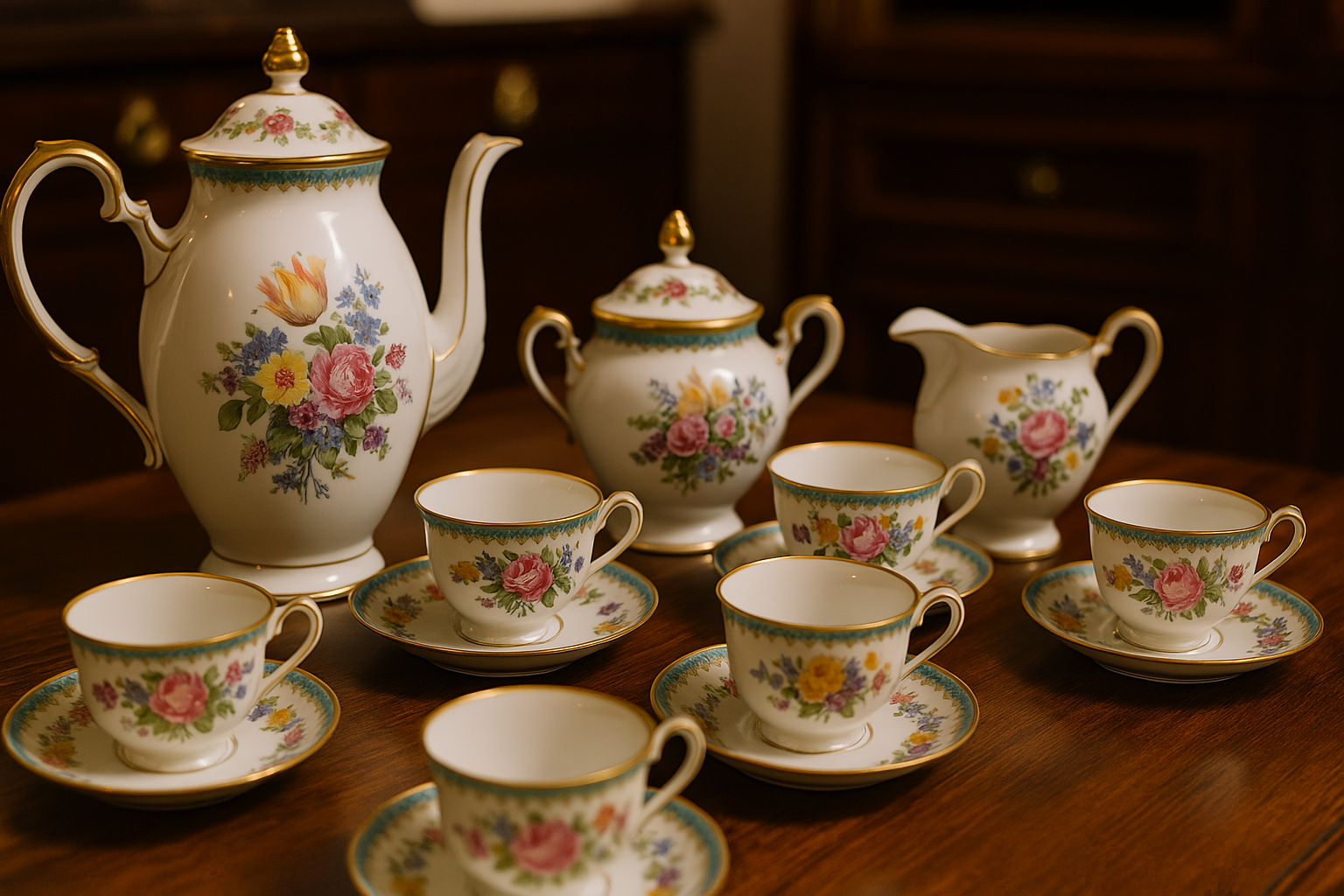
At first glance, a cup, a plate, a soup tureen might seem like ordinary, everyday objects designed for mere functionality. But when we talk about antique table porcelain, these same forms become mirrors of eras, reflections of social codes, and tools through which we can read the taste, wealth, and habits of aristocratic and bourgeois families. Each antique dinner service is much more than a coordinated set of tableware; it is a narrative, a visual language that tells us how people lived, how they ate, and how they presented themselves at the table.
During the 18th and 19th centuries, the table was not simply a place to eat, but a true theatre of social representation. The furnishings, clothing, arrangement of guests, and the quality of tableware and decorations were all part of a complex ceremony where ostentation and good taste were constantly intertwined. Porcelain, with its beauty and fragility, occupied a privileged place in this context: it was a symbol of status, but also of aesthetic culture, intellectual refinement, and belonging to a certain world.
The first complete porcelain services appeared in European courts as early as the 18th century. In Meissen, Sèvres, Capodimonte, and the great English manufactories, production began to shift from individual decorative pieces to entire sets designed for lunch, dinner, tea, and breakfast. The table became a field of formal and decorative experimentation: dinner plates, soup plates, dessert plates, saucers, cake stands, salad bowls, serving dishes, fruit bowls, cups, sugar bowls, teapots, and milk jugs. Each element had a function, a carefully studied form, and often a precise iconographic code.
A fascinating aspect of antique table porcelain is its ability to tell about the tastes of an era. The ornamental motifs changed according to fashion, geographical discoveries, and artistic influences. Floral decorations, chinoiseries, bucolic landscapes, and gallant scenes triumphed in the 18th century. Neoclassical decorations, gold borders, and heraldic motifs became popular in the 19th century. Some services were personalized with the family’s initials, while others depicted mythological scenes or reproduced famous paintings. Each decoration had a meaning, a message, a function.
The pictorial quality of these services was often very high. Porcelain painters were true artists, specializing in miniatures, capable of rendering flowers, animals, human figures, and landscapes with extreme precision. The colors were applied with a brush by skilled hands and then fixed through successive firings. In some cases, gold dust, platinum, or special enamels were used to give brightness and depth. To observe a Sèvres tea service or a Meissen soup tureen up close is to immerse oneself in an almost dreamlike dimension, where every detail is studied, calibrated, and chiselled.
But they were not only beautiful objects: table porcelain was also a tool for social communication. The way they were arranged, used, and preserved tells a lot about family dynamics. Often, there was a clear distinction between the ‘everyday’ service and the ‘display’ service, intended for important guests and special occasions. The latter was kept in locked cabinets, shown with pride, and passed down from generation to generation. Even today, in flea markets or antique houses, one can find almost intact services, a sign of the extreme care with which they were treated.
In modern collecting, antique table porcelain arouses great interest. Some seek complete sets, others focus on individual elements (such as rare plates or cups), others look for specific brands, and others build thematic collections (floral motifs, animals, historical scenes). In all cases, what is striking is the persistence of their evocative power: although they were created to be used, these porcelains seem made to be contemplated, to continue living as silent witnesses of a lost civilization of conviviality.
To buy or inherit antique table porcelain means bringing home a piece of everyday life from the past, but also of elegance and ritual. It means sitting at the table not only to eat but to experience a small fragment of history. And perhaps this is precisely what makes them so fascinating today: their ability to combine beauty, function, and memory into a single object.