

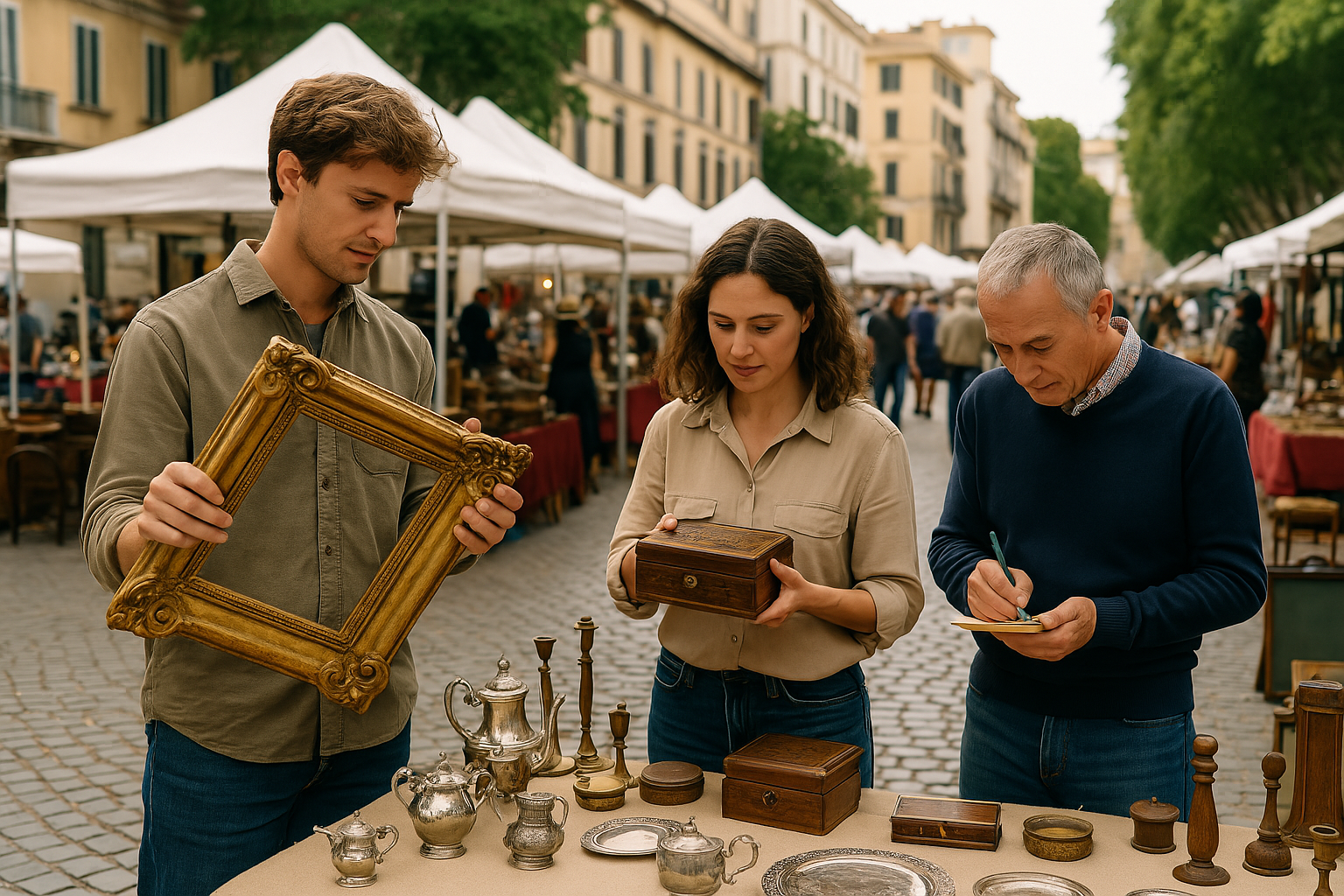
Visiting an antique market is an enriching, captivating, and complex experience. First-timers can easily feel overwhelmed by the sheer volume of items, the vendors’ chatter, the diverse styles and prices, and a euphoric sense of discovery that, if unchecked, can turn into confusion. That’s why preparing for your visit isn’t just helpful—it’s crucial. The goal isn’t to follow a strict set of rules but to develop a discerning eye capable of distinguishing, evaluating, and selecting. An antique market is neither a museum nor a shopping mall; it’s a vibrant place where preparation makes all the difference.
The first step is to do your research. Each market has its own unique character. Some specialize in genuine antiques, while others also include mid-century modern items, vintage goods, and artistic crafts. Some are formal events with selected exhibitors, while others are more casual and down-to-earth. Knowing what to expect beforehand can prevent disappointment or misunderstandings. Check the official website, read reviews, and talk to people who have been there before to fine-tune your approach.
Timing is also important. Arriving early often gives you access to the best pieces that are still available and haven’t been snatched up yet. Vendors are typically more relaxed and willing to chat, explain an object’s origins, and share its story. The early morning hours at antique markets have a different vibe, a calmness that allows you to observe more carefully. Conversely, arriving late can also present opportunities; some vendors, eager to avoid packing everything back up, may be more willing to negotiate on price.
Your mindset is another crucial aspect. Visiting a market isn’t just about searching for something specific; it’s also about being open to surprises. Often, what you find isn’t what you were looking for, but something that unexpectedly captivates you, speaks to you, or calls out to you. Having a general idea—a style, a period, a type of object—is helpful, but you should also be ready to embrace the unexpected. Your eye is trained by walking around, observing, and touching.
It’s also helpful to bring some practical tools: a pocket measuring tape, a magnifying glass, a notebook or app for jotting down measurements and observations, and reference photos. If you’re looking for furniture, for example, you should know in advance the maximum acceptable dimensions for the space where the object will be placed. The same applies to frames, rugs, and decorative accessories. Spontaneity is charming at antique markets, but it should be managed with clear-headedness.
Engaging in conversation with vendors is also essential. Asking questions about an object’s provenance, age, or any restorations—without hesitation—is not only legitimate but expected. Reputable vendors are happy to answer; in fact, they often enjoy sharing the story behind the objects they’re selling. And the way they respond can also be an indicator of their reliability. Evasiveness, vague answers, or contradictions should raise red flags.
Negotiating the price is an integral part of the experience. It’s not about haggling for the sake of it, but about finding an agreement that’s fair. Showing genuine interest, asking thoughtful questions, and valuing knowledge rather than focusing solely on lowering the price is often the best way to get a small discount and, at the same time, earn the vendor’s trust. Bargaining at antique markets is an age-old dance; mutual respect is what makes it elegant and constructive.
Finally, it’s important to remember that every object has a history, but also a destiny. Knowing how to recognize not only the economic value but also the emotional, symbolic, and aesthetic value of what you’re buying makes the difference between a simple object and a piece that truly becomes part of your life. When you return home with an object that has been well-chosen, understood, and carefully observed, the satisfaction is twofold: you haven’t just bought something, you’ve participated in a tradition.
Visiting an antique market is, in essence, a small journey. Not just in the space of a square or a fair, but through time, culture, and your own tastes. And like any journey, it requires preparation but also a free spirit. All it takes is a bit of attention, a good dose of curiosity, and a willingness to be surprised. Because sometimes, the real treasure isn’t the object you find, but the moment you recognize it.