

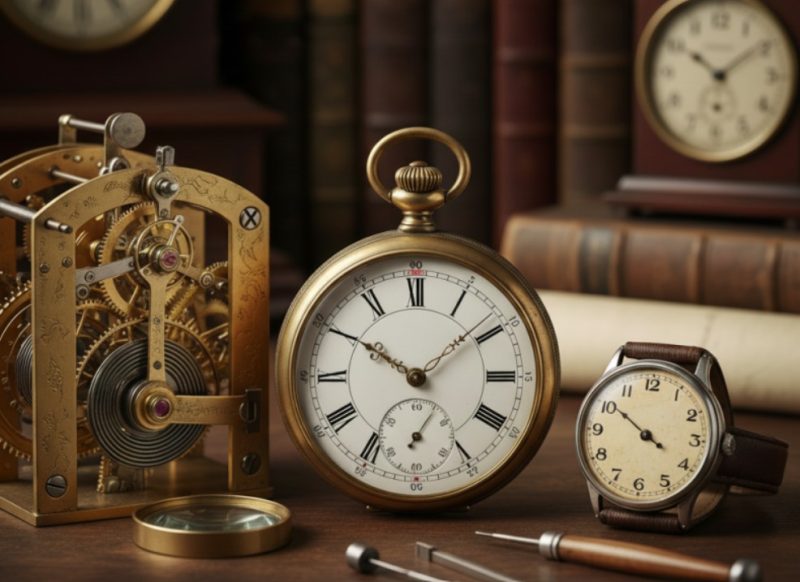
Antique clocks exert a profound fascination. They are not just instruments for measuring time, but living testimonies to history, small mechanical sculptures that tell of human ingenuity, the aesthetics of an era and the rhythm of a past life.
Every dial, every engraving, every imperfection speaks. But knowing how to listen to that language requires an eye, knowledge and a touch of experience. Recognising an vintage antique watch, distinguishing between originals, replicas and restorations, is an art that combines curiosity, method and respect for time itself.
The dial: the first window on time
The dial is the face of the watch, the first thing that catches the eye before any other detail. It is not just a functional surface, but an aesthetic manifesto of the era in which it was created.
In 18th-century models, for example, grace and refinement dominate: Roman numerals for the hours, Arabic numerals for the minutes, floral decorations, enamels and meticulous landscapes.
With the 19th century and the industrial revolution, the dial became more rational and clean, but it did not lose its symbolic language.
Tips & Tricks:
- Look at the numbers: on antique pieces, they are often slightly irregular, painted or engraved by hand.
- Touch the surface: vintage enamel is softer to the touch, never perfectly shiny like modern enamel.
- Look at the patina: slight oxidation or micro-cracks are signs of vintage ageing, not defects.
Each dial tells a story: the taste of its time, its intended use, even the philosophy of its creator.
Important signatures: marks, initials and hallmarks
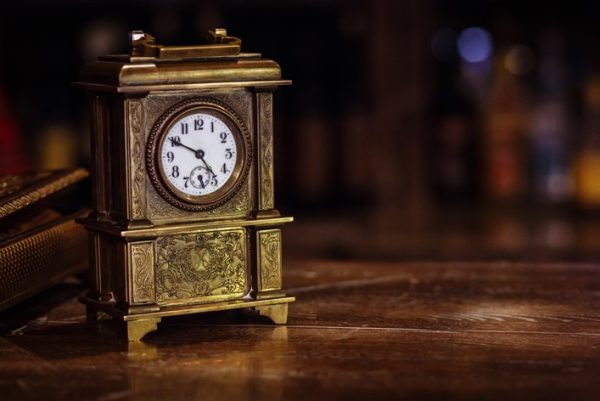
In an antique watch, signatures are like clues in a detective novel. They can be found on the dial, on the case or inside the movement. An vintage signature, engraved rather than stamped, can increase the value of a watch and attest to its provenance. But be careful: not all signatures are synonymous with authenticity.
In the 19th century, many retailers added their own names to watches purchased from foreign manufacturers, creating some confusion between the manufacturer and the distributor.
That’s why it’s important to know how to read the language of marks.
Tips & Tricks:
- Look for marks and initials inside the case: these may indicate the metal (gold, silver, brass) and the country of origin.
- If possible, compare the signature with those archived in vintage catalogues: hand-engraved signatures have irregularities that cannot be imitated by a reproduction.
- Be wary of signatures that are “too perfect” or centred with mechanical precision: they are often modern.
Among the names most sought after by collectors are Breguet, Le Roy, Lépine, but also 19th-century Swiss, English and Italian manufacturers, who often created extraordinary masterpieces.
The mechanical movement: the invisible heart of the watch
A true enthusiast knows that the value of an antique watch is not measured solely by its appearance, but by its internal movement, the beating heart composed of wheels, springs and escapements.
It is here that the watchmaker’s craftsmanship is fully revealed.
There are pendulum, verge, anchor, cylinder and manual winding movements. Each one tells a story of technological evolution, from the Baroque era to 19th-century Swiss precision.
Tips & Tricks:
- Check that the components are clean: a dirty or oxidised movement may indicate neglect or poor maintenance.
- Listen to the ticking: regular and full = good condition; irregular or “weak” = lubrication or escapement problems.
- Never force the winding of an antique watch: you could damage the delicate gears.
Some movements are chiselled or decorated with floral motifs and perlage, distinctive features of the most refined workshops.
An expert watchmaker can ‘read’ these engravings like a musician reads a score, recognising technical variations and possible period replacements.
Authenticity and fakes: how to protect yourself in the vintage watch market
Unfortunately, the appeal of antique watches has also given rise to a parallel market of fakes and reproductions.
Some are crude, others extremely sophisticated.
How can you tell them apart?
An vintage vintage watch always shows signs of wear: small scratches, slight differences between the dial and the case, signs of past maintenance.
Fakes, on the other hand, tend to look too uniform, as if time had never touched them.
Modern copies use different materials (steels or alloys that are not consistent with the period) and often insert recent movements into antique cases.
Tips & Tricks:
- Check that the case and mechanism match: if one dates back to the 18th century and the other to the 19th, it is probably an assembly.
- Look for serial numbers or valuation documents and always consult experts or watchmakers for a preliminary assessment.
- Buying from certified platforms or antique dealers with solid references is the best defence against scams.
A specialised website such as AnticoAntico.com, for example, guarantees the provenance and accurate description of each piece, minimising the risk of incorrect purchases.
When a watch tells the story of its owner
Every antique clock tells a human story. Some received it as a wedding gift, others carried it in their pocket every day as a status symbol, while others hung it in their living room as a sign of order and prestige.
Reading a clock also means understanding who owned it and the cultural context in which they lived.
It is not simply a technical object, but a witness to time and the people who lived it.
Preserving its authenticity means respecting that history, without forcing or distorting its essence.
Collectible time: the auctions and watches that made history
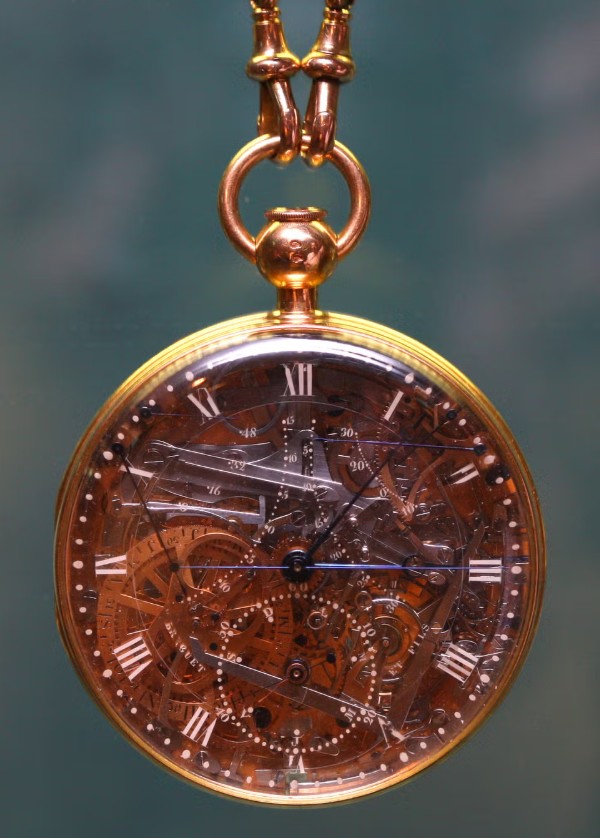
Just think of the ‘Breguet No. 160’, better known as Queen Marie Antoinette’s watch, a true marvel of 18th-century mechanics. Commissioned by a mysterious admirer in 1783, it was to be ‘the most complex watch ever made’. Breguet took almost 45 years to complete it, but the queen never saw it finished. It was stolen in 1983 from the L.A. Mayer Museum in Jerusalem and only recovered in 2007, becoming one of the most fascinating stories in the history of watchmaking.
There are moments when time truly seems to stand still, not inside a watch, but in an auction room.
It is there that masterpieces of antique watchmaking become legendary, not only for their technical value, but also for the stories that accompany them.
Another emblematic episode is that of the Patek Philippe Henry Graves Supercomplication, a masterpiece from 1933. With 24 complications – perpetual calendar, sunrise and sunset, map of the New York sky – it is considered the most complex pocket watch ever made without the aid of a computer.
In 2014, during a Sotheby’s auction in Geneva, it sold for £17.5 million, setting a world record. An astronomical price, yes, but also a sign of how much the culture of time and craftsmanship can be worth in the modern world.
And then there are lesser-known but equally fascinating stories.
In 2019, at Phillips in Hong Kong, a discreet travel clock by Ferdinand Berthoud, considered one of the absolute masters of precision in the 18th century, exceeded all expectations thanks to its rarity: it sold for over €600,000 after a long battle between European and Asian collectors.
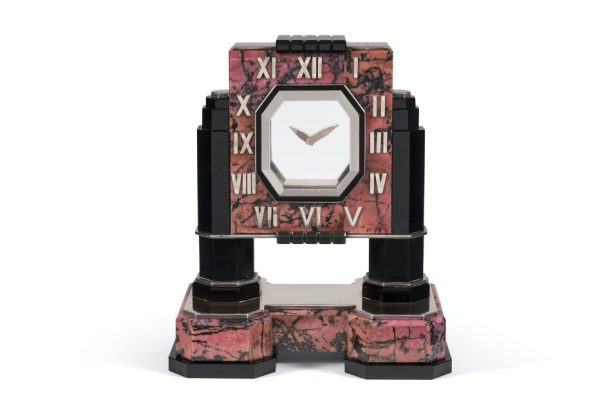
Or the case of the Cartier “Mystery Clock” table clock, where the hands appear to float in the glass, an optical trick devised by Maurice Couët in 1913.
One of these clocks, which belonged to the Duke of Windsor, was sold by Christie’s for over $1.5 million, symbolising the perfect combination of decorative art and engineering that makes antique clockmaking so unique.
When value is not just economic
Behind every auction record there is always something deeper: the fascination of precision, beauty and the mystery of time.
Collecting antique watches is not about chasing prices, but participating in a narrative that spans centuries of art and technology.
Every hand that slowly moves across a vintage dial carries with it the heartbeat of those who built it, the patience of those who adjusted it and the wonder of those who observe it today.
And perhaps this is why, even in front of a crowded auction room and staggering figures, a collector’s eyes always shine in the same way: not because of the price, but because of the magic of a time that still pulsates within an antique mechanism.
Tips for those who want to start collecting antique watches
- Start with curiosity, not obsession with bargains. It is better to have one well-documented watch than ten suspicious “bargains”.
- Observe, photograph, compare. Create a personal archive: over time, you will develop a keen eye.
- Invest in knowledge. Books, exhibitions, auctions and discussions with experts are the best way to learn.
- Always keep the movement in good working order. Regular maintenance preserves its value and accuracy.
- Document each piece. Technical data sheets, photographs, certificates: these will be your collection’s passport.
Time is not possessed, it is cherished
Collecting antique watches means learning to cherish time, not to stop it.
Each vintage piece is a small mechanical universe, a window onto a different era, a gesture of beauty and ingenuity, and perhaps the real secret lies precisely in this: understanding that authenticity lies not only in the material, but in the emotion that each ticking sound arouses.