

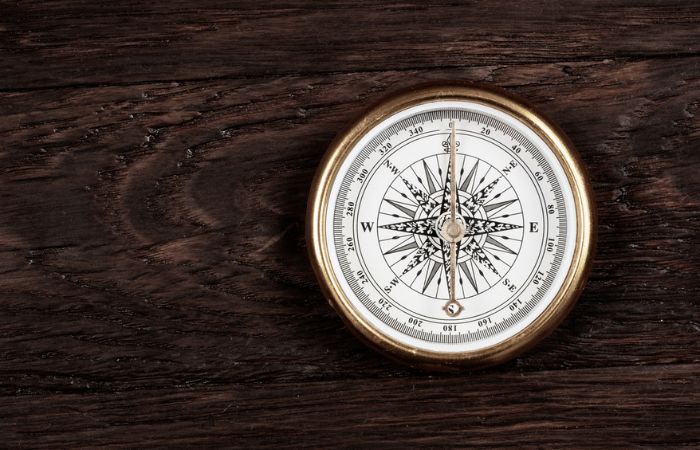
A Timeless Charm When Science Became Art
Imagine stepping into a silent room, lit only by the soft light filtering through a high window. On a large antique wooden table lie objects that seem suspended between present and past: a compass with a burnished brass body, an astrolabe with engravings so perfect they seem made yesterday, a nineteenth-century microscope with still-clear glass eyepieces… Each piece tells a story, not only of science, but of men and women who, centuries before us, set out to understand the world.
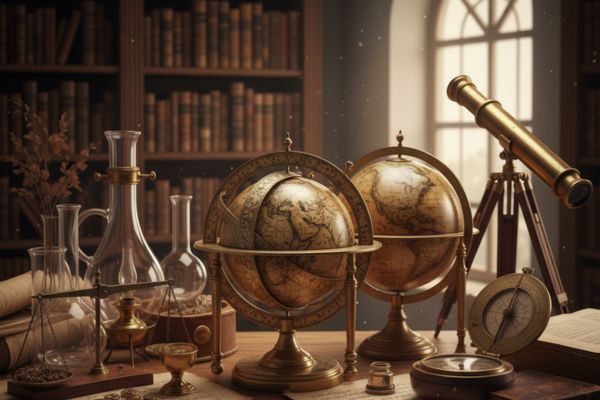
Welcome to this journey through antique scientific instruments, where we will discover together how some of the most fascinating objects in human history have been used to observe, measure, and interpret reality. It is a world where curiosity is embodied in objects of metal, wood, and glass — silent witnesses of bold minds.
The Compass: The First Orientation Instrument
When we think of the compass, we often imagine it in the hands of a sailor during a sea adventure. And indeed, the compass is one of the oldest known orientation instruments. But before ending up on ships, its history begins far away, in medieval China, where it was used in geomantic and religious contexts. Only later was it applied to navigation.
You look at the compass between your fingers: the dial is engraved with ancient symbols, the magnetic needle still free to swing towards the north. Thinking that a simple magnetized needle, suspended on a pivot, has revolutionized the concept of travel and discovery makes you realize how much power is contained in an apparently humble object.
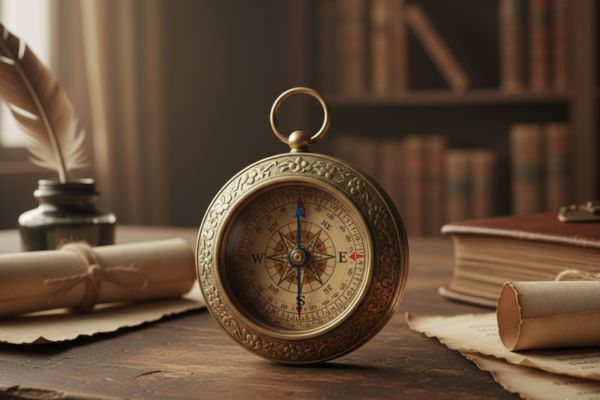
In collecting, antique compasses are appreciated not only for their historical function, but for the elegance of their construction: brass, thick glass, hand-engraved scales. Each compass is a small world enclosed in a shiny shell, and owning one means carrying with you a fragment of the epic of the great navigators.
Astrolabes and Sundials: Instruments for Reading the Sky
Before clocks marked time in every corner of the planet, the ancients had other ways to measure the passage of hours. Two of the most fascinating instruments used to read the sky are the astrolabe and the sundial.
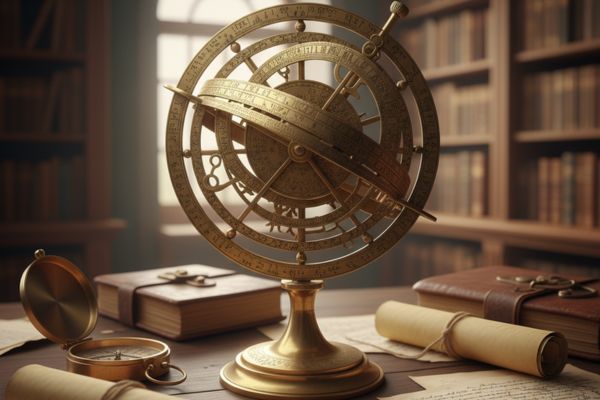
The astrolabe is a masterpiece of pre-modern engineering. Imagine it as a portable scaled map of the sky: overlapping concentric circles, engravings representing the stars, and an adjustment so precise that it allows you to calculate the time, the position of the sun, and even the latitude. In the medieval Islamic world, the astrolabe was considered a symbol of high knowledge and was used by astronomers, astrologers, and navigators.
The sundial, simpler in concept but no less poetic, uses the shadow projected by the sun to indicate the time. Many of these ancient instruments have artistic forms: marble columns with finely crafted engravings, metal plates with Roman numerals, elegantly shaped gnomons. Owning an antique sundial is a bit like owning a fragment of poetry, a physical link with the celestial motion that has marked our existence for millennia.
For the modern enthusiast, these instruments are more than just display objects: they are bridges to a worldview in which science, art, and spirituality were seamlessly intertwined.
Compasses, Calculations, and Drawings: The Instruments of Mathematicians
Now let’s move to the workshop of a Renaissance mathematician: a room full of polished wooden tables, scattered parchments, and on each of them signs of work in progress. On the surface, compasses, rulers, squares, and inkwells testify to the attention to detail and precision.
The compass, in particular, is not only a tool for drawing perfect circles, but a symbol of mathematics itself: a geometry that aspires to order and beauty. The antique versions, made with noble materials such as brass or silver, were calibrated with a finesse that reflected the importance of proportion and measurement.
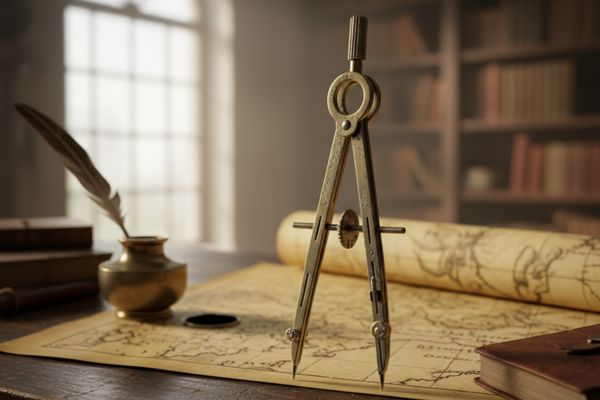
Handling an antique compass is an almost meditative experience: the tip of the brass compass, polished by time, the slight resistance when opening or closing the arc… It is like feeling in your hands the methodical thought of those who used it to calculate, design, and understand the physical world.
Antique Microscopes: Discovering the Invisible
Now we come to one of the most revolutionary instruments of science: the microscope. Before its invention, the invisible world remained — precisely — invisible. With the advent of microscopes, incredible horizons opened up: cells, bacteria, textile structures never imagined before.
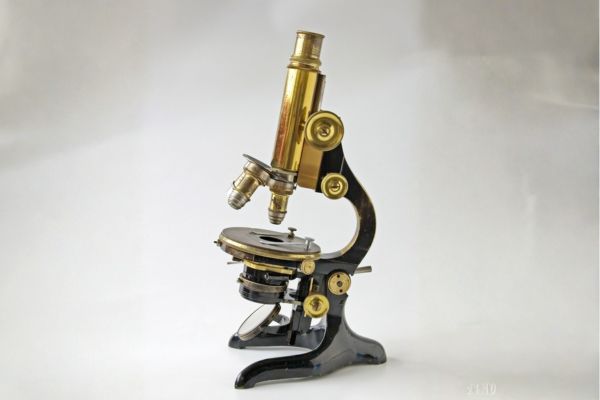
The first 17th-century microscopes were elegant objects, often mounted on wooden and brass structures, with hand-blown glass eyepieces. The lenses, although not having the optical perfection of modern ones, were still sufficient to reveal a universe that until then no one had seen. The biologists of the time, from Hooke to Leeuwenhoek, could not have imagined that they would lay the foundations for modern cell biology.
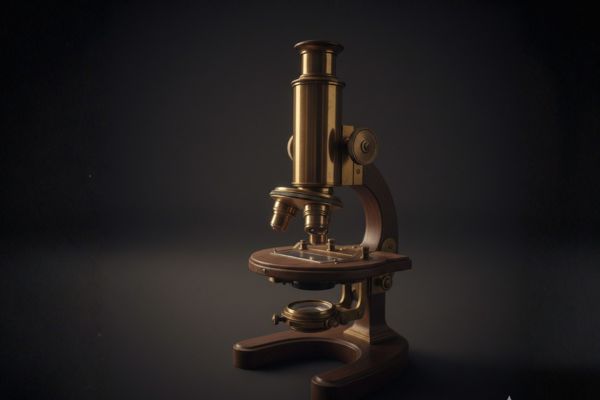
For today’s collector, an antique microscope is not only an object to admire, but a tangible testimony to the scientific revolution. It is the material evidence of how the ability to observe carefully can change your perception of the world: from a philosophical, natural, and even spiritual point of view.
Barometers, Thermometers, and Other Climate Instruments
Looking at a collection of antique scientific instruments, one cannot fail to come across devices dedicated to measuring the weather: barometers, thermometers, hygrometers. These instruments arose from the need to understand and predict the climate, a theme that remains as relevant today as ever.
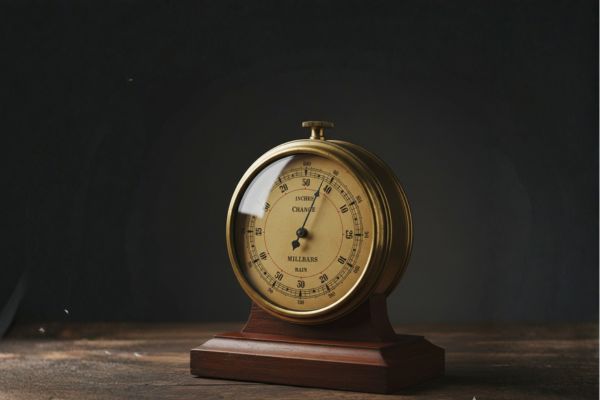
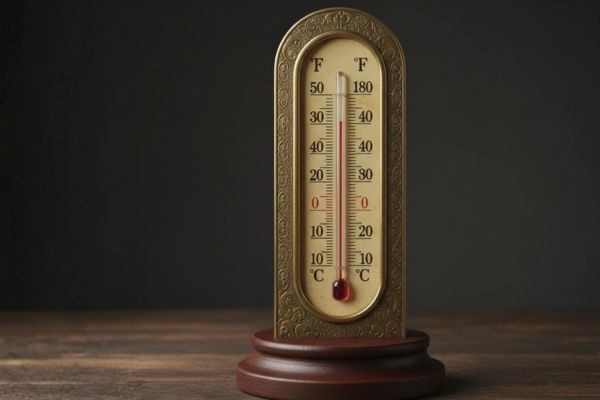
The barometer, invented in the 17th century by Evangelista Torricelli, was often a glass column filled with mercury, mounted in artistic frames. Its purpose was simple but profound: to measure atmospheric pressure to predict weather changes. Antique thermometers, on the other hand, often combined beauty and function: engraved scales, blown glass reservoirs, and, in some cases, artistic decorations.
Collecting these instruments means embracing the history of meteorology: understanding how man has tried to interpret an element as elusive as it is fundamental to life on Earth.
The Stories Behind the Objects
Each antique instrument has a unique story. There is the compass that guided an explorer to unknown lands, the astrolabe that helped an astronomer calculate the positions of the stars, the microscope that allowed a scientist to observe cells for the first time in his life.
It is fascinating to think of all the hands that have touched these objects before they reached ours. Imagine an 18th-century cartographer opening his compass to plot a course, or a 19th-century naturalist adjusting his microscope in the morning light. Every scratch, every small imperfection tells something — a journey, a discovery, an error corrected with patience.
And here lies the true value of antique scientific instruments: they are not simple artifacts, but a bridge between past and present. Not only because they remind us how far we have come in science, but because they show us the human path that has brought us this far, made of curiosity, audacity, and dedication.
Preserving and Enhancing: Why Collect Antique Instruments
For those who love antiques, antique scientific instruments offer a wealth of meaning and beauty that goes beyond the mere object. They are testimonies of thought, technology, and culture. Preserving these instruments means preserving important pages of the history of human thought.
If you are approaching this field as a collector, consider these aspects:
1. Authenticity and Provenance
An antique piece with a documented history has a value not only economic, but above all cultural. Knowing where it comes from, who owned it, and how it was used immensely enriches the ownership experience.
2. Conditions and Conservation
Many antique instruments require special care: delicate glass, metals that can oxidize, woods that dry out. Proper conservation allows you to keep intact the history that these objects carry with them.
3. Context and Narration
An astrolabe is not just a piece of engraved metal: it is the symbol of a civilization that looked at the sky with eyes full of wonder. Telling the story of each piece is as important as owning it.
An Invitation to Discover
Over the centuries, man has built instruments to explore the world — inside and outside himself. From the compass that indicates the north to the microscope that reveals the invisible, each instrument is a testimony to that spark of curiosity that drives us towards new frontiers.
For those who love antiques, antique scientific instruments are an invitation: to touch history with your own hands, to read the world through different perspectives, to feel part of a long tradition of observers, explorers, and thinkers.
So, the next time you find yourself in front of an astrolabe, a compass, or an old microscope in a window or on a catalog, stop for a moment. Observe it carefully. Who knows — you might feel under your fingers the echo of epochal discoveries, and with a little imagination, you might even see the future shining in those surfaces patinated by time.