

By Alessandro Moretti, Journalist specialized in Antiques – Milan
Updated: February 24, 2026
Over 20 years of experience in narrating private collections, historical furnishings and rare objects between Italy, France and Austria.
This article stems from direct observations made during visits to historic houses, family archives and restoration workshops, where I was able to closely examine original handles, period fabrics and accessories that have remained intact for generations.
Why do small details tell more history than large furnishings?
Handles, fabrics and accessories are the points where daily life has left concrete traces. Unlike imposing structures, which communicate style and period, details reveal repeated gestures, domestic habits, personal choices. They are the most touched, most lived-in, most repaired parts. And it is precisely there that time becomes visible.
The hidden value of details in antiques
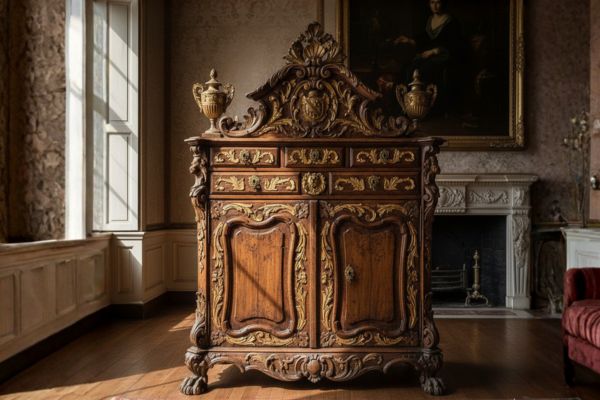
When you enter a room furnished with antique furniture, the eye is caught by the proportions: the majesty of a wardrobe, the balance of a sideboard, the shine of a wax-polished table.
But after the first glance, something more subtle happens. You get closer. You observe the lock. You touch a handle. You notice a seam on the edge of an armchair.
The human dimension of the object is concentrated in those details.
Over the years I have learned that the true collector never stops at the general surface. He looks for consistency between the whole and the minute parts. Because a piece of furniture can be restored, but an original handle tells of an authenticity that cannot be replicated.
Handles: the exact point where history has passed from hand to hand
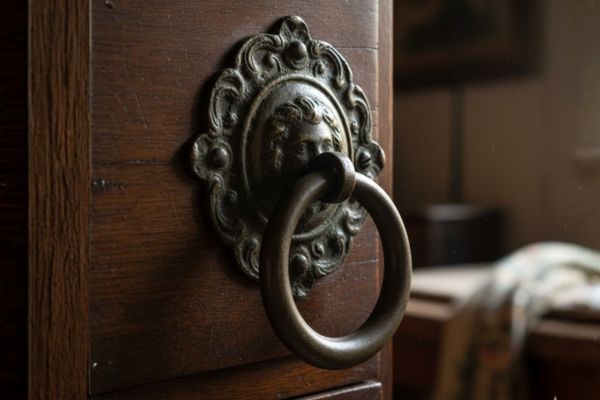
Each handle is a place of contact. It has been grasped thousands of times. It has been pulled with haste, with caution, with distraction.
In 18th-century Italian furniture, handles in worked brass, with plant motifs and small volutes, are often found. In 19th-century pieces from the Lombardy and Piedmont areas, the lines become more sober, but attention to the quality of the metal remains evident.
What to observe in an vintage handle?
- Natural and irregular wear at the gripping points
- Non-uniform patina, with slight differences in hue
- Traces of oxidation consistent with the age of the furniture
- Screws and fixings compatible with the period
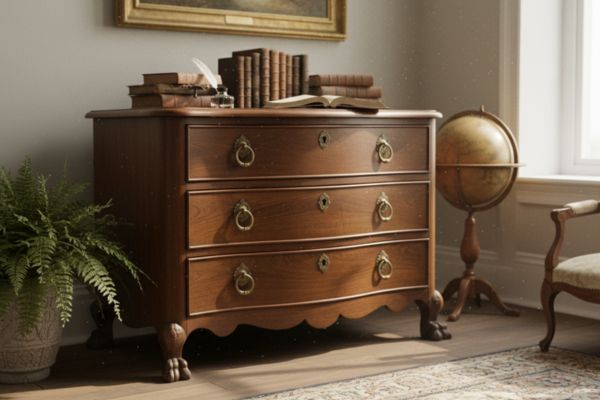
In a country house in Monferrato I observed an early 19th-century chest of drawers with slightly misaligned handles. It was not a manufacturing defect: it was the result of a settling of the wood over two centuries. That small shift told the life of the object better than any certificate.
Why is patina so important?
Patina is not dirt. It is sedimented time.
Many overly aggressive restoration interventions eliminate that subtle stratification that makes an object credible. An excessively polished surface may appear “beautiful”, but often loses narrative depth.
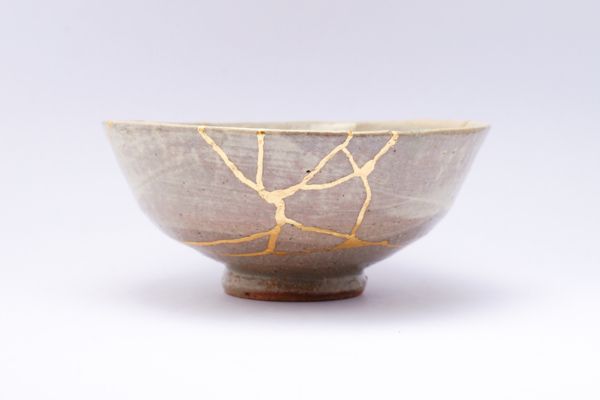
The natural patina presents:
- Lighter areas where the hand has insisted
- Micro-scratches compatible with daily use
- Slight opacity in the less touched parts
It is a delicate balance. And those who collect with sensitivity learn to recognize it.
Fabrics: the tactile memory of rooms
If handles speak of hands, fabrics speak of bodies and habits.
A worn velvet on the armrests indicates long conversations, evening readings, waiting. A damask slightly discolored near the window tells of decades of natural light.
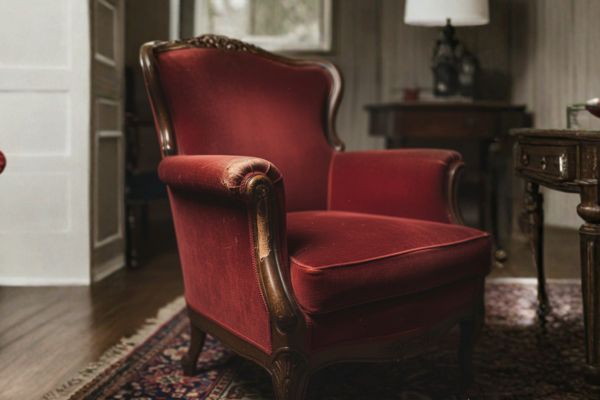
In the historic buildings I visited in Veneto, the silk-covered armchairs showed almost imperceptible differences in tone between the center and the edges. It was not a defect: it was the testimony of the sun that, season after season, had caressed the fabric.
How to recognize an original fabric?
- Internal seams made by hand
- Not perfectly uniform padding
- Slight mending consistent with the era
- Natural fibers with irregular weave
A fabric that is too perfect, without variations, is often the result of recent remakes.
Accessories: objects born for everyday life
Accessories are perhaps the most sincere objects in antiques.
A sewing box with some thread still inside.
A cigar holder with engraved initials.
A small bronze paperweight, worn on the edge.
These objects were not destined to become precious. They were tools of everyday life. And that is precisely what makes them powerful.
Why do accessories retain such intense charm?
- They are proportioned to the hand
- They bear personal signs (engravings, dates, dedications)
- They have often remained in the same family for generations
- They were not created for the market, but for use
I remember a small burr box that belonged to a family from Turin: inside, a faded dedication dated 1898. It was not a rare object in a technical sense. But it was unrepeatable.
Imperfection as a guarantee of authenticity
In the market contemporary, the idea of perfection dominates. Uniform surfaces, symmetrical lines, impeccable finishes.
vintage antiques work differently.
A small crack in the original paint.
A key that requires a slight lateral movement.
A button replaced decades ago with one similar but not identical.
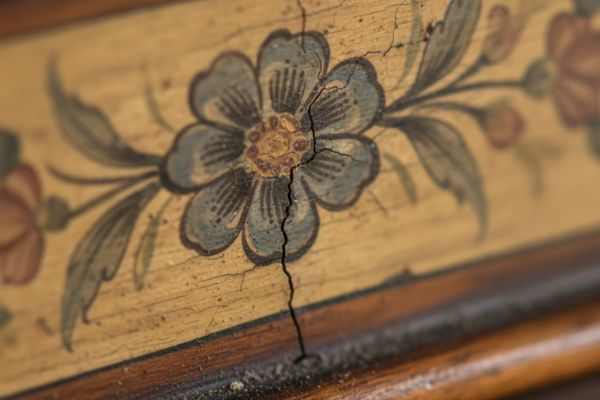
These details do not diminish the value. They strengthen it.
They are signs of continuity of use.
How to train your eye for detail
Observing an antique object takes time.
I always suggest four steps:
- Look at the whole to understand proportions and style.
- Approach the points of human contact.
- Verify the consistency between structure and small parts.
- Look for signs of overly invasive interventions.
Often a few minutes of careful observation are enough to distinguish an vintage object from one that has been excessively reworked.
The role of restoration: preserve, not erase
The ideal restoration does not aim to make the object “new”. It aims to stabilize it.
In the artisan workshops I have frequented, the most experienced restorers speak of “respect for the material”. Do not replace what can be consolidated. Do not polish what tells of time.
A good restoration:
- Stabilizes the structural parts
- Maintains the original components when possible
- Makes the integrations recognizable
Transparency is part of the ethics of antiques.
Why do details speak to the modern collector?
In an era dominated by mass production, antique details represent the opposite: uniqueness.
A hand-worked handle is not identical to another.
A manual seam presents minimal but visible variations.
An engraved accessory retains a personal touch.
The contemporary collector seeks authenticity, not perfection.
The emotional connection with objects
Antique objects create emotional connections because they have survived.
They have gone through wars, removals, changes in taste, inheritances. Yet they have reached us.
When we touch a worn handle or observe a slightly discolored fabric, we perceive a continuity. It is a silent dialogue with those who came before us.
The greatness of small things
A large piece of furniture can impress.
But it is a handle smoothed by time, a fabric carefully mended, a box engraved with almost invisible initials that generate vintage emotion.
In antiques, true wealth is not grandeur. It is memory.
And memory, almost always, hides in the details.
Author of this article
Alessandro Moretti — Journalist specialized in Antiques, Milan.
For over twenty years he has been narrating rare objects, historical furnishings and private collections in Italy and abroad. His work focuses on the analysis of material details as a narrative key to understanding eras, social contexts and family memories. He collaborates with antique dealers, restorers and collectors to document stories that live in the smallest details.
FAQ: Small details that speak of distant eras
How to recognize an vintage antique handle?
Check the natural patina, the consistency of the wear, the original hardware and slight dents. Signs of natural settling indicate authenticity.
What elements make an vintage historical fabric?
Hand stitching, discreet mending, irregular weave and original padding. Discoloration consistent with light and use confirm originality.
Why are small accessories important?
Cigar holders, sewing boxes or engraved paperweights show daily gestures, dedications and initials, offering information on the original context.
Does imperfection diminish the value of an antique object?
No. Cracks, wear or minor replacements attest to authenticity and continuity of use, adding historical and emotional value.
How to distinguish an invasive restoration from a conservative one?
Observe the consistency of the materials, lines and patina. Invasive restorations often appear uniform or shiny compared to the original areas, while conservative interventions respect original signs and textures.
How important is the provenance of an object?
Very. Documenting the history and family of origin helps to establish authority, traceability and value, providing clear signals of Trustworthiness.
How to correctly photograph an antique object?
Use indirect natural light, photograph details such as handles, seams or engravings, and include a general perspective. Note the date, room and conditions for each shot.
How often should information on an object or collection be updated?
At least quarterly, especially if exposed to light, humidity or frequent handling. Updating notes, photos and conservation data keeps freshness and reliability.
What signals reveal authenticity in antique furniture?
Uniform but natural patina, consistent traces of wear, original hardware, cracks due to natural settling and mending consistent with the era and material.