

By Marco Bianchi, Consultant and antique enthusiast — Updated: 6 Mar 2026
20+ years between flea markets, auctions and period houses in search of objects with history.
This reflection stems from direct experiences gained over two decades among private collections, antique markets and meetings with collectors throughout Italy and Europe.
When an object becomes more than just an object
Those who love antiques know it well: it’s not just about owning old things.
Collecting means establishing a silent dialogue with the past.
An old pocket watch can tell the rhythm of another era.
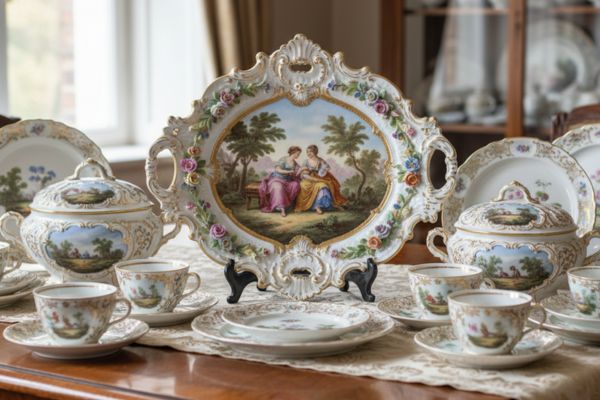
A decorated ceramic can evoke the table of a family that no longer exists.
A yellowed book can hold the imprints of those who read it decades or centuries before.
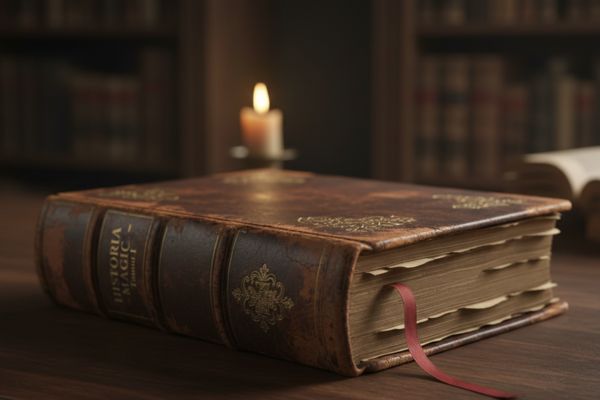
Antique objects have memory.
And it is this memory that fascinates the collector.
But between the passion for objects and the desire to accumulate them, there is a fine line.
An almost invisible line.
Crossing it is easier than you think.
Collecting: a gesture of care and research
Collecting is first and foremost an act of choice.
The true collector does not take everything he finds.
He observes, studies, compares, waits.
Often he spends months — sometimes years — before finding the right piece.
This process is made of:
- curiosity
- study
- patience
- attention to quality
- respect for the history of the object
A collection almost always arises from a personal question.
Someone falls in love with 19th-century European porcelain.
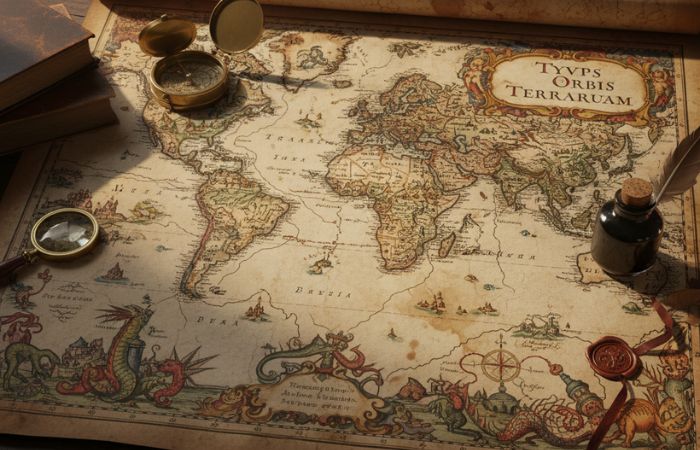
Someone else with antique maps.
Still others with botanical prints or scientific instruments.
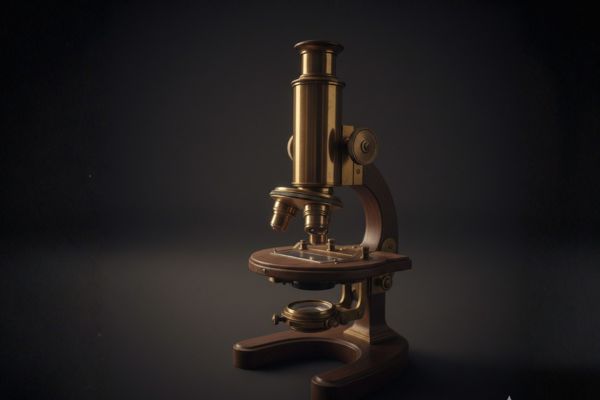
Each collection tells something about the person who builds it.
It is a silent biography made of objects.
Accumulating: when the object loses meaning
Accumulating is very different.
When you accumulate, the object stops being chosen.
It simply becomes something to add.
It no longer matters:
- the provenance
- the quality
- the history
- the state of preservation
Only possession counts.
It is a phenomenon that happens more often than you might imagine, especially when you frequent flea markets and auctions with great enthusiasm.
At first every purchase seems necessary.
Every piece seems unmissable.
Then, almost without realizing it, the objects begin to multiply.
The shelves fill up.
The boxes accumulate.
The pieces remain forgotten in a drawer.
And the pleasure of discovery slowly turns into confusion.
The difference is not in the quantity
It is important to clarify one thing.
A large collection is not necessarily an accumulation.
There are extraordinary collections composed of hundreds — even thousands — of objects.
The difference is not in the quantity.
The difference is in the coherence.
A collection always has a common thread.
It can be:
- a historical period
- an artistic technique
- a material
- a geographical place
- an author
- a specific function
When this thread exists, each new object enters into a relationship with the others.
The collection grows like a story.
When the thread is missing, the objects remain isolated.
They simply become things.
| Aspect | Collecting | Accumulating |
|---|---|---|
| Motivation | Passion for history, research and the meaning of objects | Desire for possession or impulse to purchase |
| Selection criterion | Careful selection based on quality, provenance and coherence | Impulsive or random choices |
| Relationship with objects | Each piece has a history and a role in the collection | Objects are interchangeable |
| Collection structure | Follows a theme, a period, a technique or an author | There is no common thread |
| Time spent | Patient research, study and comparison | Frequent purchases without in-depth study |
| Knowledge | The collector studies materials, techniques and historical context | Knowledge of the object is often superficial |
| Space and display | Objects are enhanced and displayed with care | Objects tend to accumulate without order |
| Evolution over time | The collection grows with coherence and maturity | The whole becomes confused and difficult to manage |
| Long-term value | Can acquire cultural, historical and economic value | Often loses meaning and value |
The pleasure of research
One of the most beautiful parts of collecting is research.
It is not uncommon for a collector to spend years looking for a specific piece.
Perhaps a particular edition of a book.
Or a rare variant of a ceramic.
Or a specific watch model.
This waiting is an integral part of the passion.
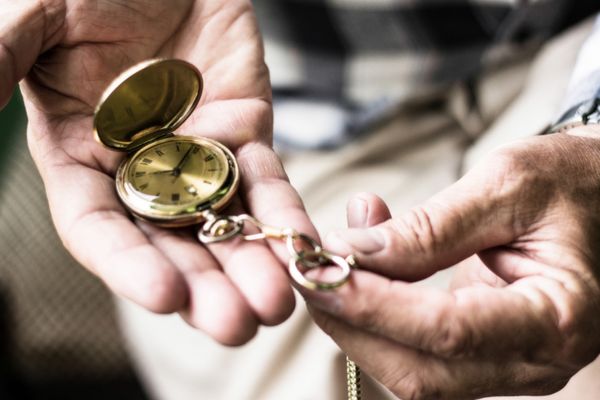
When the piece finally appears — in a shop, at an auction or in a small flea market — the emotion is difficult to describe.
It is a moment that an accumulator rarely experiences.
Because for him every object is interchangeable.
For the collector, on the other hand, every object is unique.
Knowledge is the true heart of collecting
A good collector learns continuously.
He studies books.
He consults catalogs.
He talks to antique dealers.
He compares objects.
Over time he develops a particular gaze.
He learns to recognize:
- proportions
- materials
- patinas
- processing techniques
- vintage signs of aging
This knowledge is not only useful for avoiding mistakes.
It is mainly used to understand objects.
And understanding means respecting.
The mistake everyone makes at least once
There is a moment that almost all collectors remember.
A purchase made with enthusiasm…
and then regretted.
It could be a poorly restored object.
A copy mistaken for an original.
Or a piece bought impulsively.
It is an almost inevitable step.
But it is from these mistakes that the collector’s maturity is born.
Over time you learn to slow down.
To observe better.
To ask questions.
And above all to not be in a hurry.
How to tell if we are collecting or accumulating
There are some simple questions that can help us.
When we find an interesting object we can ask ourselves:
1. Does this object tell a story?
Does it have a history, a context, a meaning?
2. Does it fit into my collection?
Or is it simply beautiful?
3. In five years will I still be happy to have it?
4. Am I buying out of enthusiasm or habit?
These are simple but extremely useful questions.
Often a few seconds of reflection are enough to avoid a wrong purchase.
Space as part of the collection
An often underestimated aspect concerns space.
A collection also lives in the way it is displayed.
When objects have room to breathe:
- their beauty emerges
- the details become visible
- the story is perceived better
On the contrary, when objects are too close together, they lose strength.
They become visual noise.
Many great collectors adopt a simple rule:
better fewer pieces, but chosen with care.
The emotional relationship with objects
There is also a more personal dimension.
Many objects enter collections because they evoke something.
A memory.
A trip.
A person.
This is not a defect.
Indeed, it is one of the most vintage parts of collecting.
But even here it is important to maintain balance.
If every object becomes indispensable, the collection risks losing direction.
Passion needs room to breathe.
The role of the antique dealer
A good antique dealer is not simply a seller.
He is often a mediator between past and present.
He can help the collector to:
- recognize quality
- understand the provenance
- avoid mistakes
- discover new areas of interest
The relationship between antique dealer and collector, when based on trust, becomes a true collaboration.
Many great collections were born from these encounters.
The beauty of selection
Over time many collectors discover an unexpected pleasure.
That of selection.
Sometimes it also means letting go of some pieces.
Selling an object that no longer represents the direction of the collection is not a failure.
It is a way to make it clearer.
More personal.
More meaningful.
Collecting is telling a story
Basically, a collection is a form of storytelling.
Each object is like a sentence.
Each group of objects becomes a chapter.
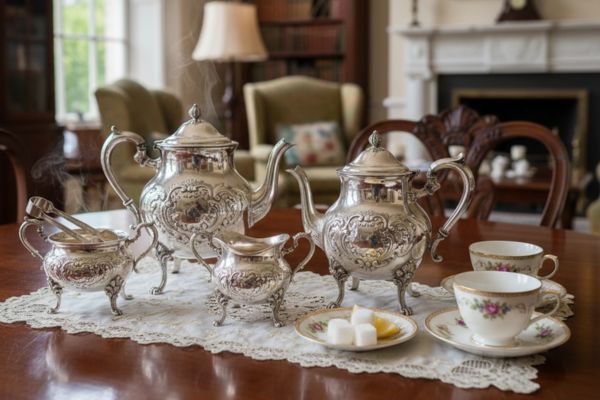
And when someone observes that collection they can read something about the person who built it:
- curiosity
- taste
- sensitivity
- memory
This is why collecting has something deeply human.
It’s not just about objects.
It’s about our way of giving meaning to time.
The true value of a collection
The value of a collection is not only economic.
Often the greatest value is invisible.
It is made of:
- hours spent searching
- conversations with antique dealers
- trips to flea markets
- leafed through books
- unexpected discoveries
It is a heritage of experiences.
And perhaps this is the secret.
When we really collect, we are not accumulating objects.
We are building a relationship with history.
A final thought
If you love antiques, you probably know that feeling.
Entering a silent shop.
Touching an antique object.
Wondering where it comes from.
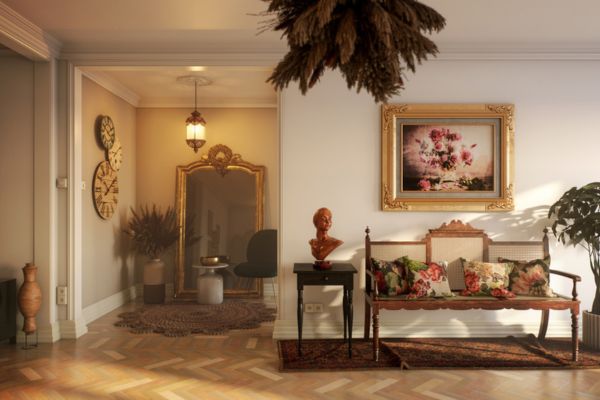
At that moment we are not thinking about possession.
We are listening to a story.
And it is there that collecting finds its most vintage meaning.
Not in accumulation.
But in the ability to recognize, among a thousand objects, the one that really deserves to be preserved.
Author profile
Marco Bianchi — Consultant and antique enthusiast
For over twenty years, Marco has been exploring European flea markets, auctions and private collections in search of objects that tell forgotten stories. He collaborates with antique dealers and galleries in the evaluation and research of historical pieces, with particular interest in decorative arts, antique books and everyday objects between the 18th and 20th centuries. He believes that every collection should be born from curiosity, knowledge and respect for the past.