

By Marco Bellini — Journalist specializing in antiques and European collecting
Updated: March 24, 2026
Quick credential: Over 20 years of experience in reporting on private collections, international auctions, and historic European silverware workshops.
Note of direct experience: This article stems from years of visits to artisan workshops, antique dealers’ archives, and auction houses, where I have observed and studied hundreds of silver objects from the 17th to the 20th century.
A journey into the silver of the past
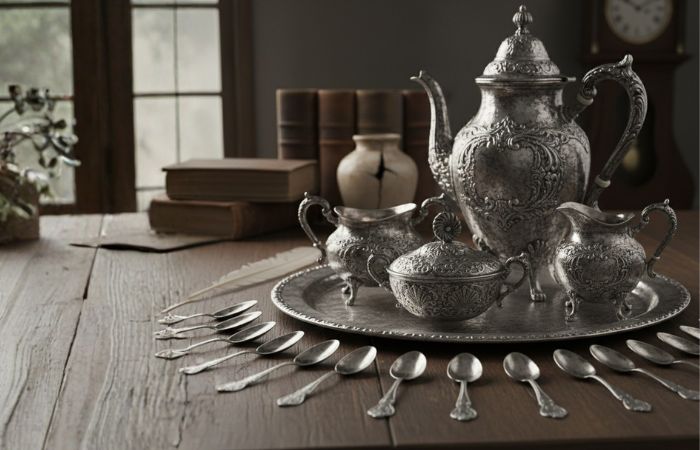
There are objects that tell history with an almost elegant discretion. Antique silver is one of them. It doesn’t raise its voice, it doesn’t shine excessively like gold; yet it possesses a silent presence that spans the centuries.
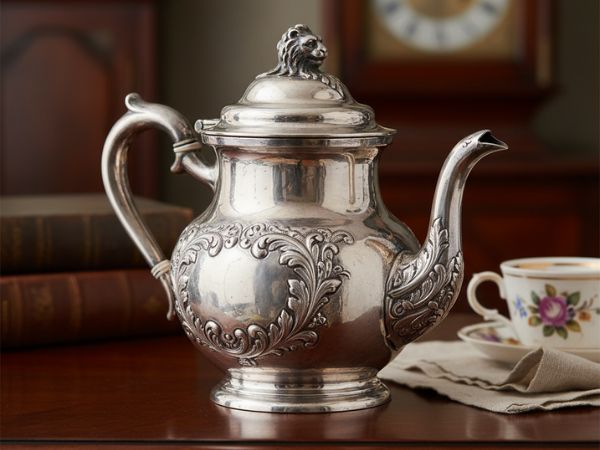
When you hold a 18th-century English spoon or a 19th-century Italian teapot in your hands, you immediately perceive something special: the slightly different weight, the softness of the hand-worked metal, the patina of time that has smoothed every detail.
Many collectors start their journey right here: from a small jewelry box found in a family home, from a tea set seen in an antique shop, or from a tray purchased at a flea market.
But an inevitable question soon arises:
How do you recognize authentic antique silver?
The answer is never completely technical. It is made of observation, experience, and, above all, curiosity.
Why antique silver still fascinates today
Before learning to recognize it, it is worth understanding why antique silver still exerts such a powerful charm.
In the past, silver was much more than a precious material. It was a symbol of family and social prestige. Aristocratic and bourgeois families commissioned complete tableware services, religious objects, travel instruments, or refined toilet accessories.
Each piece told a story.
An engraved cup could celebrate a birth or a marriage.
A tea service could accompany conversations and cultural gatherings.
A decorated snuffbox could belong to a diplomat or a traveler.
These objects were not simple utensils: they were witnesses to the daily life of an era.
And this is precisely what makes antique silver so interesting for collectors and enthusiasts.
The first clue: the hallmarks of silver
When trying to understand if an object is authentic, the first step is almost always the same: observe the hallmarks.
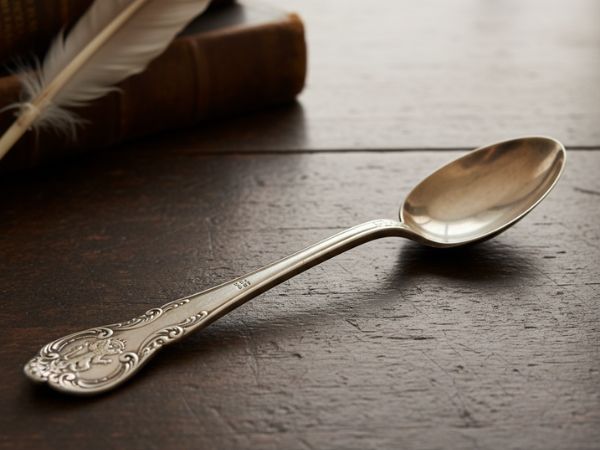
Hallmarks are small marks impressed into the metal. They are often tiny and discreet, but they represent a true identity card of the object.
In many European countries, especially in England, France, and Italy, silver had to be checked by official offices that certified the purity of the metal.
These offices applied specific marks that indicated:
- the city of production
- the year of manufacture
- the silver standard
- the silversmith’s mark
Observing these signs can turn into a small historical investigation.
A spoon can reveal that it was made in London in 1785.
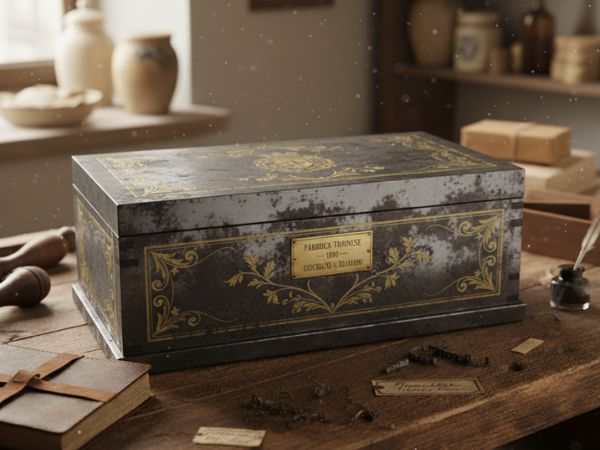
A box can bear the mark of a Turin workshop from the 19th century.
And it is precisely this discovery that often ignites the passion of the collector.
The weight and consistency of the metal
Another element that helps to recognize authentic silver is the weight.
Silver has a particular density. It is neither as light as aluminum nor as heavy as bronze. When you hold an authentic object in your hand, you perceive a sensation of balanced solidity.
Plated objects or those produced industrially in recent times may appear lighter or less consistent.
Of course, this assessment requires some experience. Over time, however, the collector learns to recognize this difference almost instinctively.
The patina of time
One of the most fascinating aspects of antique silver is the patina.
Over the years, silver develops a slightly softer tone. It is not a defect, but a precious quality that testifies to the age of the object.
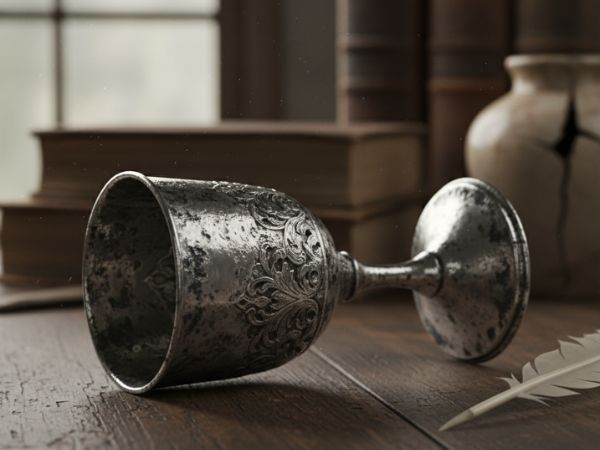
The surface may have small nuances, slightly darker areas, or opaque reflections. This natural transformation is often impossible to replicate artificially.
Objects that are too shiny, perfectly uniform, or without any trace of time always deserve closer observation.
The authentic patina is like the skin of an object: it tells its story.
The processing techniques
Another fundamental clue concerns the craftsmanship.
Before industrial production, most silver objects were made by hand. This means that small, imperceptible details can reveal a lot.
For example:
- slight irregularities in the engravings
- small signs of hammering
- hand-engraved decorations
These traces are often invisible at first glance, but become evident when observing the object calmly and in the right light.
Completely perfect, almost mechanical workings, on the other hand, may indicate more recent production.
The decorations tell the era
Each historical period had a recognizable decorative style.
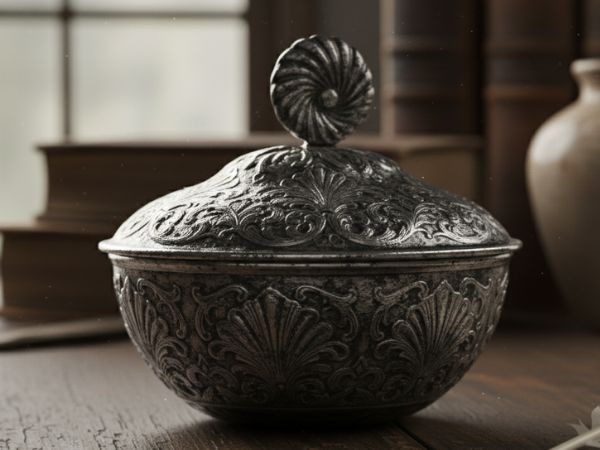
A silver object can therefore reveal its era also through its ornamental motifs.
In the 18th century, for example, the following were very common:
- floral motifs
- rococo shells
- elegant and asymmetrical curves
In the 19th century, on the other hand, one often observes:
- a more classic style
- symmetrical decorations
- references to Greek and Roman antiquity
Learning to recognize these elements helps to place an object in its historical context.
The role of silversmiths
Behind every antique object there is almost always the hand of an artisan.
Silversmiths were often true artists. Their workshops passed on techniques and secrets of processing for generations.
Many of them have left easily recognizable marks that are now highly sought after by collectors.
In some cases, a single mark can greatly increase the value of an object.
It is not uncommon for a simple spoon to become a collector’s item thanks to the signature of the silversmith who made it.
Where to find authentic antique silver
Those who wish to start a collection often wonder where it is possible to find authentic pieces.
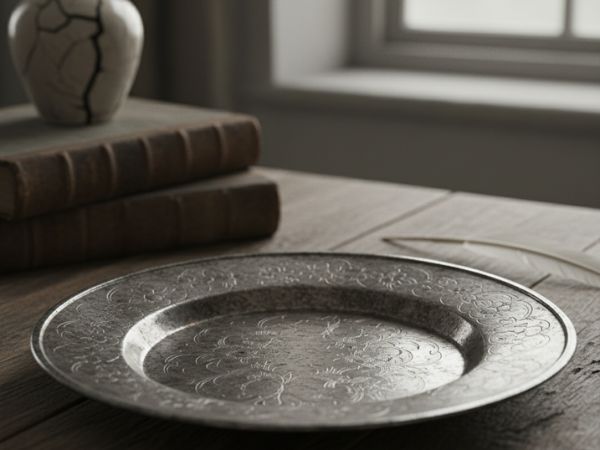
The possibilities are many:
- antique shops
- specialized markets
- auctions
- private collections
Each place has a different charm.
Antique shops often offer selected and guaranteed objects.
Auctions can hold surprising discoveries.
Flea markets, on the other hand, still retain that sense of adventure that makes the search particularly exciting.
When to seek the opinion of an expert
Even the most experienced collectors, sooner or later, ask for a second opinion.
Antique silver is a field rich in details and variations, and some differences can be difficult to identify without specific experience.
An antique dealer or a specialized appraiser can help to:
- verify authenticity
- identify hallmarks
- establish the period of production
- estimate the value
This collaboration between enthusiasts and experts is an integral part of the world of antiques.
The pleasure of discovery
Perhaps the most beautiful thing about antique silver is not its economic value.
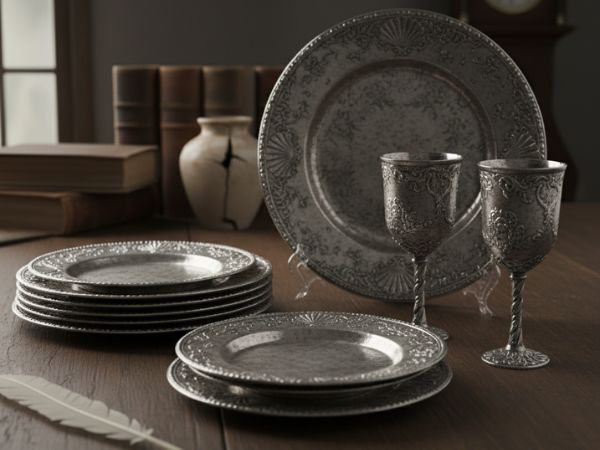
It is the pleasure of discovery.
Each object carries with it a fragment of the past: a set table, an elegant conversation, a daily gesture performed centuries ago.
Collecting antique silver means coming into contact with these stories.
And every time a new piece enters a collection, the feeling is always the same: that of having saved a small fragment of memory.
Learning to look
Recognizing authentic antique silver does not only require technical knowledge.
Above all, it requires attention and curiosity.
Observe the hallmarks.
Feel the weight of the metal.
Study the decorations.
Listen to the stories of the objects.
Over time, the gaze changes. Objects are no longer simple utensils, but small witnesses to history.
And perhaps this is the true charm of antiques: learning to see the past in the objects that surround us.
About the Author
Marco Bellini — Journalist and researcher in the field of European antiques
For over twenty years, Marco Bellini has been reporting on the world of historical collections, collaborating with antique dealers, auction houses, and museums. His articles explore the history of decorative art objects — from antique silverware to European porcelain — with the aim of making the culture of antiques and collecting accessible to the public.