

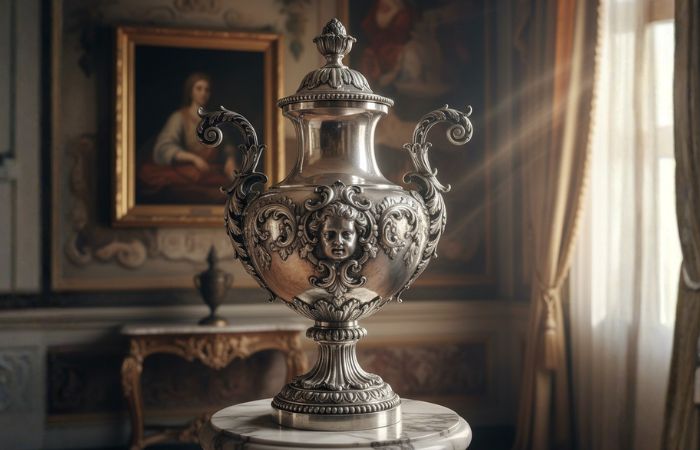
There’s something deeply fascinating about antique silverware. It’s not just about their material value, nor the brilliance they still manage to retain after centuries. Silver tells stories. It tells of tables set in noble houses, of daily gestures that became rituals, of important gifts, of passages from family to family. Every scratch, every engraving, every small imperfection is a trace of a life lived.
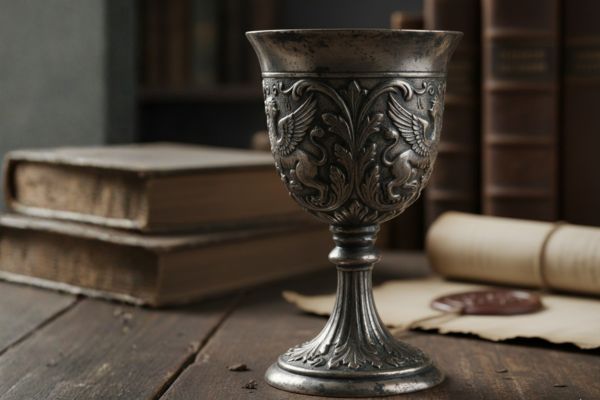
Anyone approaching the world of antiques will, sooner or later, encounter antique silver. And it is often an encounter that leaves its mark. But it is also a world full of pitfalls: copies, reproductions, well-made fakes and invasive restorations can confuse even the most attentive eye. This is why learning to recognise an authentic piece is not just a technical skill, but a true form of sensitivity.
In this journey, we will try to understand how to observe, interpret and “read” antique silver, without haste, as one would with a precious object in their hands.
The first look: when an object “speaks”
The first contact with an antique silver object is visual, almost instinctive. Even before analysing marks or hallmarks, it is important to observe the whole.
An authentic piece rarely appears perfect. Silver that has been lived with shows a natural patina, an oxidation that forms over time and is not uniform. It may have darker areas, small signs of wear in the points of contact, slight deformations due to daily use.
On the contrary, an object that is too shiny, almost “cold” in its brilliance, deserves attention. It is not always fake, but it may have been excessively polished or restored.
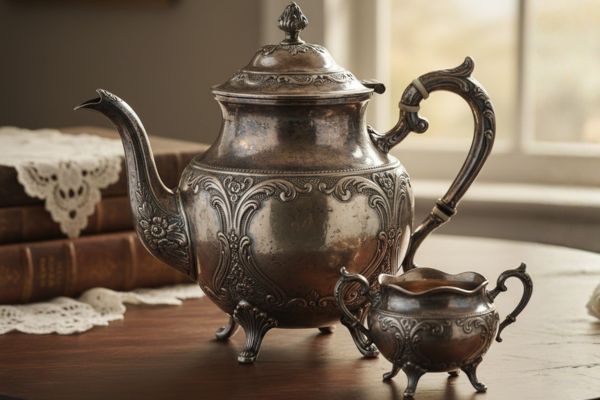
The eye of the enthusiast learns over time to recognise these subtle differences. It is not an exact science, but a form of visual experience that is refined with practice.
The weight and feel
Another often underestimated element is weight. Silver has a particular density, different from other metals used in reproductions.
When you pick up an authentic object, you perceive a “full” solidity, never light or empty. Temperature is also a clue: silver tends to be cold to the touch and maintain this sensation longer than other materials.
Physical contact tells a lot. A piece of cutlery, a teapot, a tray: each object has a balance between form and mass that in authentic pieces is harmonious, natural. Modern copies, even well-made ones, often betray a slightly artificial sensation.
Hallmarks: the silent signature of silver
If there is a fundamental element in the identification of antique silver, it is undoubtedly the hallmark.
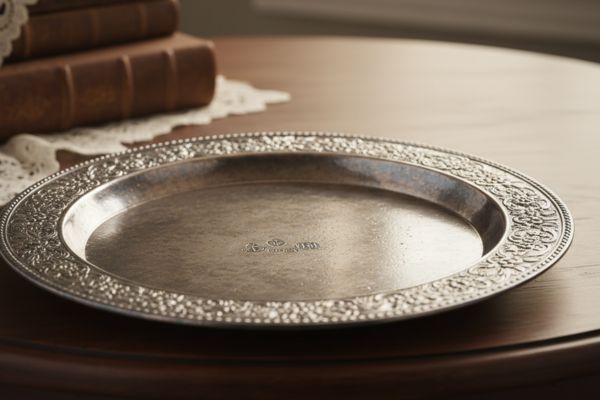
Hallmarks are marks impressed on the metal that indicate origin, silver content, goldsmith or city of production. They are a kind of identity card of the object.
However, they are not always easy to interpret. Over the centuries, marking systems have changed from country to country, and even within the same territory.
In general, an authentic hallmark has some characteristics:
- it is engraved with precision but not perfectly uniform
- it shows signs consistent with the general wear of the piece
- it does not appear “stamped on” but integrated into the metal
- it maintains proportions consistent with the declared era
A common mistake is to think that a clear and legible hallmark is always synonymous with authenticity. In reality, a sign that is too sharp on an object that should be two centuries old may be suspicious.
The patina: time that becomes surface
The patina is perhaps the most poetic element of antique silver. It is the result of the natural oxidation of the metal over the years. It is not dirt, it is not a defect: it is memory.
An authentic patina is not uniform. It is concentrated in the engravings, in the less accessible corners, in the areas that have had less contact with cleaning.
Many modern restorations tend to “erase” the patina, bringing the object back to an almost specular brilliance. But in this process, a fundamental part of the piece’s identity is lost.
An experienced collector never seeks absolute perfection. They seek balance between preservation and authenticity.
Style and proportions: recognising the era
Each era has left a stylistic signature in silver.
The baroque lines, for example, are rich, redundant, almost theatrical. The neoclassical, on the other hand, focuses on balance, symmetry and sobriety. The Victorian period introduces more narrative decorations, often linked to nature or the symbolic world.
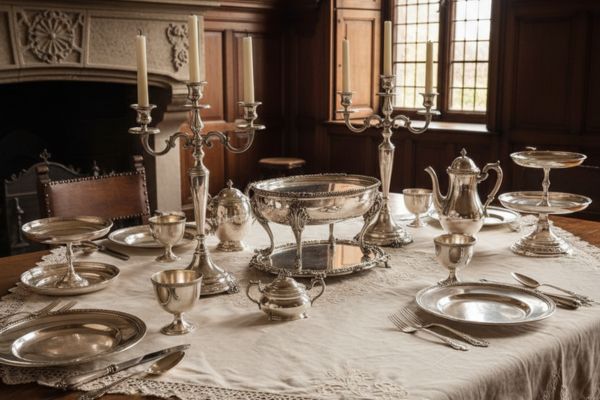
Observing the style means placing the object in a precise cultural context. It is not just about aesthetics, but about the history of taste.
A frequent mistake in fakes is the inconsistent mixing of styles: an object may have a neoclassical body but decorations that are too modern or details that do not belong to the declared era.
The sound of silver
There is a lesser-known, but fascinating aspect: the sound.
If lightly struck (carefully and without damaging it), authentic silver produces a clear, limpid, almost “singing” sound. Alloys or different metals, on the other hand, return a duller sound.
It is not a scientific method, but it is a tradition that many antique dealers know and use as a further element of evaluation.
Restorations: when history is modified
In the world of antiques, restoration is a delicate issue. A well-done intervention can save an object without altering its identity. An excessive intervention, on the other hand, can compromise its historical value.
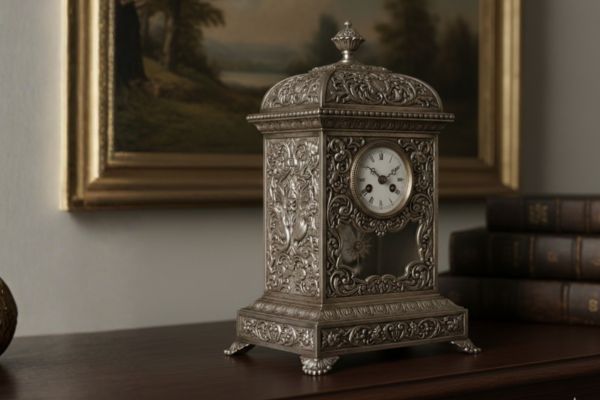
In the case of silver, the most frequently restored parts are handles, bases and decorations.
Some signs of invasive restoration include:
- colour differences between parts of the same object
- visible or non-uniform welds
- decorative motifs slightly “interrupted”
- partially altered hallmarks
An experienced collector does not reject restoration in itself, but always wants to be able to read it.
The context: where the object is found
An often decisive element is the provenance.
An object with a documented history, even partial, has a different value compared to one without any trace. Family collections, inheritances, auction sales or finds in historical contexts add levels of authenticity that are difficult to replicate.
In the world of antiques, the history of the object is often as important as the object itself.
The most common mistake: seeking perfection
Those approaching antique silver for the first time often make the same mistake: looking for a perfect object.
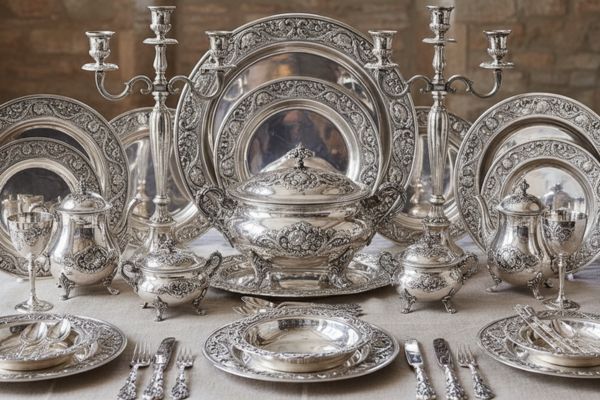
But the antique is never perfect. It is consistent, lived-in, layered. Perfection belongs to the new, not to time.
An authentic piece may have small imperfections, slight deformations, signs of use. And that is precisely what makes it authentic.
A personal relationship with objects
Collecting antique silver is not just a matter of investment or aesthetics. It is a way of relating to the past.
Each object carries with it a silent presence. A teapot may have served tea in an aristocratic house in the 19th century. A spoon may have passed through generations. A tray may have witnessed moments of celebration or everyday life.
When you learn to recognise authenticity, you also learn to respect these stories.
Learning to see beyond the surface
Identifying an authentic antique silver does not mean following a rigid list of rules. It means developing a conscious gaze, capable of capturing details, contradictions and harmonies.
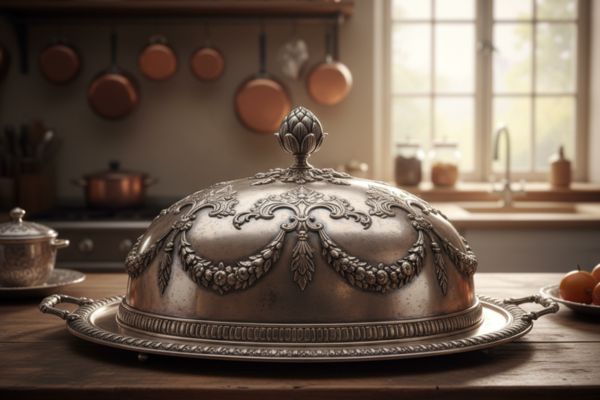
It is an exercise in attention, but also in sensitivity.
Over time, the eye becomes educated. And what at first seemed only a shiny object becomes something deeper: a material testimony of time.
And perhaps this is the true charm of antiques. Not possession, but the ability to listen to what objects tell, in silence, from long before we met them.
FAQ
1. How can I recognise an authentic antique silver?
An authentic antique silver can be recognised by observing patina, hallmarks, weight and style. The combination of these elements must be consistent with the declared era.
2. Is patina always a sign of authenticity?
Yes, but it must be natural and irregular. A patina that is too uniform or absent may indicate excessive cleaning or a reproduction.
3. What are hallmarks in antique silver?
They are marks impressed on the metal that indicate origin, silver content and goldsmith. They are one of the main proofs of authenticity.
4. Is very shiny silver always fake?
No, but it may have been over-polished or restored. Authentic antique silver rarely appears perfectly shiny.
5. Does weight help to recognise real silver?
Yes, silver has a specific density that makes it more “full” and consistent than many modern alloys.
6. Is it possible to recognise a fake with the naked eye?
In some cases, yes, especially if the style or decorative details are not consistent with the era.
7. Do restorations reduce the value of antique silver?
It depends. A light and professional restoration can be acceptable, while invasive interventions can reduce the value.
8. Why is style important in identification?
Because each era has precise aesthetic characteristics. Stylistic inconsistencies may indicate a fake.
9. Is the sound of silver a reliable method?
It is a traditional clue, but not sufficient on its own. It should always be combined with other elements of evaluation.
10. Is it better to buy antique silver with documentation?
Yes, documented provenance increases the reliability and value of the object, making authentication easier.