

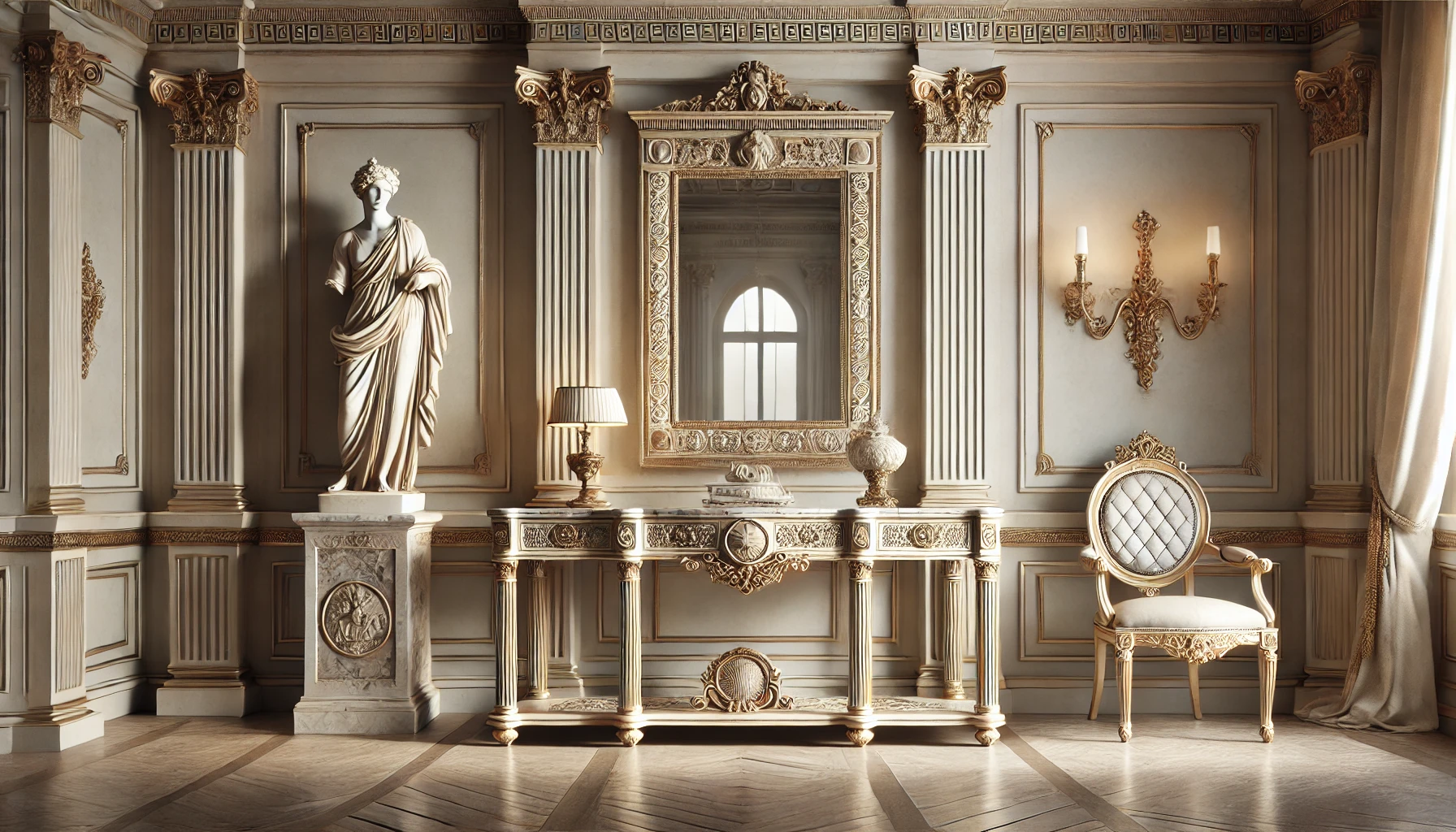
With the advent of Neoclassicism, furniture underwent a radical transformation, abandoning the excessive ornamentation of the Rococo period to return to a more restrained and harmonious beauty. Born in the late 18th century as a reaction to the decorative excesses of the previous era, Neoclassicism drew inspiration from the art and architecture of Ancient Greece and Rome, giving rise to elegant, symmetrical, and refined furniture. This style spread throughout Europe, thanks to the influence of intellectuals and artists who promoted the return to a more rational and disciplined aesthetic.
1. Characteristics of Neoclassical Furniture
The Neoclassical style is distinguished by its clean lines and perfect symmetry, in stark contrast to the lightness of Rococo. Furniture becomes more sober and geometric, with balanced and proportionate structures that reflect the classical ideals of harmony and eternal beauty.
While present, decorations are less elaborate than in previous periods and focus on motifs of classical inspiration, such as fluted columns, medallions, garlands, and festoons. The decorative carvings are refined but discreet, often engraved directly into the furniture’s structure to avoid weighing down the shape. The surfaces are smooth and well-polished, highlighting the quality of the wood and the precision of the workmanship.
The predominant colors in this style are white, cream, and pastel shades, enriched by gilded or bronzed details. The contrast between light tones and metallic details enhances the refinement of the furnishings, creating a sense of measured elegance. The materials used include mahogany, maple, and rosewood, chosen for their resistance and natural beauty, while the preferred fabrics for seating and curtains are silk, damask, and velvet in light tones, often decorated with geometric or stylized floral motifs.
2. Types of Neoclassical Furniture
Neoclassicism introduced new furniture and revisited traditional ones with more rigorous and elegant forms. Each piece of furniture was designed to create visual harmony in the environment, reflecting the ideals of order and measure.
- Chairs and armchairs with medallion backs: Typically characterized by light structures, oval backs, and tapered legs, often inspired by Greco-Roman models. The seats are upholstered with precious fabrics and finished with discreet trimmings that enhance their refinement.
- Consoles and sideboards with fluted columns: Decorative elements such as pilasters and capitals reproduce the architectural style of Antiquity, transforming these pieces of furniture into true works of art.
- Desks and secretaries with geometric inlays: Writing furniture features refined details, often embellished with gilded bronzes and inlays of precious woods, creating delicate contrasts that emphasize the balance of the style.
- Beds with linear headboards: Beds become more sober and rectilinear, with discreet carvings and a moderate use of gilding. The fabrics used for canopies and sheets are light and decorated with classical motifs.
- Round tables with sculpted bases: Often decorated with mythological figures or scenes from Antiquity, these tables combine solidity and beauty in a perfect aesthetic synthesis.
These pieces of furniture were designed to create balanced and sophisticated environments, where classical beauty could merge with daily functionality without sacrificing comfort.
3. Techniques of Craftsmanship and Decoration
Neoclassicism relied on extremely high-level processing techniques, with particular attention to the precision and quality of materials. The production of neoclassical furniture required great craftsmanship and the use of sophisticated tools to ensure flawless finishes.
- Inlay and marquetry: Geometric motifs, rosettes, and mythological scenes were created with woods of different shades to create elegant contrasts. The use of mother-of-pearl and ivory accentuated the value of the decorations.
- Sculptures and reliefs inspired by classical art: The furniture featured decorations sculpted with figures that echoed the bas-reliefs of Antiquity, adding a touch of prestige and historicity to the furnishings.
- Gilding and applied bronzes: Metal inserts were used to enhance decorative details without weighing down the structure, creating plays of light that gave depth to the furniture.
- Varnishing and French polishing: Techniques that gave the furniture a smooth and luminous finish, enhancing the grain of the wood and ensuring lasting protection.
- Marble or stone tops: Many neoclassical pieces of furniture, such as consoles and sideboards, featured surfaces in light or colored marble, inspired by the temples of Antiquity, adding a further element of luxury and refinement.
4. The Influence of Neoclassicism in Antiques and Contemporary Design
Neoclassicism is one of the most influential styles in the history of furniture and continues to exert a great fascination in the world of antiques. Original furniture from this era is highly sought after by collectors and can reach high prices in international auctions, thanks to its extraordinary craftsmanship and timeless elegance.
In contemporary design, Neoclassicism is often reinterpreted in a modern key, maintaining the essential lines and decorative elements inspired by Antiquity. Many designers and interior architects use neoclassical furniture to give environments a timeless elegance, combining antique furniture with modern elements for a sophisticated contrast.
5. Conclusion
Neoclassicism marked a turning point in furniture and design, bringing attention back to symmetry, harmony, and purity of form. The furniture of this period embodies the elegance and refinement of classical art, and is still extremely appreciated today both in the world of antiques and in modern interior design. With their perfect proportions and decorations inspired by Antiquity, Neoclassical furniture represents an ideal balance between beauty and functionality, confirming their relevance even after centuries.