

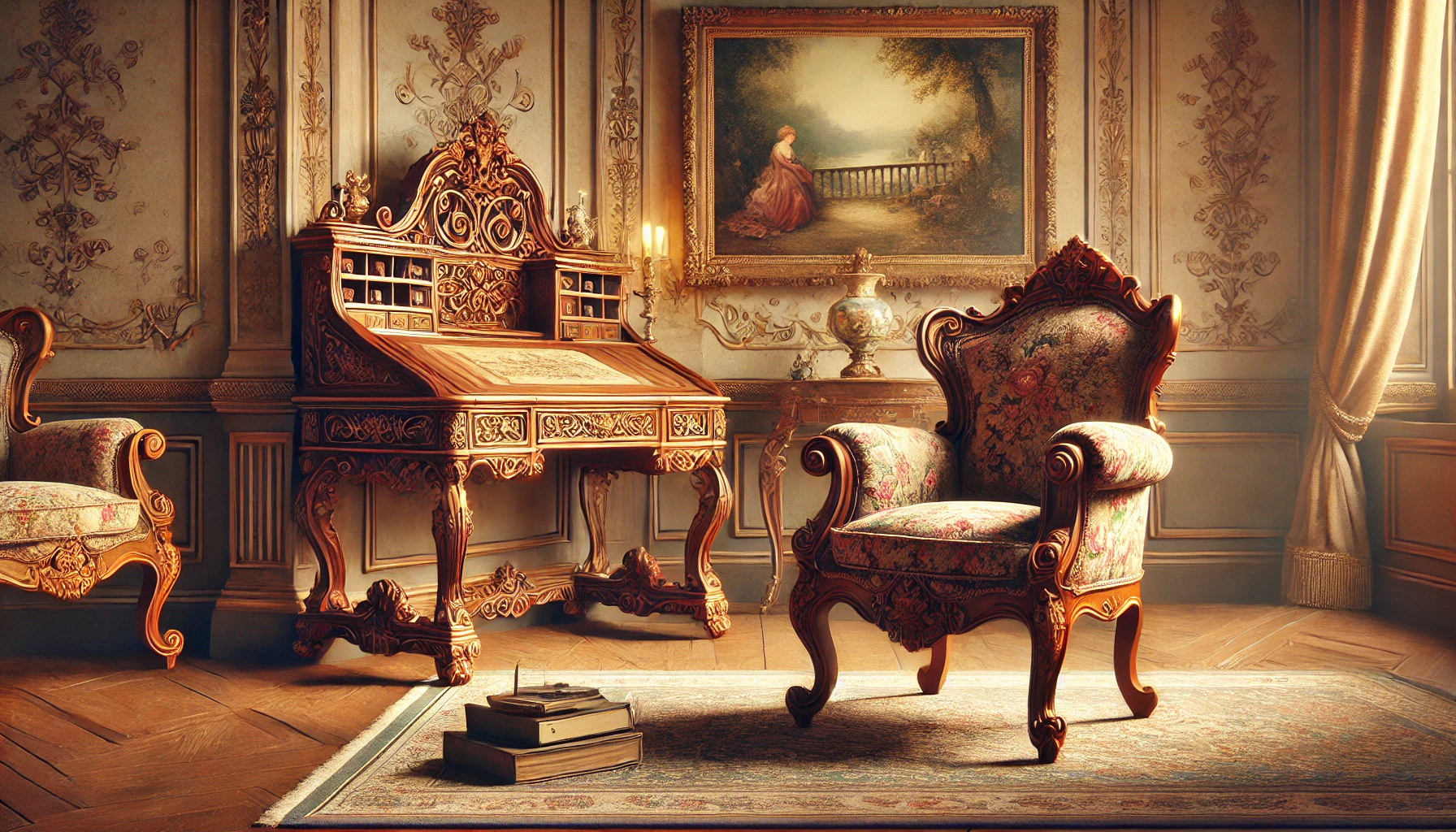
In the 19th century, Europe underwent significant social and cultural changes that were also reflected in furniture design. With Romanticism and Biedermeier, interior styles moved away from the grandeur of Neoclassicism, embracing a more intimate and functional concept of the home. While Romanticism emphasized artistic expression and a nostalgic charm for past eras, Biedermeier focused on practicality, comfort, and a sober yet elegant decoration. Both styles marked a turning point in furniture design, laying the foundations for the modern concept of the domestic environment.
1. The Characteristics of Romantic and Biedermeier Furniture
The Romantic style developed from the early decades of the 19th century, influenced by a nostalgic sentiment for the past and the rediscovery of the Middle Ages and Gothic art. Furniture from this period is distinguished by soft lines, floral decorations, and sinuous shapes that give a sense of lightness and poetry to the spaces. The detailed carvings and elaborate finishes reflected an artistic taste inspired by past eras, especially the Gothic and Renaissance periods.
Biedermeier, originating in Germany and spreading throughout Austria and Central European countries between 1815 and 1848, developed in a bourgeois context and was characterized by a pursuit of comfort and simplicity. Biedermeier furniture is functional, made with light woods such as cherry and maple, and has clean, sober lines, without excessive decoration. The discreet elegance and practicality of this style make it a precursor to modern design.
The predominant colors vary: Romanticism favors warm and intense tones, such as burgundy, forest green, and midnight blue, while Biedermeier is dominated by lighter and brighter shades, such as ivory, beige, and honey. Both styles aim to create welcoming environments, albeit with different aesthetic approaches.
2. Types of Romantic and Biedermeier Furniture
The differences between Romanticism and Biedermeier clearly emerge in the type of furniture and its use in domestic environments. Both styles respond to the need to create more livable and comfortable spaces, but with very different stylistic choices.
Upholstered Seating: In Romanticism, we find armchairs and sofas with curved backs and decorative carvings, often upholstered in velvet or damask. In Biedermeier, however, chairs and armchairs have a simpler structure, with essential lines and fabrics in light and sober colors.
Coffee and Dining Tables: Romantic tables are often enriched with carved legs and surfaces in marble or lacquered wood. In Biedermeier, tables are more functional, made with solid woods and finished with light varnishes to enhance the natural beauty of the material.
Sideboards and Bookcases: Both styles feature storage furniture for the home, but in Romanticism, sideboards and bookcases are imposing and decorated, while in Biedermeier, these same structures are simpler, more practical, and have balanced geometric shapes.
Bedrooms: In Romanticism, beds are often four-poster, with light curtains and wrought iron details, while in Biedermeier, beds have curved wooden headboards with minimal decorations.
Desks and Secretaires: Both styles value the desk as an essential piece of furniture. In Romanticism, we find refined pieces with inlays and artistic details, while in Biedermeier, the design is more functional and rational.
3. Manufacturing and Decoration Techniques
The techniques used to create furniture during the Romantic and Biedermeier periods reveal the different concepts of furniture design and the response to the social needs of the time.
Inlay and Marquetry: In Romanticism, there is extensive use of inlays and marquetry to decorate furniture surfaces with floral motifs, pastoral scenes, and mythological figures. In Biedermeier, however, the decoration is more discreet and focuses on the naturalness of the wood grain, avoiding excessive ornaments.
Polishing and Finishes: Romantic furniture is often polished with dark varnishes to create an effect of depth and warmth, while Biedermeier furniture is treated with light and transparent finishes that highlight the quality of the wood.
Carvings and Sculpted Decorations: In Romanticism, furniture features hand-carved details with Gothic and Neo-Renaissance motifs. In Biedermeier, however, decorations are minimal and often limited to slight curves in the profiles of the furniture.
Materials and Upholstery: Romanticism uses dark woods such as walnut and mahogany, while Biedermeier prefers cherry, maple, and beech, often with matte finishes.
4. The Influence of Romanticism and Biedermeier in Antiques and Contemporary Design
Both styles have left an indelible mark on the history of furniture and continue to influence contemporary design. In the antique market, Biedermeier furniture is among the most sought after for its practicality and timeless elegance, while Romantic furniture is appreciated for its decorative richness and nostalgic charm.
In modern interior design, many typical elements of the Biedermeier style are reinterpreted with innovative materials, maintaining their essentiality and functionality. Romanticism also finds space in contemporary environments, thanks to the use of decorative details such as floral carvings, damask fabrics, and warm colors that evoke welcoming and evocative atmospheres.
5. Conclusion
Romanticism and Biedermeier represent two different but complementary approaches to 19th-century furniture. While Romanticism emphasizes decoration and harkening back to the past, Biedermeier focuses on functionality and comfort, anticipating the concept of modern bourgeois furnishings. Both styles continue to inspire the world of interior design and antiques, demonstrating that beauty and practicality can coexist harmoniously in a timeless balance.