

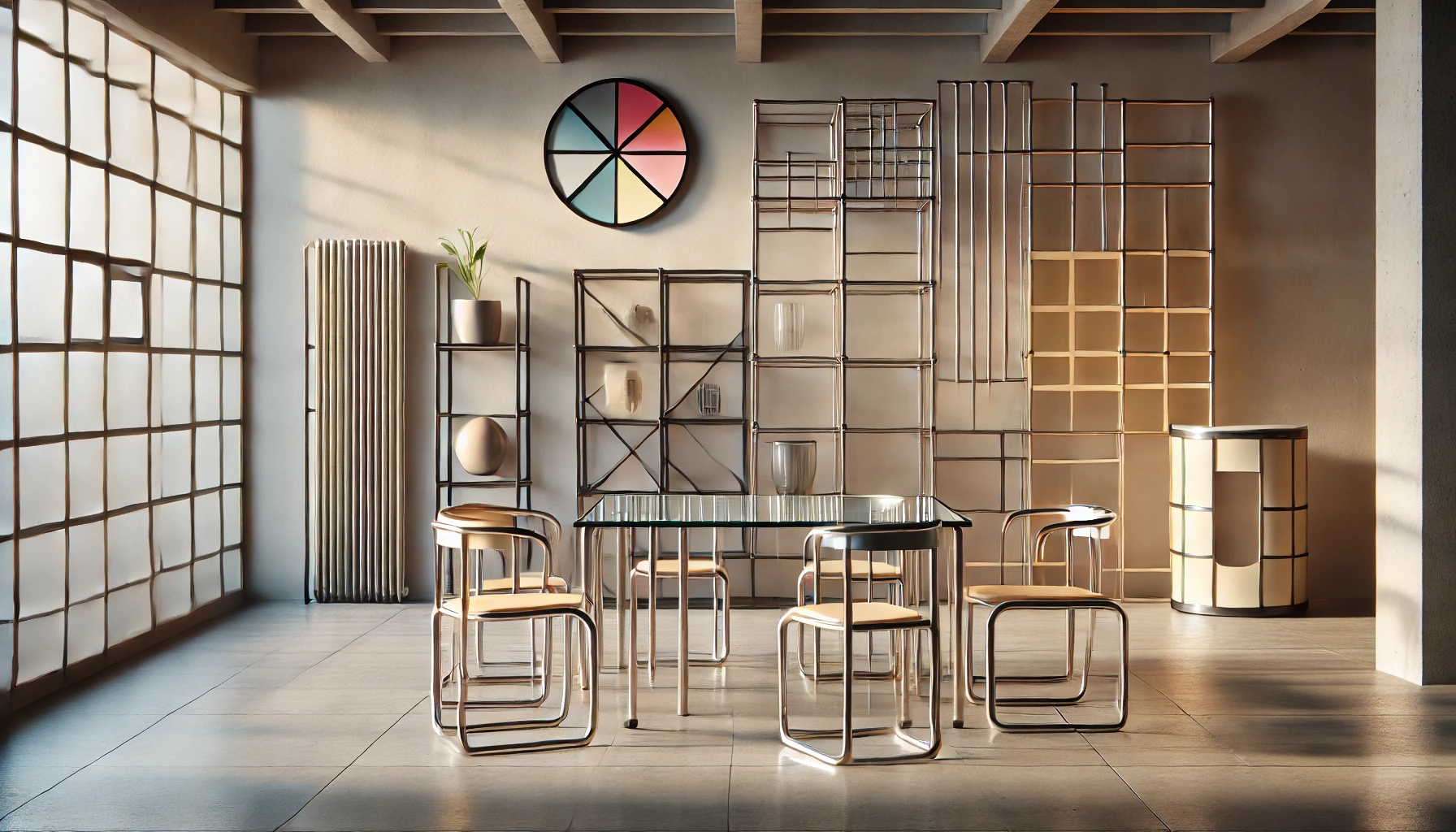
During the 20th century, the world of furniture and design underwent a radical transformation thanks to Modernism and the Bauhaus movement, two currents that revolutionized the way furniture and living spaces were conceived. While previous styles were characterized by elaborate decorations and luxurious materials, Modernism and the Bauhaus focused on clean lines, innovative materials, and design oriented towards functionality. This minimalist and efficient approach reflected the profound social, cultural, and economic changes of the 20th century, leading to the birth of a completely new aesthetic that still influences contemporary design today.
The main goal of these movements was to unite art and industry, creating furniture that was accessible, economical, and functional, without sacrificing elegance and beauty of design. With the motto “form follows function,” the Bauhaus and Modernism defined a style destined to stand the test of time.
1. Characteristics of Modernist and Bauhaus Furniture
Modernism and the Bauhaus are based on some key principles that distinguish them from previous styles:
- Simplicity and Minimalism: Superfluous decorations are eliminated in favor of essential shapes and clean geometric structures.
- Functionality over Aesthetics: Each piece of furniture is designed to be practical, ergonomic, and suited to the needs of daily life.
- Innovative Use of Materials: New materials such as tubular steel, glass, aluminum, and plastic are experimented with, alongside wood processed industrially.
- Modular and Flexible Design: Modular and adaptable furniture makes it possible to optimize living spaces.
- Neutral Colors and Chromatic Contrast: Sober tones such as white, black, and gray prevail, combined with colored details in primary shades (red, blue, and yellow) inspired by the artistic language of the Bauhaus movement.
These characteristics make Modernist and Bauhaus furniture extremely versatile, suitable for any environment, and capable of maintaining a timeless aesthetic.
2. Types of Modernist and Bauhaus Furniture
Modernism and the Bauhaus introduced new types of furniture and reinterpreted traditional ones with essential shapes and industrial materials. Some iconic examples include:
- Tubular Steel Chairs: One of the symbols of the Bauhaus, such as Marcel Breuer’s famous Wassily chair, characterized by a bent metal structure and a leather or fabric seat.
- Minimalist Tables with Glass Tops: Designed to enhance lightness and transparency, these tables stand out for their use of chrome-plated steel and smooth surfaces.
- Ergonomic Armchairs: Aerodynamic shapes and curved lines combine with innovative materials to ensure maximum comfort.
- Modular Bookcases and Lightweight Shelving: Made with geometric structures in metal or laminated wood, they allow for customization of spaces.
- Sofas with Essential Lines: Devoid of ornaments, they focus on functionality and clean shapes.
- Beds with Metal and Wood Structures: Designed to be practical and easy to assemble, while maintaining a modern and elegant appearance.
This furniture perfectly suited domestic and work spaces, representing a true revolution in the way of living.
3. Processing Techniques and Innovative Materials
One of the key elements of the Bauhaus and Modernism was experimentation with materials and industrial production techniques. Among the most significant innovations we find:
- The Use of Curved Tubular Steel: It allowed the creation of light, resistant structures with an essential aesthetic.
- Molded Plywood: Used for ergonomic seats and curved surfaces, as in the famous chair by Charles and Ray Eames.
- Tempered Glass and Glossy Surfaces: Materials that gave brightness and modernity to environments.
- Industrial Mass Production: Conceived to lower costs and make furniture accessible to a wider audience.
- The Use of Plastic and Synthetic Resins: Allowed to obtain smooth and resistant surfaces, with a more versatile and colorful design.
These innovations led to the birth of durable, practical furniture with a modern aesthetic that continues to influence contemporary design.
4. The Influence of Modernism and the Bauhaus in Antiques and Contemporary Design
Today, Modernist and Bauhaus furniture are among the most appreciated both in the world of antiques and in contemporary design. The originals from the 1920s-50s are sought-after collector’s items, with signatures of designers such as Marcel Breuer, Ludwig Mies van der Rohe, Le Corbusier, and Charles & Ray Eames reaching very high prices in international auctions.
In current design, many elements of Modernism are reinterpreted and adapted to contemporary needs. The minimalist style, the use of industrial materials, and the pursuit of functionality are principles that are still the basis of modern furniture today. Furthermore, the modular approach and mass production introduced by the Bauhaus are now an integral part of the philosophy of many design and furniture companies.
Also in the field of architecture and technology, the influence of the Bauhaus is evident, with buildings and products that reflect the same attention to simple shapes, innovative materials, and maximum functional efficiency.
5. Conclusion
Modernism and the Bauhaus marked a turning point in the world of design and furniture, promoting an aesthetic that favors simplicity, functionality, and the use of innovative materials. The furniture of this period, with their essential lines and rational approach to design, still represent a point of reference for contemporary design. Their ability to combine elegance and practicality makes them timeless, demonstrating that true beauty lies in essentiality and in the perfect harmony between form and function.