

The Silent Appraisal: What a Painting Tells You Before You Ever See the Signature
✨ Selected Pieces from the AnticoAntico Collection
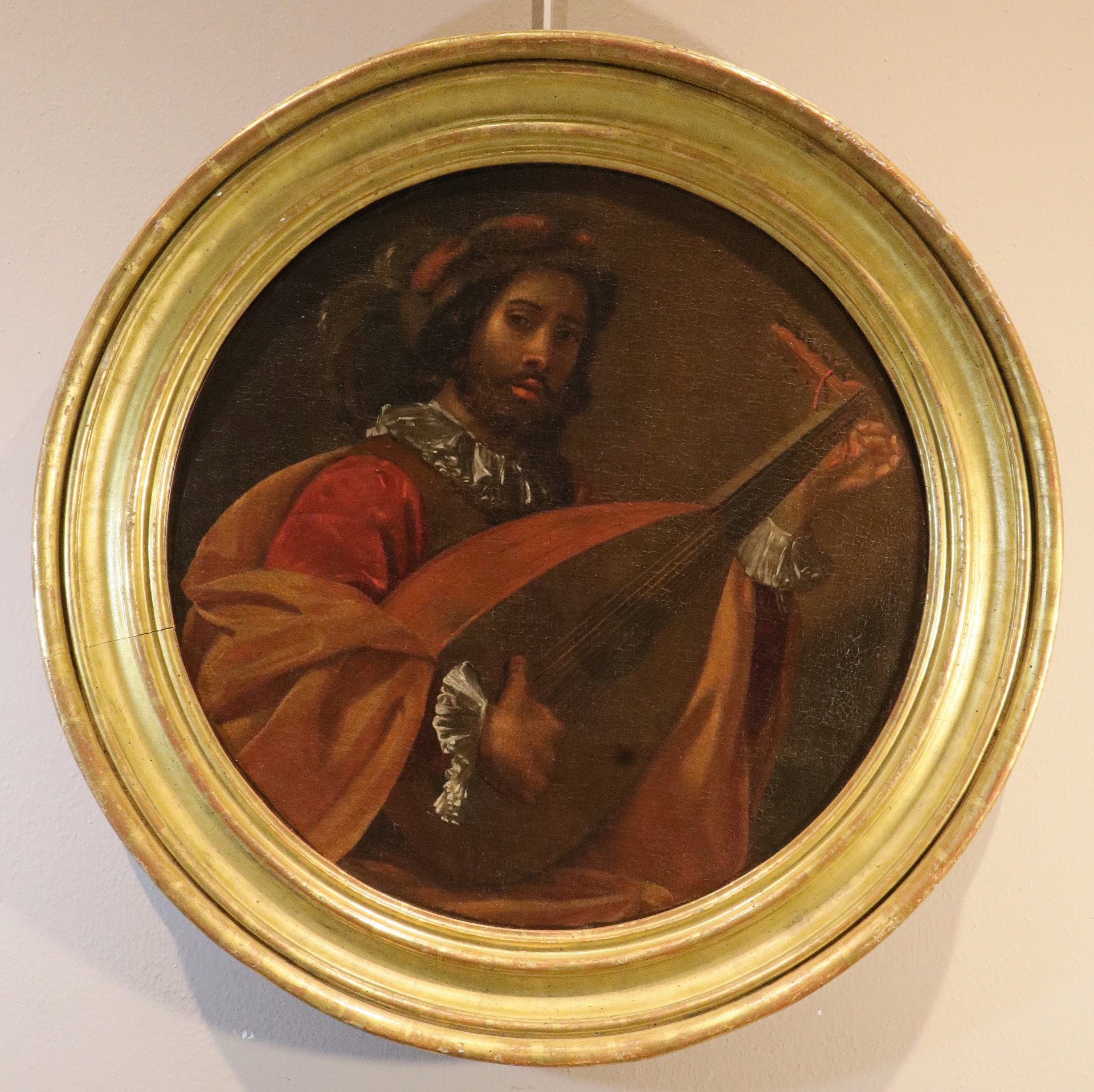
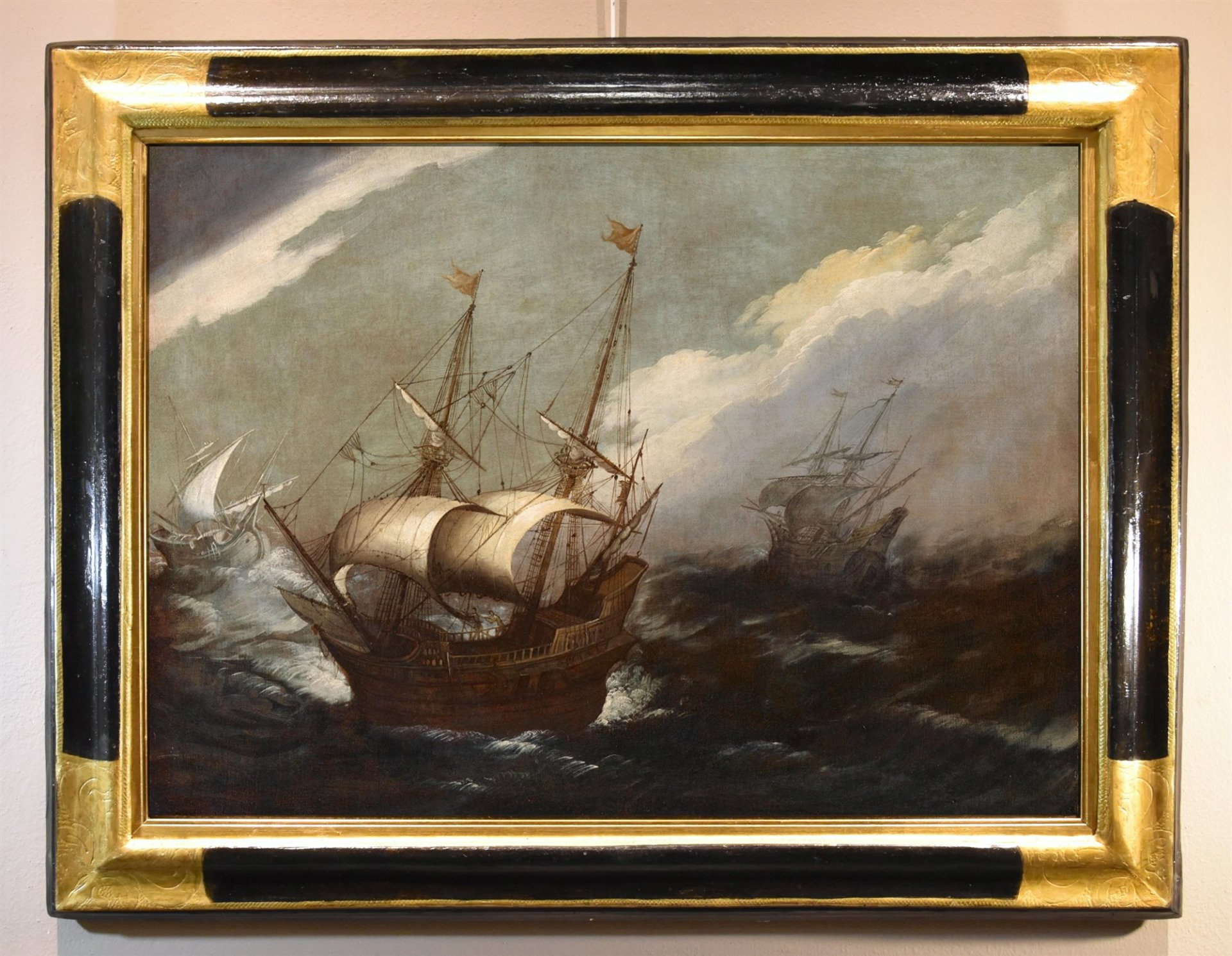
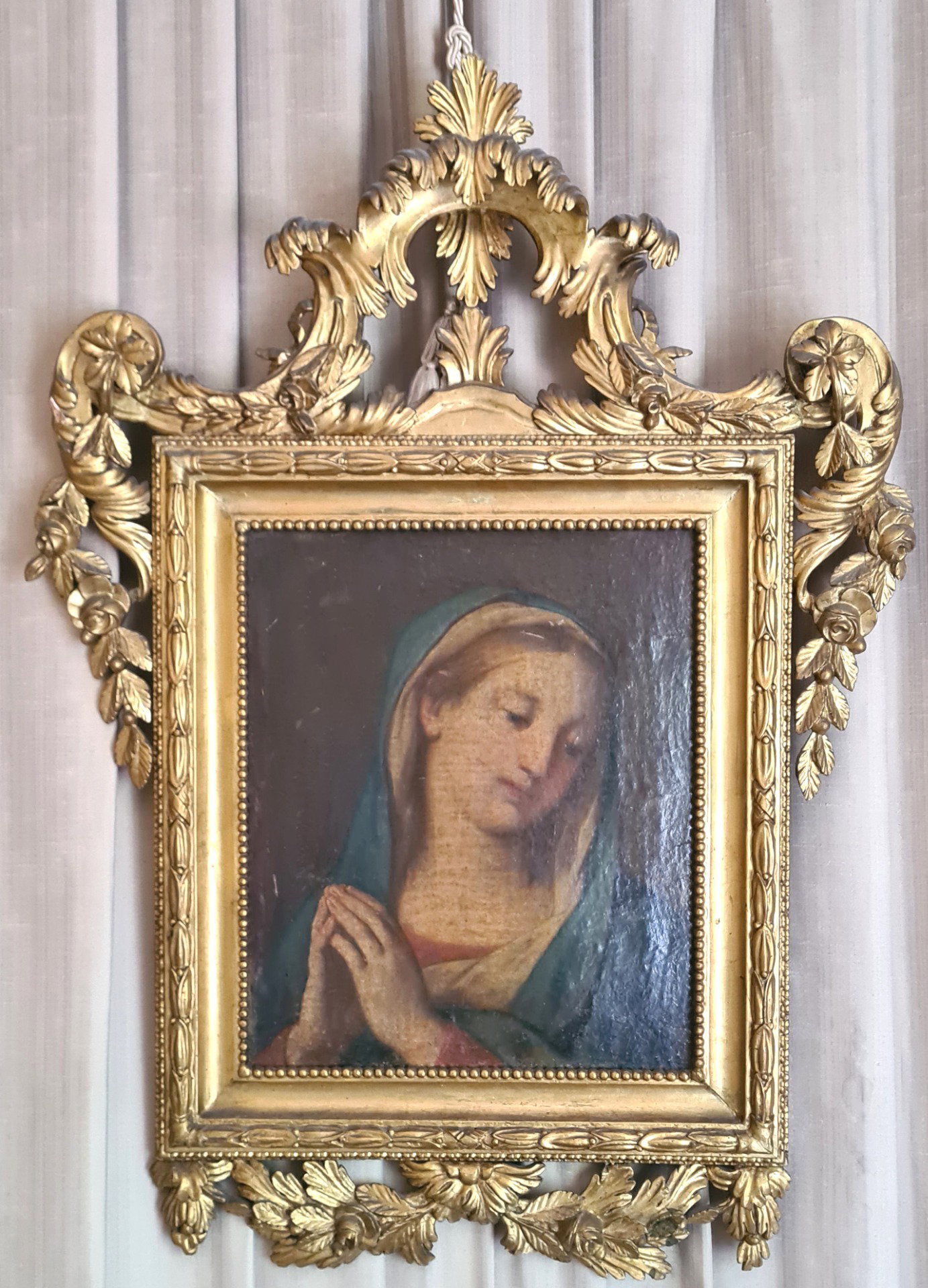
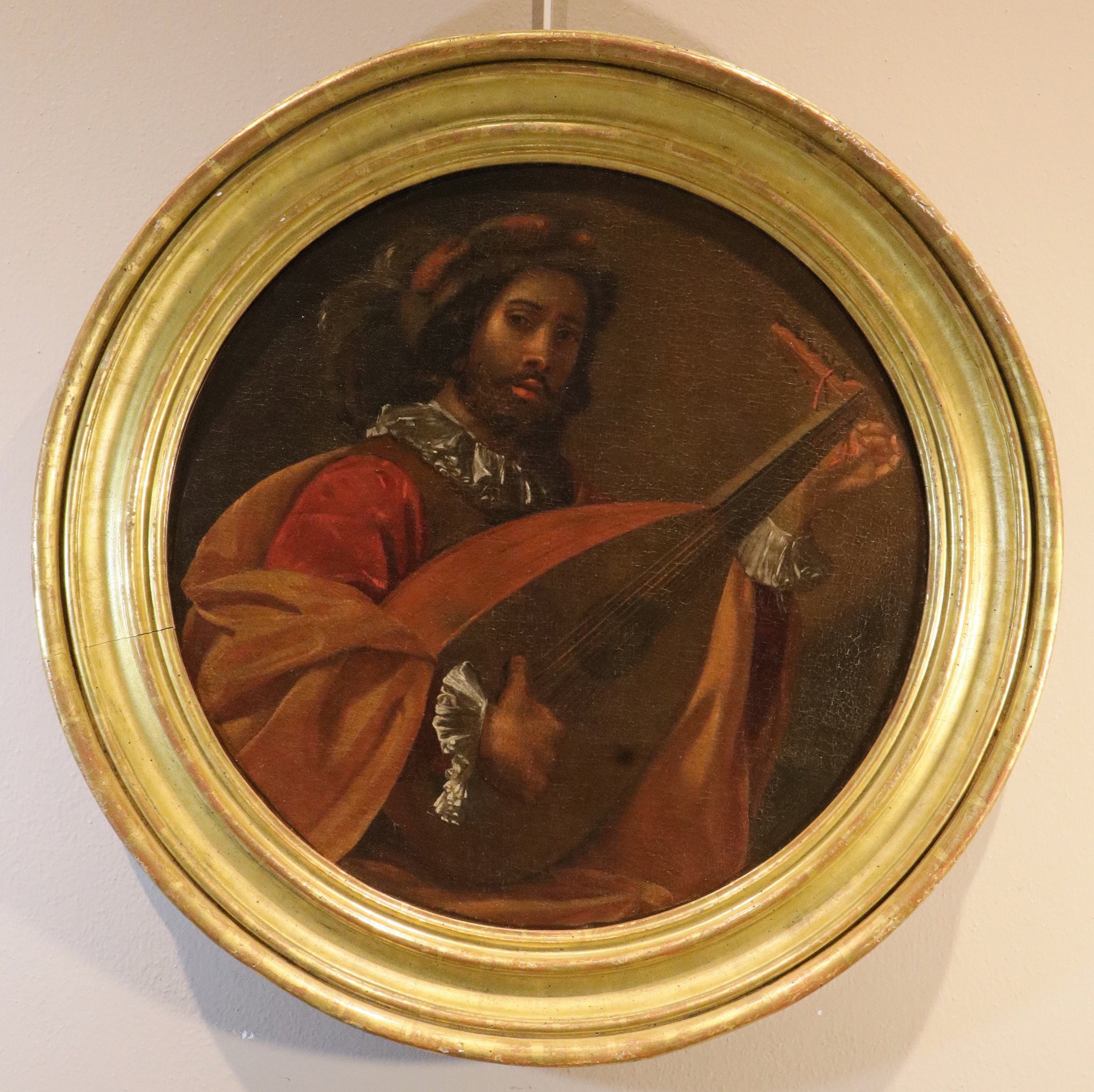
Every old master painting is a confession. Before a single letter of a signature reveals itself, the canvas has already whispered its age, its origin, and the hand that guided its brush. Learning to interpret these silent signals is the first genuine step toward understanding the value of old master paintings.
In an era of fakes and forensic reproductions, the true connoisseur does not look for certainty — he listens for authenticity. This chapter introduces you to the art of reading a painting with your senses before your eyes. Because in the world of antique painting, provenance begins with the oldest witness in the room: the object itself.
The First Glance: Reading the Support and Its Surface
A painting’s support — the wooden panel, copper plate, or stretched canvas — is a historical fingerprint that predates the artist’s signature by years, often by centuries. Wood panels were the standard in Italy well into the 16th century, while coarse canvas began dominating during the Baroque period. A rectangular oak panel with beveled edges speaks of Northern Europe; a poplar panel of thick, gessoed ground suggests Florence or Rome.
Turn the piece over — if you dare. The reverse side often carries more truth than the front. Hand-planing marks, original wax seals, guild stamps, and old inventory numbers scratched into the wood are silent testimonies of aging. They are the physical proof that a work has lived through time, not been born in a studio yesterday.
- Wood panel: typical of Tuscan and Flemish primitives; check for vertical cracking and cradle reinforcement.
- Copper plate: popular in Italy between 1550 and 1700; check the cold, dense surface and smooth brushwork.
- Canvas before 1800: tightly woven linen or hemp; old canvases show characteristic craquelure and a dark, oxidized tone.
Craquelure, the web of fine cracks across the paint layer, is nature’s timestamp. Under a magnification lens, natural cracks have rounded, irregular edges, while artificially induced cracks are sharp and uniform. If the craquelure follows the movement of the brush and follows the natural stress lines of the fabric, you are likely in the presence of a genuine antique surface.
The Language of Materials: Pigments, Gold, and the Master’s Hand
Before the academic discipline of chemistry, artists used pigments like lapis lazuli, malachite, vermilion, and lead white — each with a unique history told through color. The price of ultramarine blue was often rivaled by its weight in gold. Its lavish use across a Madonna’s robe, therefore, is a strong indicator of a prestigious commission or a wealthy patron. If you see a deep, unmistakably pure blue in a 15th-century panel, you are seeing an economic decision, not just an artistic choice.
But materials alone are not enough. The trace of the brush — the execution of an eye, the delicate transition of light across a cheek — is the master’s unique DNA. Between the assistants and the dotta mano of the maestro, the difference lies in immediacy of gesture, in the confidence of a stroke that does not search, but simply states.
Look for the underdrawing. Often visible beneath diluted paint layers or through infrared reflectography, the underdrawing reveals the artist’s thinking process — the hesitation, the correction, the freedom of a draft. A machine-copied forgery will have a rigid line, with no variation in pressure. An original will reveal the tremble of thought. This is where the silent dialogue between viewer and painter begins, and it is the true heart of understanding the value of old master paintings.
- Golden backgrounds require egg-tempera technique; check the incised halo lines in the preparation layer.
- Heavily impasted whites were typical of the Italian Baroque; a smooth, uniform texture often suggests a later reproduction.
- Color palette: artificial ultramarine was introduced after 1826; its absence is an excellent chronological marker.
Beyond the Brush: Condition, Old Restorations, and the Forgotten Marks
A painting’s condition is a kind of biography of care — and neglect. Old restorations carry their own history: a relining from the 19th century, a repaint added during the 18th-century enthusiasm for varnished surfaces, or a transferred panel. These interventions are not necessarily defects. They are evidence of continuous appreciation. Yet, a heavy-handed cleaning can permanently reduce a painting’s value, while subtle, respectful conservation can enhance it.
Finally, do not forget the frame. The frame you see today is rarely the original one, but old frames themselves are valuable antiquarian objects. More importantly, inscriptions on the reverse — old auction numbers, estate labels, and aristocratic collection stamps — are verified links to the provenance chain. These marks are the fingerprints of history’s journey: from noble chapel to private collection to the auction house that, in having owned and displayed the work, certifies a portion of its worth.
Every fingerprint, every crack, every old varnish residue contributes to the painting’s aura and, therefore, to its market value. A signed masterpiece with a broken provenance is often worth less than an anonymous panel still bearing the seal of a princely collection. This is why the true collector looks first at the painting and its history, and only last at the signature. To deepen your journey into these silent appraisals, explore the antique paintings collection and discover how theory becomes practice in a curated gallery. And if you wish to continue your study of the patrimony of artistic expression, browse the classic masterpieces section and train your eye on works that have survived centuries of appraisal.
Masters, Workshops, and Followers: Why Attribution Is a Dialogue, Not a Label
The Workshop System: A Shared Masterpiece
When you gaze upon a Renaissance altarpiece or a Baroque mythological scene, a common assumption is that the great master alone painted every brushstroke. However, the reality of the old master atelier was far more collaborative. During the 15th and 16th centuries, the workshop was the primary engine of artistic production, functioning much like a modern creative agency. A master would conceive the composition, execute the critical passages—such as faces and hands—and then delegate the rest to a team of specialized apprentices and journeymen.
This collaborative process creates a fascinating conundrum for the modern collector. A painting might emerge from the studio of a titan like Titian or Veronese, yet only partially be executed by his own hand. This does not diminish the value of the piece, but it entirely reshapes how we discuss its attribution. The distinction between “autograph” (entirely by the master) and “workshop” (produced by assistants under his direction) is a spectrum, not a binary. Understanding this nuance is a critical step in understanding the value of old master paintings, as it directly influences provenance, rarity, and ultimately, the auction estimate.
- Autograph works: Entirely by the master’s hand, carrying the highest premium.
- Workshop with retouching: Painted by assistants but polished and finalized by the master.
- Workshop copies: Produced from the master’s cartoon or design, executed entirely by students.
- Followers: Painted by independent artists mimicking the master’s style, often years later.
For the connoisseur, navigating this hierarchy requires a keen eye. While the signature—or its absence—matters, it is the paint’s physical geography, the underdrawing, and the handling of shadow that whisper the truth. Delving into the historical production methods reveals that a “school of” painting can still house stunning quality, though it will typically be valued at a fraction of a fully autograph piece.
Attribution History: The Art of Provenance Verification
The story of who painted a canvas is rarely linear. A painting might be sold for centuries under one name, only to be “re-attributed” after a technical analysis reveals a hidden pentimento or a specific pigment palette unique to a certain period. The process of proving attribution reads like a detective narrative, involving dendrochronology (dating the wood panel), X-radiography (revealing the underdrawing), and infrared reflectography (examining carbon-based sketching). These scientific tools work in tandem with the aesthetic eye of the scholar.
Consider the case of a piece listed as “Follower of Rembrandt.” This label indicates that the artist was deeply influenced by the Dutch master but was not a direct student. It tells us the canvas has stylistic echoes of Rembrandt’s dramatic chiaroscuro, yet lacks the master’s signature psychological depth. Conversely, a label of “Circle of” suggests a closer geographical and possibly educational proximity, while “Workshop of” implies the painter was physically present in the atelier. These distinctions are not pedantic; they are the very foundation of understanding the value of old master paintings in the eyes of a museum curator or a seasoned auction house specialist.
The shift in attribution can be a double-edged sword. If a minor work previously attributed to a second-tier artist is suddenly discovered to be an early work by a major master, its value skyrockets. Conversely, a mis-attribution can deflate a collection’s worth overnight. This is why building a robust provenance—a documented chain of ownership—is essential. Each historical auction catalog, exhibition record, or previous owner’s inventory adds a layer of credibility to the dialogue. Explore our curated selection of authenticated old masters to see how our specialists document these complex histories.
- Provenance: The documented history of ownership, providing a verifiable chain of custody.
- Exhibition History: Prior display in reputable galleries bolsters a painting’s academic pedigree.
- Literature: Citations in scholarly books or monographs act as definitive references.
- Condition and Restoration: Even in old master works, heavy cleaning or overpainting can obscure the original stroke quality, complicating attribution debates.
Ultimately, the attribution on a label is merely the starting point of a conversation. It is a hypothesis—often heavily supported by evidence—but one that invites scholarly debate. For the enthusiast, this dialogue is part of the romance. It connects the viewer to the hand of the creator, bridging a gap of four hundred years. Whether you are pursuing a decorative panel for your study or a serious investment piece, remember that the value is not just in the paint, but in the story told about the hand that held the brush.
From Provenance to Patina: The Three Forces That Move an Old Master’s Worth
Understanding the value of old master paintings is never a purely arithmetic exercise. An antique canvas carries a biography written in brushstrokes, varnish, and the whispered records of every hand that held it across centuries. When serious collectors and auction specialists assess a work, they instinctively weigh three forces that move its worth: provenance, patina, and the volatile chemistry of market demand.
These three elements rarely operate in isolation. A painting with flawless provenance but a seriously damaged surface will struggle to find its ceiling, while a pristine canvas with a murky ownership history raises questions that even the most beautiful surface cannot silence. The true art of valuation lies in reading how these forces intersect and which one dominates the narrative at any given moment.
As we explore each force below, keep in mind that no single factor creates value on its own. The rare convergence of a distinguished pedigree, an honest and untouched surface, and a market hungry for exactly that subject matter is what produces those record-breaking hammer prices we read about with envy.
Subtopic One: Provenance — The Chain of Custody That Speaks Volumes
Provenance is the painting’s aristocracy, a documented trail of ownership that converts a mere attribution into a piece of living history. When a canvas can be traced from a Medici inventory to a Parisian ducal collection, and from there to a respected Swiss dealer, it ceases to be simply “a work attributed to the school of Canaletto” and becomes an heirloom with a verifiable pulse. Museum curators buy provenance as much as they buy paint; it is the strongest available evidence of both authenticity and uninterrupted legal title.
A distinguished provenance works like an insurance policy for the buyer. If a painting once hung in the Palazzo Barberini or passed through the hands of a legendary connoisseur such as Bernard Berenson, that association automatically increases its desirability among galleries and private collectors. Auction catalogues devote generous paragraphs to such histories because they know that a powerful name attached to the chain of custody can accelerate bidding beyond all logical expectations.
- An unbroken chain of royal, noble, or otherwise noted ownership can multiply a painting’s value several-fold compared to an identical work with no documented history.
- Provenance serves as a primary vetting tool for auction houses — it helps distinguish authentic masterworks from later pastiches and outright forgeries.
- Gaps in the chain do not necessarily destroy a sale, but they invite deep skepticism and often depress estimates by half or more.
- Archival documents, old exhibition labels, wax seals, and collector stamps on the verso are physical markers that specialists hunt for religiously.
Even a relatively minor name in the provenance chain can influence value. When collectors and dealers browse a well-documented catalog, they are essentially reading a miniature cultural history that reassures them of the work’s authenticity and its place within the broader evolution of European painting. That reassurance is priceless in a market where confidence is the true currency.
For those who wish to witness the power of provenance in practice, a careful study of gallery inventories and auction results offers endless instruction: explore the antique painting collection at AnticoAntico and notice how many pieces carry documented histories that span private collections across Italy and beyond.
Subtopic Two: Patina — The Honest Archaeology of the Surface
Patina is the painting’s skin, the accumulated story of time written in craquelure, ambered varnish, and the gentle softening of contrasts that only decades or centuries can confer. A mature surface holds a depth and mellowness that no modern restoration can faithfully imitate; it is the visual record of the painting’s physical journey through real human spaces. When a collector speaks of a work having “good patina,” they are acknowledging that the object has aged with dignity and been spared destructive interventions.
Yet patina is a double-edged sword in the market of understanding the value of old master paintings. A damaged but untouched surface can fascinate a skilled restorer, who sees it as a potential resurrection project; a brutal over-cleaning that strips the original glazes, on the other hand, can erase the work’s soul and cut its estimate in half overnight. The distinction between a surface that has aged naturally and one that has been aggressively attacked by abrasives or harsh solvents is one that every serious buyer must eventually learn to read.
- Dignified craquelure follows the natural movement of the panel or canvas and follows the forms of the composition; artificial cracking seeks to imitate it but almost always reveals itself under magnification.
- A warm, translucent varnish tone can be desirable, but a varnish so dark it obscures the modeling of the figures will put many bidders off.
- Restorers and conservators leave their own tiny traces — touch-ups, relining, and fills — and an honest report of these interventions is worth more than a superficially “clean” painting.
- The presence of a stable, untouched surface can actually increase value among connoisseurs, who prefer a work that has not been over-interfered with.
Patina is therefore not merely a matter of cosmetics; it is forensic evidence. A surface that has accumulated its patina in coherent layers allows specialists to date the painting with greater confidence. It also reveals how the artwork was cared for — whether it hung in a smoky chapel, a damp palazzo, or a climate-controlled gallery — and each of those environments leaves its particular signature on the pigments and ground.
For the wise collector, patina is neither an enemy to be removed nor a god to be worshipped uncritically. It is a dialogue between the painting and time, and the skilled eye knows exactly what that dialogue says about the work’s authenticity, age, and the nature of its survival. A painting that has kept its original surface is often described as “honest” — and that honesty commands a premium that can only be understood through direct visual experience.
Subtopic Three: Demand — The Market’s Final Verdict
The third force is the shifting appetite of the market itself. Provenance and patina lay the foundation, but the final hammer price is written in the ebbs and flows of contemporary taste. A school-of-Caravaggio canvas can languish in uneasy obscurity for a decade, then suddenly ignite when a major museum exhibition reframes its importance for a new generation of collectors. The market does not always obey logic; it follows emotion, fashion, and the powerful narratives spun by curators and dealers.
Demand is also shaped by scarcity and subject matter. Certain motifs — a dramatic religious scene, a luminous still life, a serene portrait — enter and exit favor in cycles that are difficult to predict but easy to recognize in hindsight. A collector who purchases purely from passion, however, often discovers that demand eventually catches up with genuine quality, proving that the market’s verdict is both capricious and, over the long run, surprisingly fair.
- Subject categories such as devotional works, landscapes, or still lifes each have their own collector bases and price trajectories.
- Regional markets matter: an Italian Old Master will often perform strongest in Milan, London, or New York depending on the particular master’s reputation.
- Exhibition history and recent scholarly publications can create sudden spikes in demand for previously overlooked painters.
- International art fairs and online platforms have broadened the audience, introducing new money into a field traditionally dominated by seasoned specialists.
The seasoned specialist understands that demand is cyclical, and great works will always find their moment. This is precisely why patient collectors and dealers maintain close relationships with galleries whose inventories stretch across genres and centuries. Browsing a curated selection of antique paintings allows one to observe how different subjects and schools respond to the same market pressures — a reminder that value is ultimately a conversation between the object and the era that receives it.
Understanding the value of old master paintings, in the end, is not a skill reserved for auction house experts or museum curators. It is a discipline that any thoughtful enthusiast can develop by studying provenance with rigor, reading patina with sympathy, and observing market demand with a careful and patient eye. Those three forces, working together, reveal the living thread that connects a work to the hands that made it, held it, and will one day possess it again.
Living with the Old Masters: Collecting with Confidence in Modern Interiors
The fear that old master paintings will look out of place in a contemporary setting is one of the most persistent myths in the art world. Many collectors hesitate, imagining a dark, dusty museum atmosphere that clashes with minimalist design or open-plan living. However, the reality is that these works are remarkably versatile. They serve as narrative anchors, adding a layer of historical depth and human connection that sterile, mass-produced decor simply cannot replicate. Rather than retreating into the shadows, these paintings often become the vibrant heart of a modern home, sparking conversation and inviting contemplation.
Understanding the value of old master paintings is not just about appraising their monetary worth; it is about recognizing their power to transform a living space. When placed strategically, a chiaroscuro Caravaggio or a serene landscape by Claude Lorrain offers a striking counterpoint to clean architectural lines. The contrast is not a conflict; it is a sophisticated dialogue. This chapter will guide you through the practical and aesthetic considerations of integrating these historical treasures into your everyday environment, ensuring that your collection enhances your life as much as it enhances your walls.
The Art of Curating: Blending Old Art with New Spaces
The light in a modern loft, often abundant and crisp, interacts with the subtle glazes of an antique canvas in ways that can surprise and delight. Unlike the dimly lit galleries of old, contemporary homes offer a chance to view these works under varied lighting conditions, from bright natural daylight to warm evening lamps. Using modern track lighting or picture lights with a high Color Rendering Index (CRI) can make a centuries-old oil painting feel fresh and immediate. This modern context does not diminish the work; it revitalizes it, allowing the brushstrokes and layers of varnish to be appreciated with a new sense of intimacy.
To master the blend, consider the following principles of contemporary curation:
- Scale and Proportion: A large, imposing portrait can anchor a bare wall just as a piece of bold abstract art would, but it adds gravitas. Conversely, small cabinet paintings are perfect for creating intimate vignettes in reading corners or hallways.
- The Power of Contrast: Juxtapose the dark, rich tones of a Baroque canvas against pale linen sofas or polished concrete floors. The contrast creates a focal point that draws the eye immediately.
- Modern Frames: Do not be afraid to reframe an old master in a sleek, minimalist frame. This simple act can bridge the gap between the 17th century and the 21st, making the piece feel more like a deliberate design choice and less like a museum artifact.
Furthermore, integrating these pieces with modern furniture creates a look of cultivated taste rather than mere period recreation. The goal is to create a sense of layered history, where a 17th-century still life coexists with a mid-century modern chair. This approach reflects a deep understanding of art’s enduring nature, moving beyond simple decoration to create a narrative richer than any single era.
The Alternative View: When Old Masters Sit with Antique Furniture
While the eclectic modern mix is popular, there is another path for those who wish to create a cohesive historic environment. If you choose to furnish a room with antique consoles, crystal chandeliers, and dark woods, an old master painting becomes the missing piece of the puzzle. In this setting, the painting is not a contrast but the culmination of an era, completing the authentic atmosphere you are striving to create. This approach requires confidence in sourcing quality period furniture, but the result is an immersive experience that transports you and your guests to another century.
Even in a period-correct room, however, you should ensure your lighting is up to date. Mixing your old masters with antique furniture is about harmony, not high maintenance. You must verify the physical security of the frames and ensure they are hung on structurally sound walls, as historic homes or modern buildings with plaster walls require different anchors. Whether you choose a modern contrast or a period blend, the core principle remains: the painting must feel at home, which ultimately makes you, the collector, feel at ease.
Building Your Confidence: The First Acquisition
Of course, knowing how to display a piece does not erase the anxiety of the first purchase. The key is to buy what you love, but to love what is authentic. When you decide to invest in this segment of the market, understanding the value of old master paintings hinges on condition, attribution, and provenance. Ensure you request a full condition report and check for any signs of over-painting or heavy restoration that may compromise the integrity of the work. A slightly faded painting that retains its original fine detail is often a better investment than a vibrant one that has been heavily repainted 200 years later.
To develop your eye, visit major auction houses and attend viewings. Compare the surfaces of the canvases, noting the craquelure and the patina of age. Since this is a niche area, do not hesitate to rely on experts. A reputable dealer, like those at AnticoAntico, will provide you with professional guidance and detailed studies. The moment you decide to esplora la collezione, you are entering a world where history and beauty intersect.
Finally, remember that ownership is a responsibility. You become the current guardian of a piece of history, tasked with preserving it for the next generation. Control the climate in your home to avoid extreme fluctuations in humidity, keep the paintings out of direct sunlight, and enjoy the pleasure they bring. Once you have lived with a masterpiece, you will wonder how your home ever felt complete without it. Contact us with any questions you might have about starting your collection. It is a journey that begins with a single, bold step.
FAQ
1. What factors determine the value of an Old Master painting?
The value of an Old Master painting is determined by a combination of factors including the artist’s reputation and rarity, provenance (history of ownership), condition, authenticity, subject matter, and market demand. Works by renowned artists like Rembrandt or Caravaggio command high prices, while lesser-known masters may still hold significant value if the piece is of exceptional quality or historical importance.
2. How can I verify the authenticity of an Old Master painting?
Authentication involves a multi-step process: examining the painting’s style, technique, and materials against known works of the artist; analyzing provenance documents; consulting expert connoisseurs; and using scientific methods such as infrared reflectography, X-ray, and pigment analysis. Always seek the opinion of recognized art historians or auction house specialists before attributing a work to a specific master.
3. Why is provenance crucial in valuing Old Master paintings?
Provenance offers a documented chain of ownership that verifies a painting’s history and authenticity. A clear, unbroken provenance can significantly enhance value, as it provides confidence in the work’s origin and past. Conversely, gaps or dubious provenance can raise red flags and diminish value, as collectors and institutions prioritize secure, legitimate histories.
4. What role does condition play in the appraisal of Old Master paintings?
Condition is paramount: works that retain their original paint layers, varnish, and support without major damage or over-restoration are more valuable. Factors like flaking, abrasion, discoloration, or previous restoration attempts can reduce value. However, even damaged paintings by top masters may still be sought after, as conservation can potentially restore them, though the cost must be weighed against the potential end value.
5. How does the current art market influence the value of Old Master paintings?
Market trends, collector interest, and economic conditions directly impact value. When auction houses report strong sales for Old Masters, demand rises, boosting prices. Conversely, shifts in taste toward modern or contemporary art can cause temporary dips. Yet, Old Masters are considered a stable investment as they are rare, historically significant, and finite in supply, often retaining and appreciating value over time.