

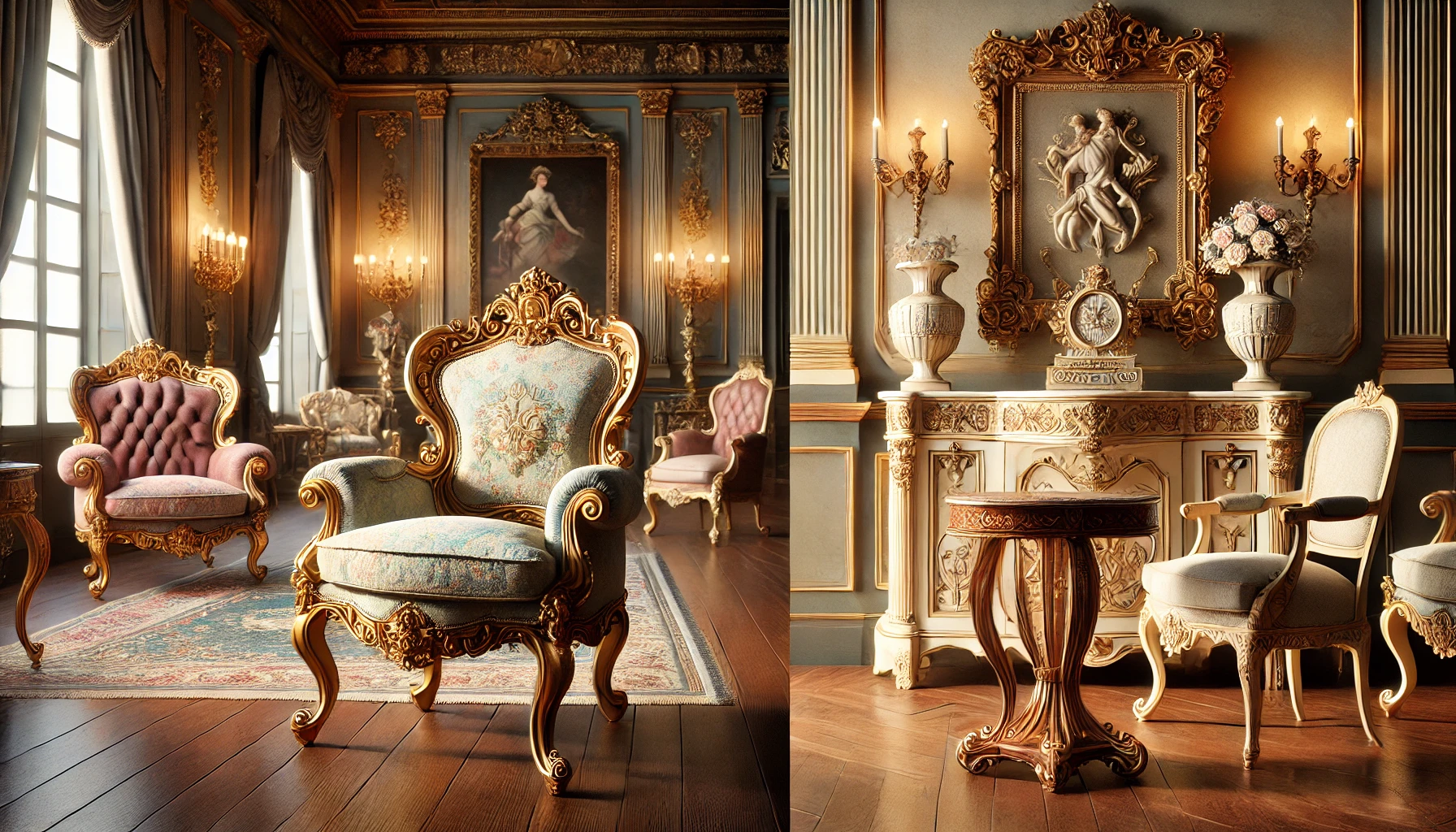
French 18th-century furniture is distinguished by two distinct yet equally refined styles: Louis XV and Louis XVI. These pieces, symbols of luxury and elegance, have influenced interior design for centuries and continue to captivate collectors and art enthusiasts. Let’s delve into the characteristics of these two iconic styles and their main differences.
1. Louis XV Style: The Explosion of Rococo
The Louis XV style developed in the first half of the 18th century and represented a clear break from the rigidity of the Baroque, introducing softer forms, sinuous curves, and richly detailed decoration.
Key Characteristics:
- Curved and asymmetrical lines, with decorative motifs inspired by nature (leaves, shells, flowers).
- Cabriole legs, elegant and sinuous, often finished with scroll feet.
- Surfaces inlaid with precious woods such as rosewood, mahogany, and walnut.
- Gilding, bronzes, and lacquers to emphasize richness and opulence.
Iconic Furniture Pieces:
- The Bergère Armchair: An enveloping seat with upholstered armrests, perfect for relaxation.
- The Rococo Console Table: Small tables with undulating shapes, often decorated with inlays and gilding.
- The Secrétaire à Abattant: An elegant drop-front desk, used for correspondence and as a decorative element.
The Louis XV style is the epitome of elegance and comfort, perfect for refined and welcoming interiors.
2. Louis XVI Style: The Return to Symmetry and Neoclassicism
In the second half of the 18th century, with the rise of Louis XVI, artistic taste shifted towards more orderly and sober lines, influenced by classical Greco-Roman art. This style opposed the freedom of Rococo, introducing balanced proportions and a more restrained decoration.
Key Characteristics:
- Straight and geometric lines, with more structured and symmetrical forms.
- Straight and fluted legs, often inspired by ancient columns.
- Decorations inspired by mythology and classical architecture, such as garlands, Greek keys, and rosettes.
- Use of refined materials such as marble, gilded bronze, and inlaid woods.
Iconic Furniture Pieces:
- The Louis XVI Commode: A chest of drawers with clean lines and refined details.
- The Game Table: Foldable and decorated with inlays, used for aristocratic pastime.
- The Medallion Chairs: Oval back, fluted legs, and neoclassical details evoking the majesty of antiquity.
The Louis XVI style is ideal for those who appreciate a more sober and rigorous elegance, with references to classical harmony.
3. Differences and Complementarity Between Louis XV and Louis XVI
The Louis XV style is characterized by curved forms, fluid and asymmetrical lines, with a strongly naturalistic inspiration. The legs of the furniture are often cabriole, elegant and sinuous, while the decorations include floral motifs, rocaille, and details inspired by nature. The materials used are exotic woods, lacquers, and gilded bronzes, which contribute to a rich and opulent aesthetic.
The Louis XVI style, instead, favors straight, geometric, and symmetrical lines, with a more rigorous and rational structure. The legs of the furniture are straight and fluted, inspired by classical columns. The decorations are inspired by mythology and Greco-Roman architecture, with elements such as garlands and rosettes. The main materials include marble, bronze, and inlaid woods, for a more sober and balanced appearance.
These differences make the two styles unique, but also complementary, allowing them to be harmoniously integrated into a period or modern environment.
4. The Influence of Louis XV and Louis XVI in Contemporary Design
Even today, these two styles influence luxury furniture and interior design. Many designers reinterpret classical forms and decorations, combining them with modern materials to create elegant and timeless environments.
Modern Reinterpretations:
- Louis XVI chairs upholstered in contemporary fabrics for a contrast between antique and modern.
- Louis XV console tables repainted in light colors for shabby chic interiors.
- Antique chests and desks adapted to contemporary uses, such as TV furniture or workstations.
Conclusion
Louis XV and Louis XVI style furniture are testaments to refined eras, expressions of craftsmanship of the highest level. Beyond their beauty, they are perfect for adding a touch of history and class to modern environments. Whether you prefer the sinuosity of Rococo or the Neoclassical elegance, these furnishings will continue to be synonymous with luxury and refinement.