
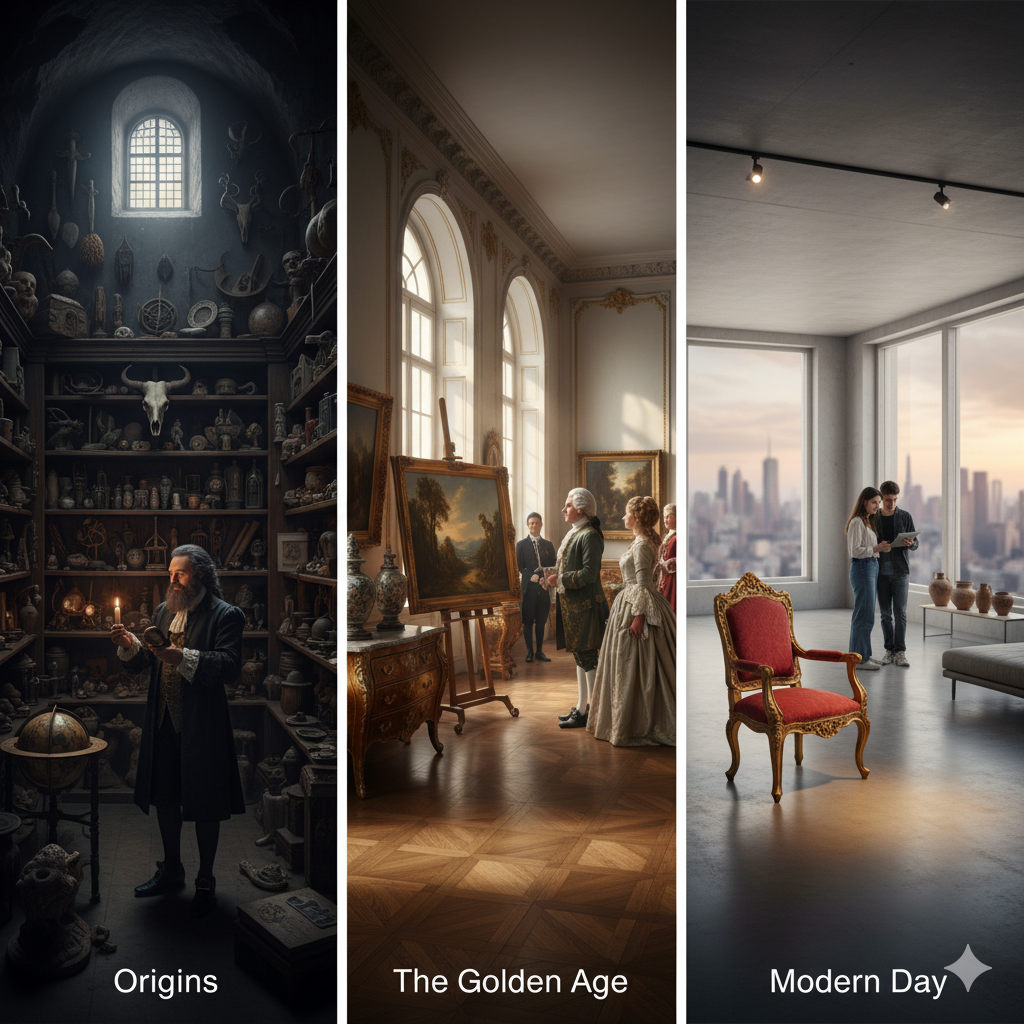
Antiques have ancient roots, dating back to the first collectors of the classical era, when objects were valued not only for their economic worth but also for their cultural and symbolic significance. Over the centuries, interest in antique objects has evolved, transitioning from private collections of nobles to major international auction houses. If you are also fascinated by the world of antiques, join us in discovering how it was born and how it has transformed over time.
The First Collections: From Antiquity to the Middle Ages
As early as Ancient Rome and Greece, the wealthiest individuals collected works of art and ancient artifacts to demonstrate their social status and knowledge. Emperors and aristocrats amassed statues, coins, and relics from earlier cultures, often to decorate their villas and palaces. This collecting model declined during the Middle Ages, when antique objects were often neglected or repurposed for other uses.
The Renaissance: Rediscovery of Art and History
During the Renaissance, interest in the past revived, driven by a renewed passion for classical art and archaeology. Humanists and patrons, such as the Medici in Florence, collected sculptures, manuscripts, and antiquities. This period saw the birth of the first true art galleries, aimed at preserving and studying the cultural heritage of the past.
From Aristocratic Collecting to the First Antique Dealers
In the 17th and 18th centuries, collecting was no longer exclusive to nobles but began to spread among art enthusiasts and wealthy bourgeoisie. The first antique dealers started gathering and selling artworks and historical pieces to an increasingly broad clientele. The first auction houses were established in London and Paris, giving rise to a true antiques market.
The 19th Century and the Birth of the Modern Market
During the 19th century, the growing interest in preserving historical heritage led to the founding of museums and institutions dedicated to protecting ancient art. World’s fairs showcased objects from different eras and cultures, increasing public interest. It was during this time that professional figures such as antique dealers and curators emerged, making the market more structured.
Antiques Today: Passion and Investment
Today, the world of antiques has changed significantly thanks to technology and globalization. Online auctions have made purchasing antique pieces more accessible, while increased awareness of historical value makes collectors and buyers more knowledgeable and discerning. If you’re thinking about entering the world of antiques, know that it’s not just a passion for beauty but also an investment that can be highly rewarding.
Antiques continue to evolve, maintaining their timeless charm while adapting to modern dynamics. Are you ready to discover the next piece that will become part of your collection?