

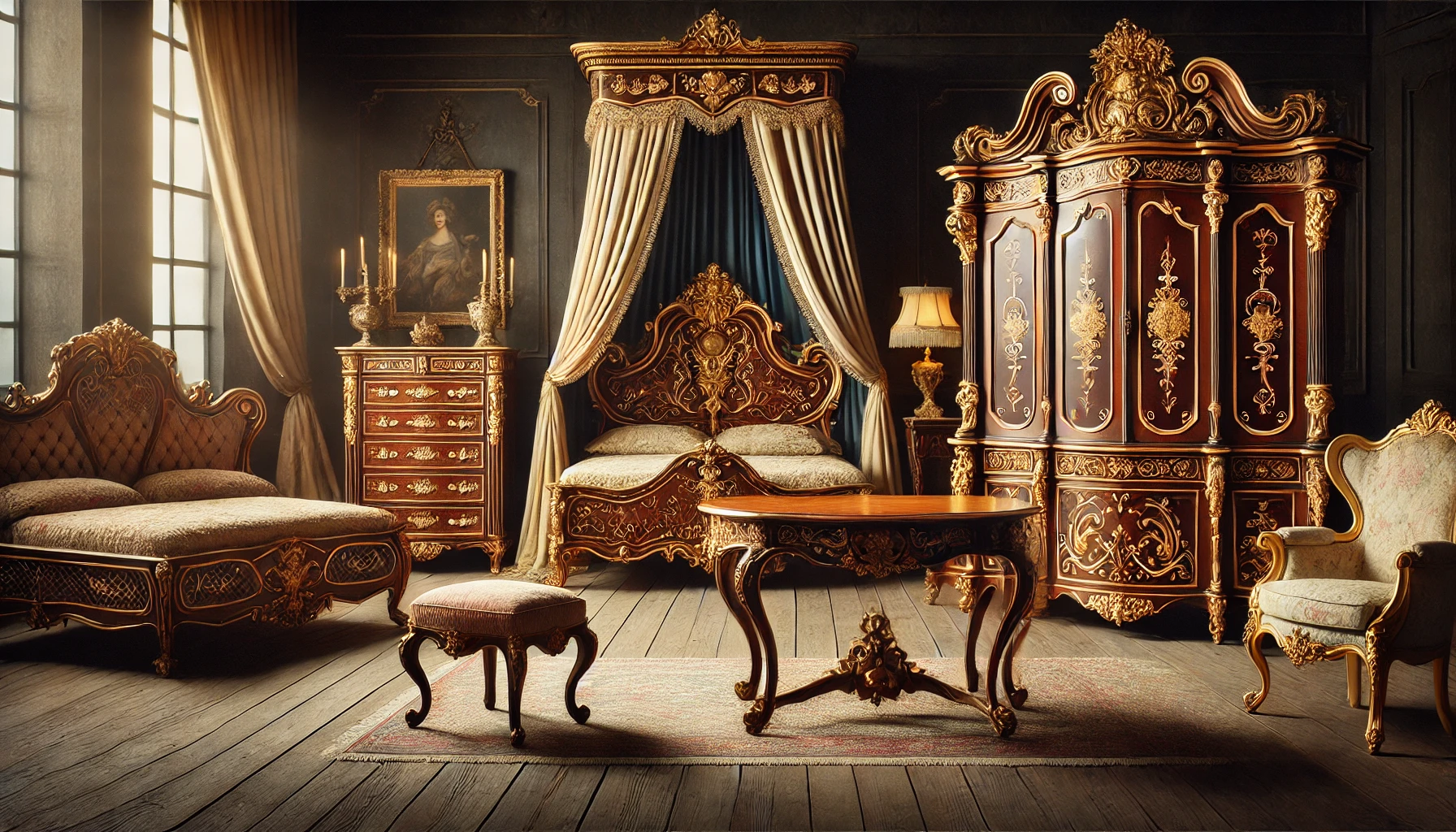
Antique furniture represents a perfect blend of functionality and aesthetics, embodying the taste and craftsmanship of bygone eras. Certain pieces have become true icons due to their beauty and impact on design. Let’s explore some of the most celebrated items in the history of furniture.
- The Regency Table: Elegance and RestraintThe Regency-style table, which developed in England between the 18th and 19th centuries, is a perfect example of balance between luxury and functionality. Characterized by clean lines, discreet decorations, and refined materials like mahogany, it graced aristocratic drawing rooms and elegant libraries.
- Style: Light lines and tapered legs.
- Materials: Mahogany, rosewood, and brass details.
- Functionality: Dining or work table, often extendable.
- The Louis XV Vitrine: Art and DecorationBorn in France in the 18th century, the Louis XV-style vitrine is one of the most sophisticated examples of decorative furniture. Characterized by curved glass, gilded bronze inlays, and floral motifs, it is a symbol of Rococo design.
- Characteristics: Bombé glass, gilded wood structure, and refined inlays.
- Use: Displaying porcelain, precious books, and luxury items.
- Legacy: Still highly appreciated in classic decor today.
- The Four-Poster Bed: A Symbol of RoyaltyFrom the Renaissance to the Victorian period, the four-poster bed represented an element of prestige and comfort. With sumptuous curtains and draperies, as well as elaborate carvings, it was a symbol of luxury in noble residences.
- Structure: Solid wood with sculpted columns.
- Decorations: Silk and velvet curtains.
- Significance: Status symbol of sovereigns and aristocrats.
- The Bergère Armchair: Comfort and RefinementPopular in 18th-century France, the Bergère armchair combines elegance and comfort thanks to its padded armrests and enveloping backrest. Often upholstered in precious fabrics like damask and brocade, it is still a must-have in classic decor.
- Design: Wide seat and padded armrests.
- Materials: Carved wood frame and precious fabrics.
- Influence: Still reproduced in modern variations today.
Conclusion
Each antique furniture piece carries a piece of history, attesting to the craftsmanship of past eras. Integrating these pieces into a modern decor means adding character, value, and a touch of timeless class.