

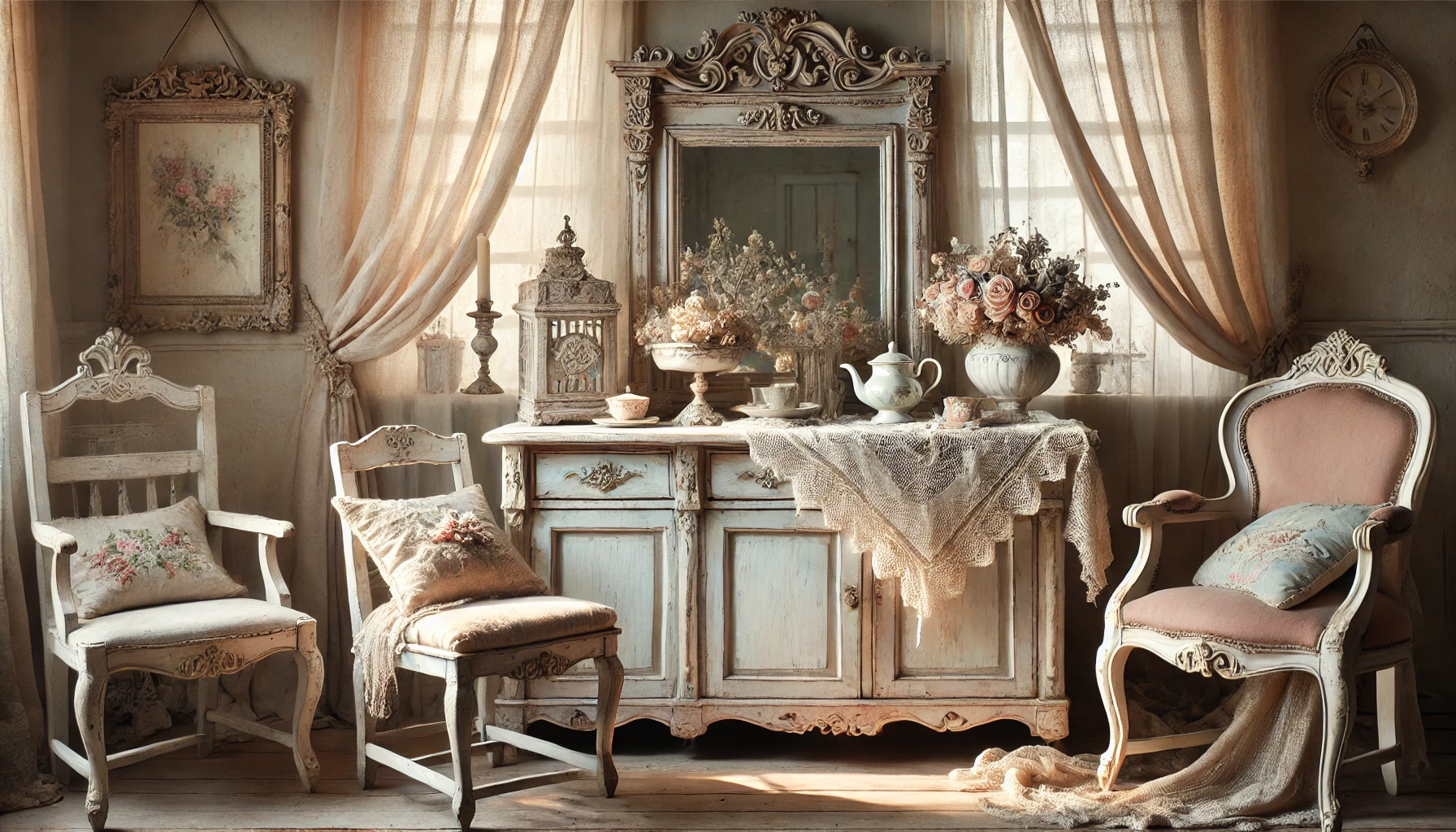
Shabby chic is an interior design trend that beautifully marries the charm of antiques with a romantic, lived-in feel. Originating in England and popularized in the United States during the 1980s, this style is characterized by the use of antique or vintage-looking furniture, often repainted in light and pastel shades. In this guide, we will explore how to integrate antiques into a shabby chic decor scheme and provide tips to achieve a harmonious and elegant result.
1. Defining Shabby Chic
The term “shabby” implies a sense of being worn or slightly imperfect, but the shabby chic style is meticulously curated to achieve a refined yet inviting atmosphere.
- Delicate Colors: Predominantly white, ivory, beige, light gray, and pastel shades such as antique rose, powder blue, and sage green.
- Distressed Furniture: vintage antiques or furniture repainted using the distressing technique to create a naturally aged appearance.
- Natural Materials: Distressed wood, wrought iron, linen, and raw cotton are typical elements.
- Floral and Romantic Decor: Floral patterns, lace, painted ceramics, and retro details complete the romantic ambiance of shabby chic.
2. Incorporating Antiques into Shabby Chic Style
To achieve the perfect balance between elegance and simplicity, here are some suggestions on how to use antique furniture and objects in a shabby chic setting:
- Revive Antique Furniture: An old wardrobe, sideboard, or solid wood console can be restored and painted in light colors to fit the style.
- Opt for Seating with Romantic Details: Louis XV style chairs or armchairs with linen upholstery are perfect for shabby chic decor.
- Use Raw or Distressed Wood Tables: A dining table in bleached oak or pine serves as an ideal centerpiece for a shabby chic dining room.
- Embrace Imperfections: Scratches, peeling paint, and signs of age aren’t flaws, but details that make each antique unique.
3. Accessories and Decor for a Shabby Chic Touch
Beyond furniture, accessories play a vital role in creating an vintage shabby chic atmosphere.
- Mirrors with Carved Frames: Preferably gilded or bleached, perfect for adding brightness to rooms.
- Retro Chandeliers and Sconces: Wrought iron models or those with crystal droplets add old-world charm.
- Vintage Porcelain and Tableware: Decorated ceramic tea sets, plates with ornate edges, and cut glass add a refined touch.
- Floral Cushions and Fabrics: Linen, cotton, and lace are ideal for curtains, tablecloths, and bedspreads.
- Vintage Trunks and Chests: Perfect as decorative and functional elements for storing blankets or accessories.
4. DIY Restoration and Customization Techniques
If you want to transform an antique piece into shabby chic decor, consider these DIY restoration techniques:
- Distressing: Lightly sanding the paint to create a worn, aged effect.
- Wax Patina: Applying neutral or colored wax after painting to protect the furniture and give it a more vintage look.
- Stencils and Hand-Painted Decorations: Flowers, garlands, or ornamental details on the furniture surface can accentuate the romantic style.
- Chalk Paint: Ideal for creating a matte, powdery finish, perfect for shabby chic.
5. Shabby Chic Antiques in Various Rooms
Shabby chic suits any room in the house. Here are some ideas for each:
- Living Room: A natural linen sofa with lace cushions, a bleached wood coffee table, and a vintage bookcase with decorative frames.
- Bedroom: A wrought iron bed or a distressed wood headboard, floral bedside tables, and fabric lampshades.
- Kitchen: A vintage sideboard with glass doors, exposed vintage tableware, and white wooden chairs.
- Bathroom: Restored cabinets, ornate framed mirrors, and ceramic accessories for an elegant touch.
Conclusion
Antiques in shabby chic style are perfect for those who desire inviting, romantic, and character-filled spaces. Restoring antique furniture allows you to breathe new life into pieces with great historical and aesthetic value, creating a warm and timeless atmosphere. With the right touches, you can transform any space into an elegant and refined haven where past and present harmoniously blend.